Roze Ludmila V, Laivenieks Maris, Hong Sung-Yong, Wee Josephine, Wong Shu-Shyan, Vanos Benjamin, Awad Deena, Ehrlich Kenneth C, Linz John E
Department of Food Science and Human Nutrition, Michigan State University (MSU), East Lansing, MI 48824, USA.
Department of Plant Biology, Michigan State University (MSU), East Lansing, MI 48824, USA.
Toxins (Basel). 2015 Apr 28;7(5):1411-30. doi: 10.3390/toxins7051411.
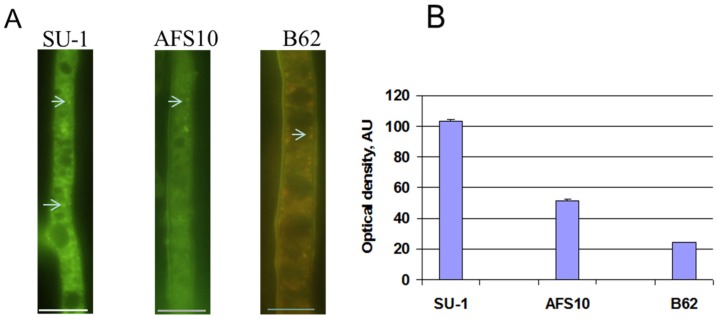
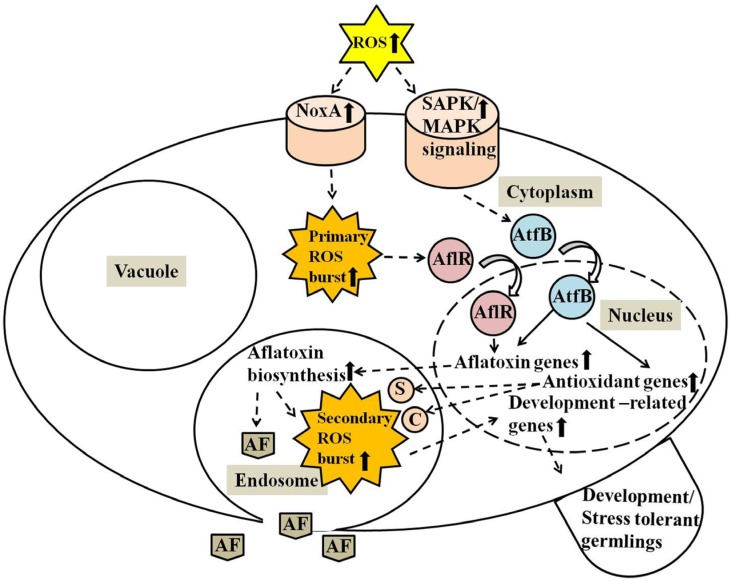
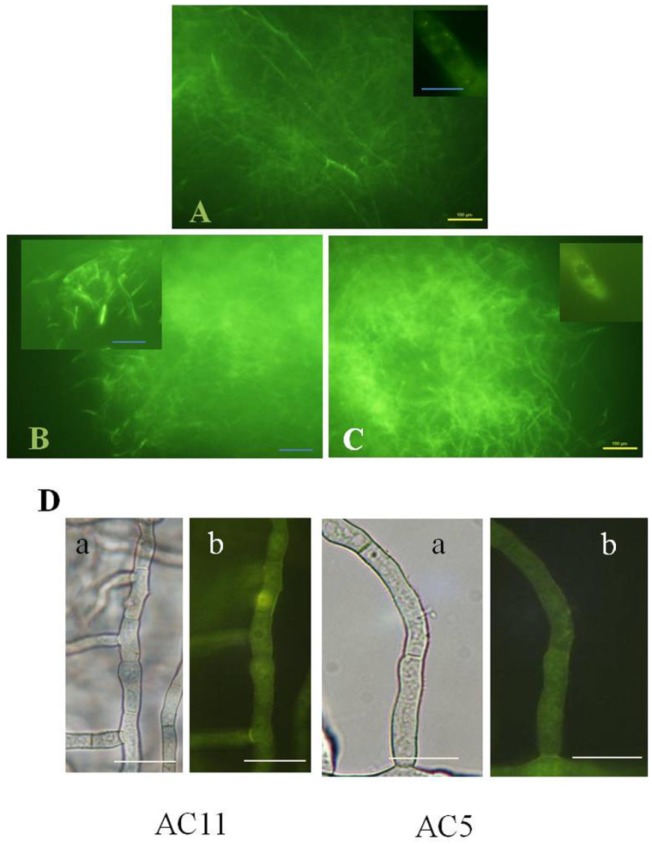
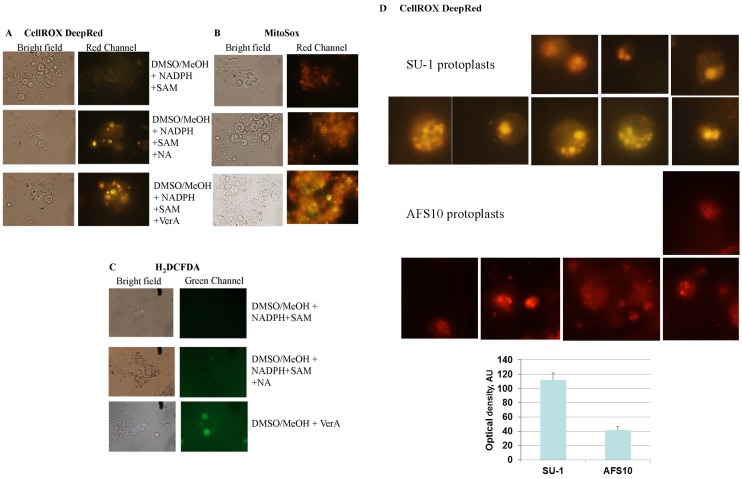
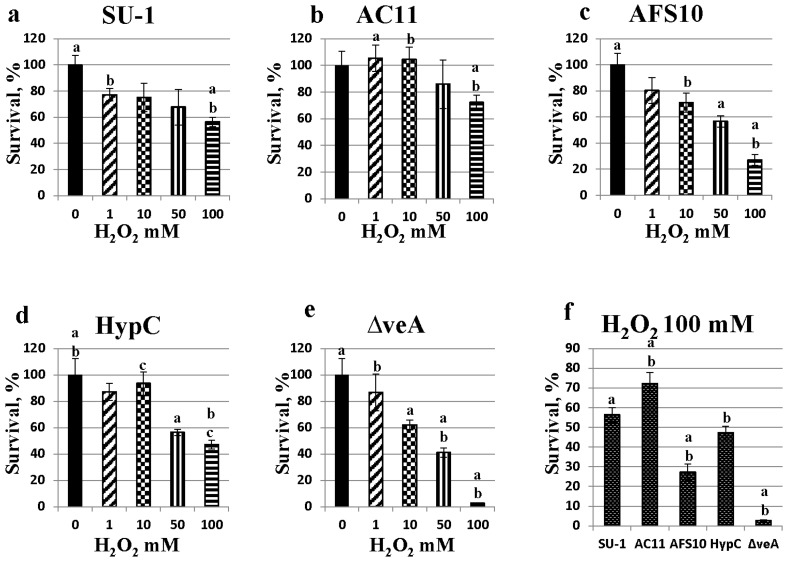
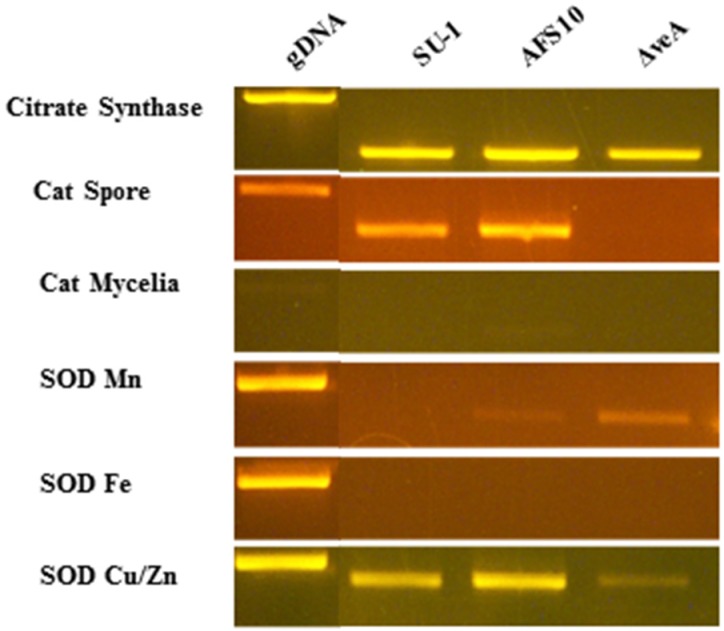
Aflatoxin biosynthesis in the filamentous fungus Aspergillus parasiticus involves a minimum of 21 enzymes, encoded by genes located in a 70 kb gene cluster. For aflatoxin biosynthesis to be completed, the required enzymes must be transported to specialized early and late endosomes called aflatoxisomes. Of particular significance, seven aflatoxin biosynthetic enzymes are P450/monooxygenases which catalyze reactions that can produce reactive oxygen species (ROS) as byproducts. Thus, oxidative reactions in the aflatoxin biosynthetic pathway could potentially be an additional source of intracellular ROS. The present work explores the hypothesis that the aflatoxin biosynthetic pathway generates ROS (designated as "secondary" ROS) in endosomes and that secondary ROS possess a signaling function. We used specific dyes that stain ROS in live cells and demonstrated that intracellular ROS levels correlate with the levels of aflatoxin synthesized. Moreover, feeding protoplasts with precursors of aflatoxin resulted in the increase in ROS generation. These data support the hypothesis. Our findings also suggest that secondary ROS may fulfill, at least in part, an important mechanistic role in increased tolerance to oxidative stress in germinating spores (seven-hour germlings) and in regulation of fungal development.
寄生曲霉这种丝状真菌中的黄曲霉毒素生物合成至少涉及21种酶,这些酶由位于一个70 kb基因簇中的基因编码。为了完成黄曲霉毒素的生物合成,所需的酶必须被转运到称为黄曲霉毒素体的特殊早期和晚期内体中。特别重要的是,七种黄曲霉毒素生物合成酶是P450/单加氧酶,它们催化的反应会产生作为副产物的活性氧(ROS)。因此,黄曲霉毒素生物合成途径中的氧化反应可能是细胞内ROS的另一个来源。目前的研究探讨了这样一种假设,即黄曲霉毒素生物合成途径在内体中产生ROS(称为“次级”ROS),并且次级ROS具有信号传导功能。我们使用了能在活细胞中对ROS进行染色的特定染料,并证明细胞内ROS水平与合成的黄曲霉毒素水平相关。此外,用黄曲霉毒素前体喂养原生质体会导致ROS生成增加。这些数据支持了这一假设。我们的研究结果还表明,次级ROS可能至少部分地在萌发孢子(7小时龄的幼苗)对氧化应激耐受性的提高以及真菌发育的调节中发挥重要的机制作用。