Caldwell Ruth B, Toque Haroldo A, Narayanan S Priya, Caldwell R William
Veterans Affairs Medical Center, One Freedom Way, Augusta, GA 30904, USA; Vision Discovery Institute, Medical College of Georgia, Georgia Regents University, 1459 Laney Walker Boulevard, Augusta, GA 30912, USA; Vascular Biology Center, Medical College of Georgia, Georgia Regents University, 1459 Laney Walker Boulevard, Augusta, GA 30912, USA.
Department of Pharmacology and Toxicology, Medical College of Georgia, Georgia Regents University, 1459 Laney Walker Boulevard, Augusta, GA 30912, USA.
Trends Pharmacol Sci. 2015 Jun;36(6):395-405. doi: 10.1016/j.tips.2015.03.006. Epub 2015 Apr 27.
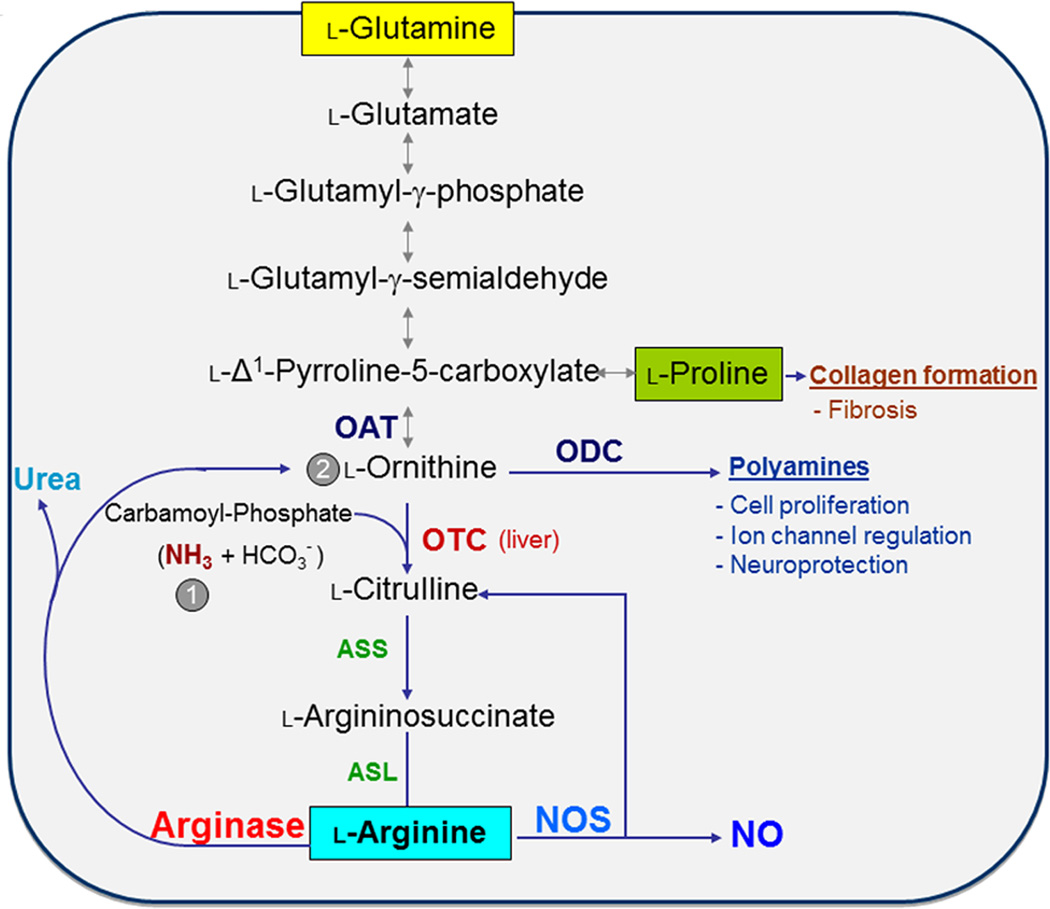
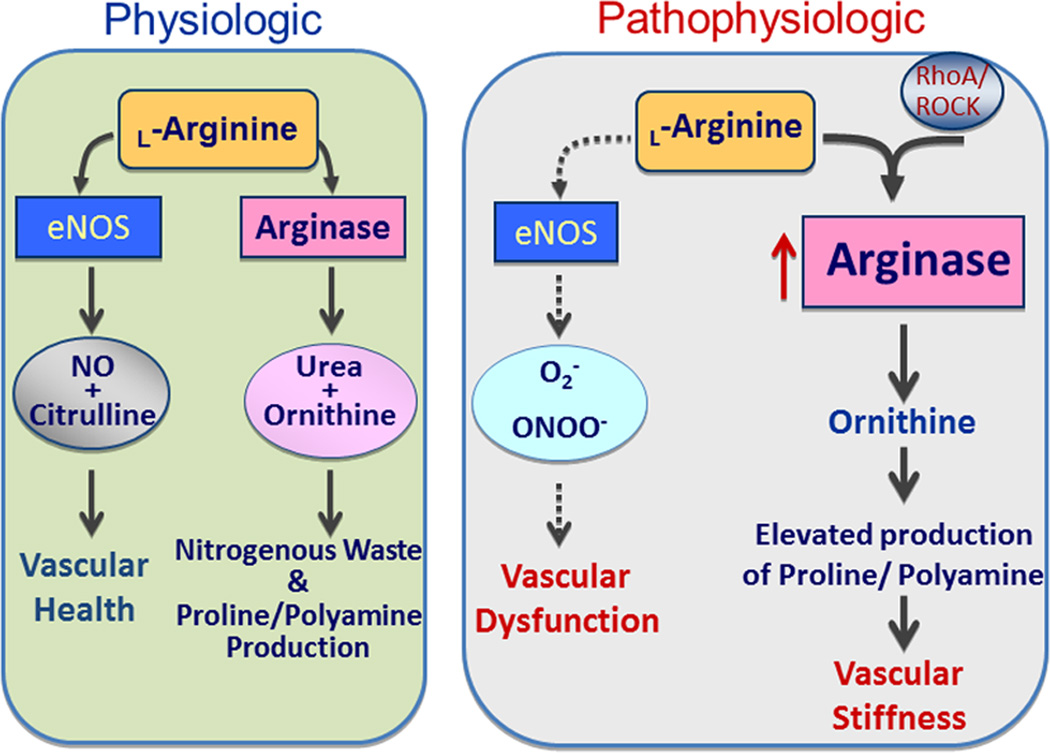
Arginase has roots in early life-forms. It converts L-arginine to urea and ornithine. The former provides protection against NH3; the latter serves to stimulate cell growth and other physiological functions. Excessive arginase activity in mammals has been associated with cardiovascular and nervous system dysfunction and disease. Two relevant aspects of this elevated activity may be involved in these disease states. First, excessive arginase activity reduces the supply of L-arginine needed by nitric oxide (NO) synthase to produce NO. Second, excessive production of ornithine leads to vascular structural problems and neural toxicity. Recent research has identified inflammatory agents and reactive oxygen species (ROS) as drivers of this pathologic elevation of arginase activity and expression. We review the involvement of arginase in cardiovascular and nervous system dysfunction, and discuss potential therapeutic interventions targeting excess arginase.
精氨酸酶起源于早期生命形式。它将L-精氨酸转化为尿素和鸟氨酸。前者提供对NH3的保护;后者用于刺激细胞生长和其他生理功能。哺乳动物中精氨酸酶活性过高与心血管和神经系统功能障碍及疾病有关。这种活性升高的两个相关方面可能与这些疾病状态有关。首先,精氨酸酶活性过高会减少一氧化氮(NO)合酶产生NO所需的L-精氨酸供应。其次,鸟氨酸的过量产生会导致血管结构问题和神经毒性。最近的研究已确定炎症因子和活性氧(ROS)是精氨酸酶活性和表达病理性升高的驱动因素。我们综述了精氨酸酶在心血管和神经系统功能障碍中的作用,并讨论了针对过量精氨酸酶的潜在治疗干预措施。