Nadendla Eswarkumar, Teyssier Catherine, Delfosse Vanessa, Vivat Valérie, Krishnasamy Gunasekaran, Gronemeyer Hinrich, Bourguet William, Germain Pierre
Inserm U1054, Centre de Biochimie Structurale, Montpellier, France; CNRS UMR5048, Universités Montpellier 1 & 2, Montpellier, France; CAS in Crystallography and Biophysics, University of Madras, Chennai, India.
Inserm U1054, Centre de Biochimie Structurale, Montpellier, France; CNRS UMR5048, Universités Montpellier 1 & 2, Montpellier, France.
PLoS One. 2015 May 1;10(5):e0123195. doi: 10.1371/journal.pone.0123195. eCollection 2015.
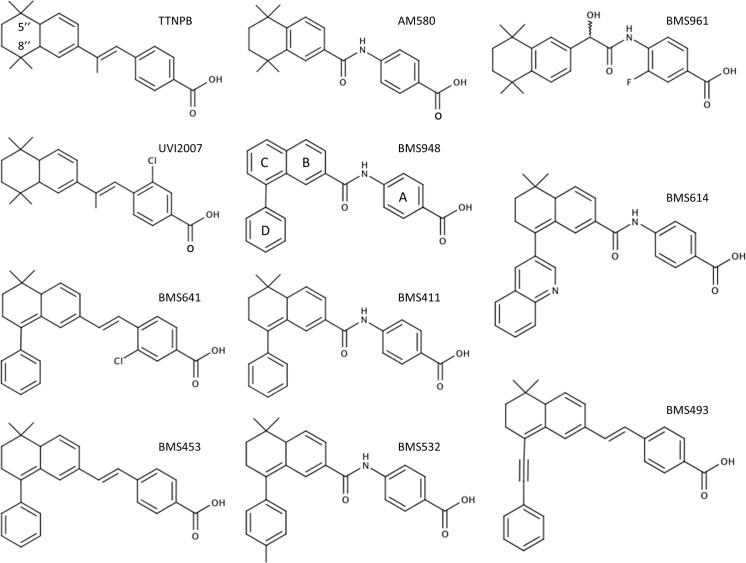
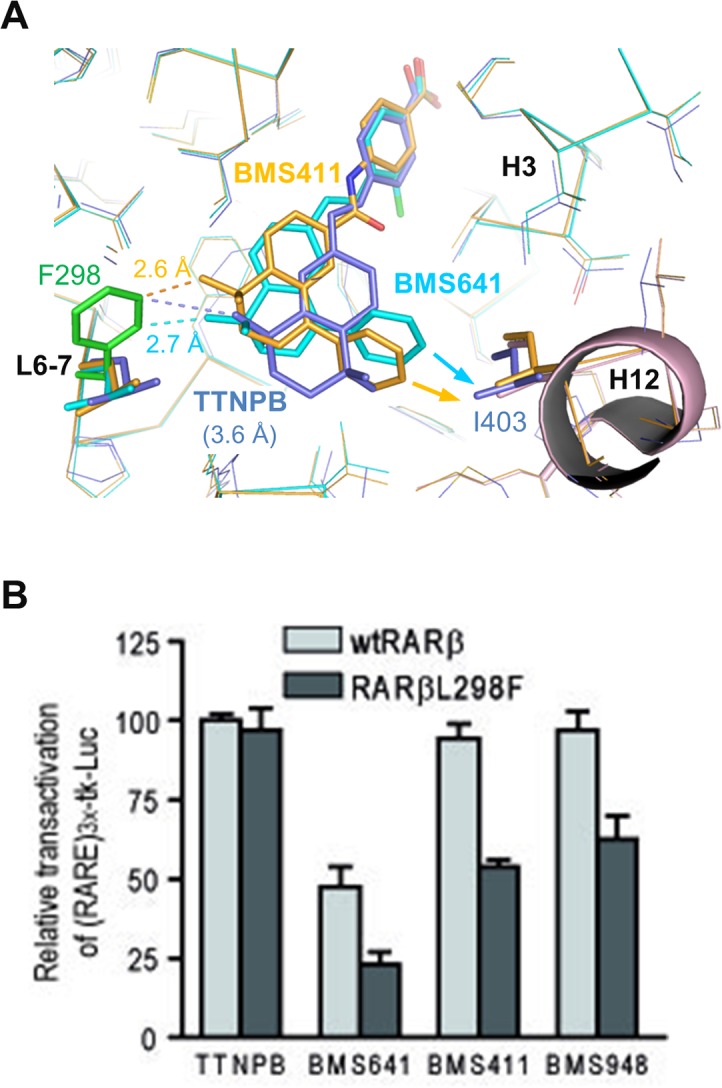
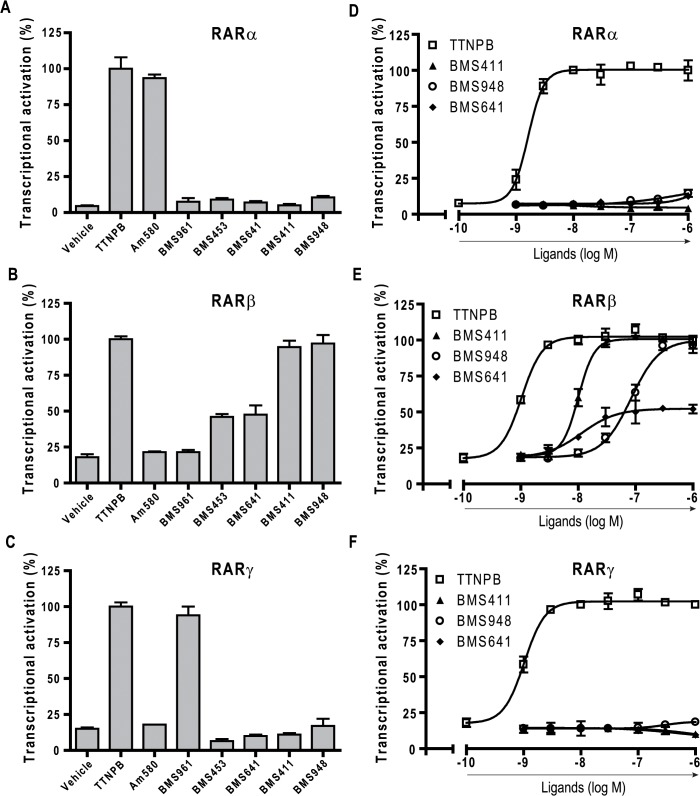
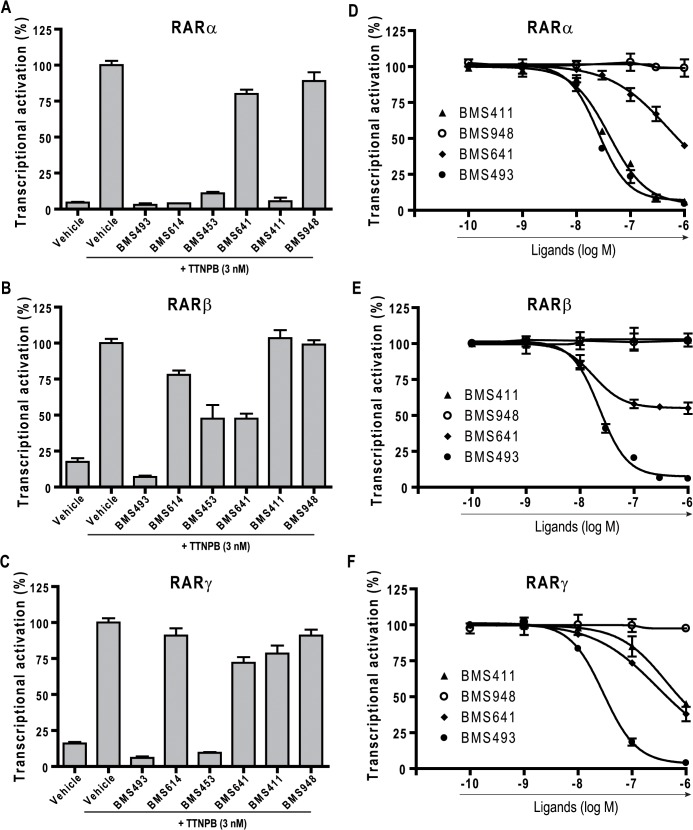
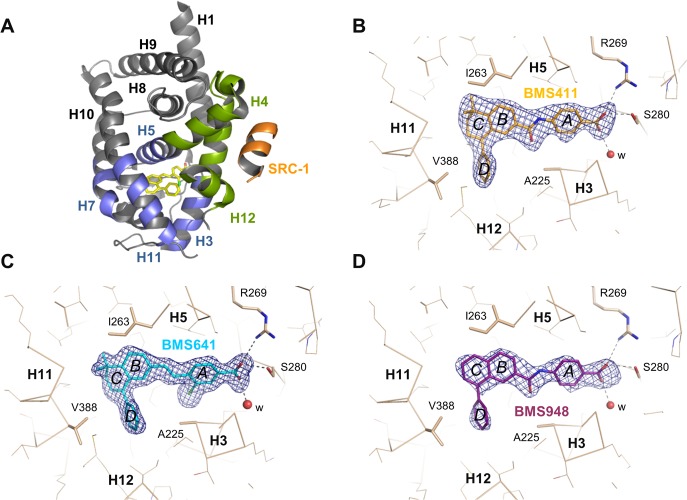
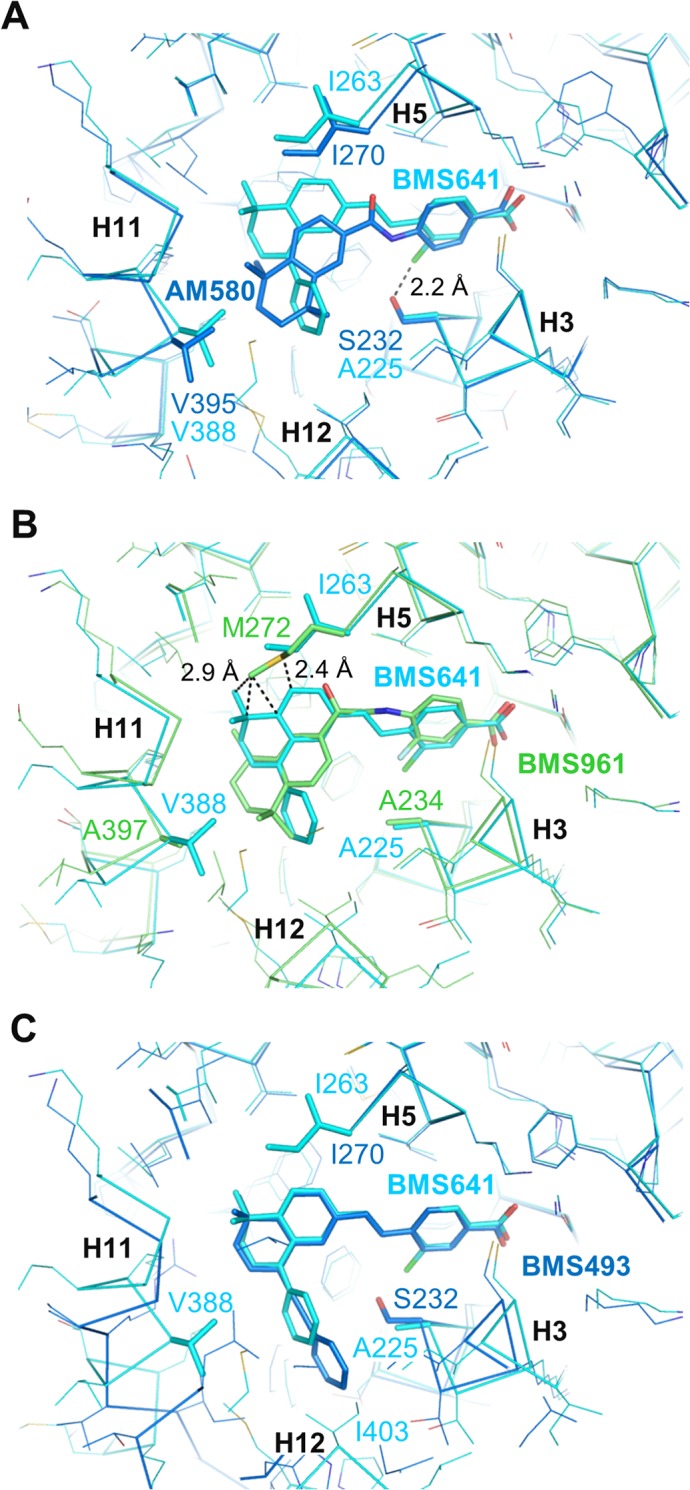
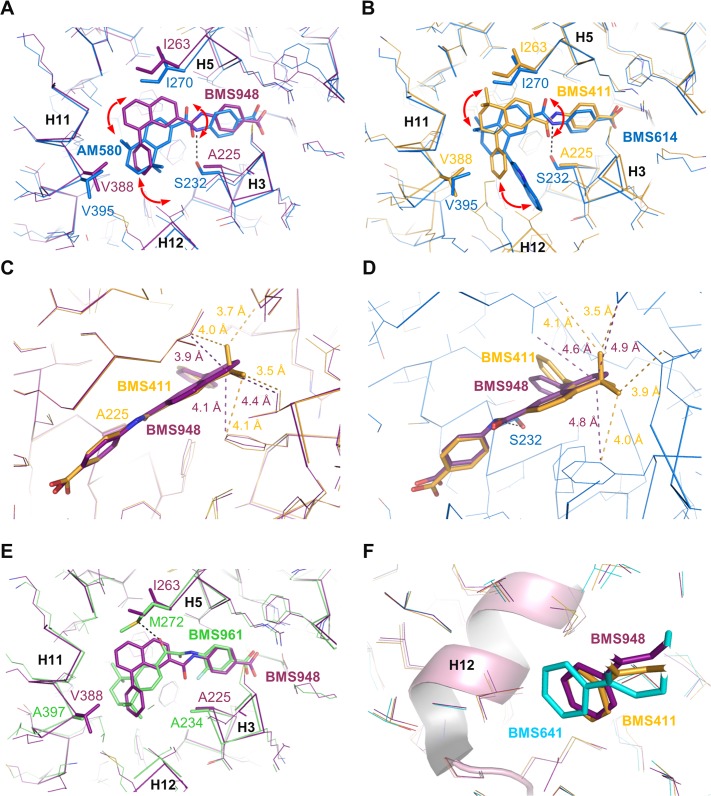
Retinoic acid is an important regulator of cell differentiation which plays major roles in embryonic development and tissue remodeling. The biological action of retinoic acid is mediated by three nuclear receptors denoted RARα, β and γ. Multiple studies support that RARβ possesses functional characteristics of a tumor suppressor and indeed, its expression is frequently lost in neoplastic tissues. However, it has been recently reported that RARβ could also play a role in mammary gland tumorigenesis, thus demonstrating the important but yet incompletely understood function of this receptor in cancer development. As a consequence, there is a great need for RARβ-selective agonists and antagonists as tools to facilitate the pharmacological analysis of this protein in vitro and in vivo as well as for potential therapeutic interventions. Here we provide experimental evidences that the novel synthetic retinoid BMS948 is an RARβ-selective ligand exhibiting a full transcriptional agonistic activity and activating RARβ as efficiently as the reference agonist TTNPB. In addition, we solved the crystal structures of the RARβ ligand-binding domain in complex with BMS948 and two related compounds, BMS641 and BMS411. These structures provided a rationale to explain how a single retinoid can be at the same time an RARα antagonist and an RARβ full agonist, and revealed the structural basis of partial agonism. Finally, in addition to revealing that a flip by 180° of the amide linker, that usually confers RARα selectivity, accounts for the RARβ selectivity of BMS948, the structural analysis uncovers guidelines for the rational design of RARβ-selective antagonists.
视黄酸是细胞分化的重要调节因子,在胚胎发育和组织重塑中发挥着重要作用。视黄酸的生物学作用由三种核受体介导,分别为RARα、β和γ。多项研究表明,RARβ具有肿瘤抑制因子的功能特征,实际上,其表达在肿瘤组织中常常缺失。然而,最近有报道称RARβ在乳腺肿瘤发生中也可能发挥作用,从而证明了该受体在癌症发展中的重要但尚未完全理解的功能。因此,迫切需要RARβ选择性激动剂和拮抗剂作为工具,以促进该蛋白在体外和体内的药理学分析以及潜在的治疗干预。在此,我们提供实验证据表明新型合成类视黄醇BMS948是一种RARβ选择性配体,具有完全的转录激动活性,激活RARβ的效率与参考激动剂TTNPB相同。此外,我们解析了RARβ配体结合结构域与BMS948以及两种相关化合物BMS641和BMS411形成复合物的晶体结构。这些结构为解释单一类视黄醇如何同时成为RARα拮抗剂和RARβ完全激动剂提供了理论依据,并揭示了部分激动作用的结构基础。最后,除了揭示通常赋予RARα选择性的酰胺连接子翻转180°可解释BMS948的RARβ选择性外,结构分析还揭示了合理设计RARβ选择性拮抗剂的指导原则。