Li Xiangdong, Yang Yuejin, Wang Laiyuan, Qiao Shubin, Lu Xiangfeng, Wu Yongjian, Xu Bo, Li Hongfan, Gu Dongfeng
Department of Epidemiology, State Key Laboratory of Cardiovascular Disease, Fuwai Hospital, National Center for Cardiovascular Diseases, Chinese Academy of Medical Sciences and Peking Union Medical College, Beijing, 100037, China; Department of Cardiology, Fuwai Hospital, National Center for Cardiovascular Diseases, Chinese Academy of Medical Sciences and Peking Union Medical College, Beijing, 100037, China.
Department of Cardiology, Fuwai Hospital, National Center for Cardiovascular Diseases, Chinese Academy of Medical Sciences and Peking Union Medical College, Beijing, 100037, China.
PLoS One. 2015 May 1;10(5):e0125430. doi: 10.1371/journal.pone.0125430. eCollection 2015.
We evaluated the potentiality of plasma microRNAs (miRNAs, or miRs) that were considered as novel biomarkers for acute coronary syndrome (ACS), including acute myocardial infarction (AMI) and unstable angina (UA).
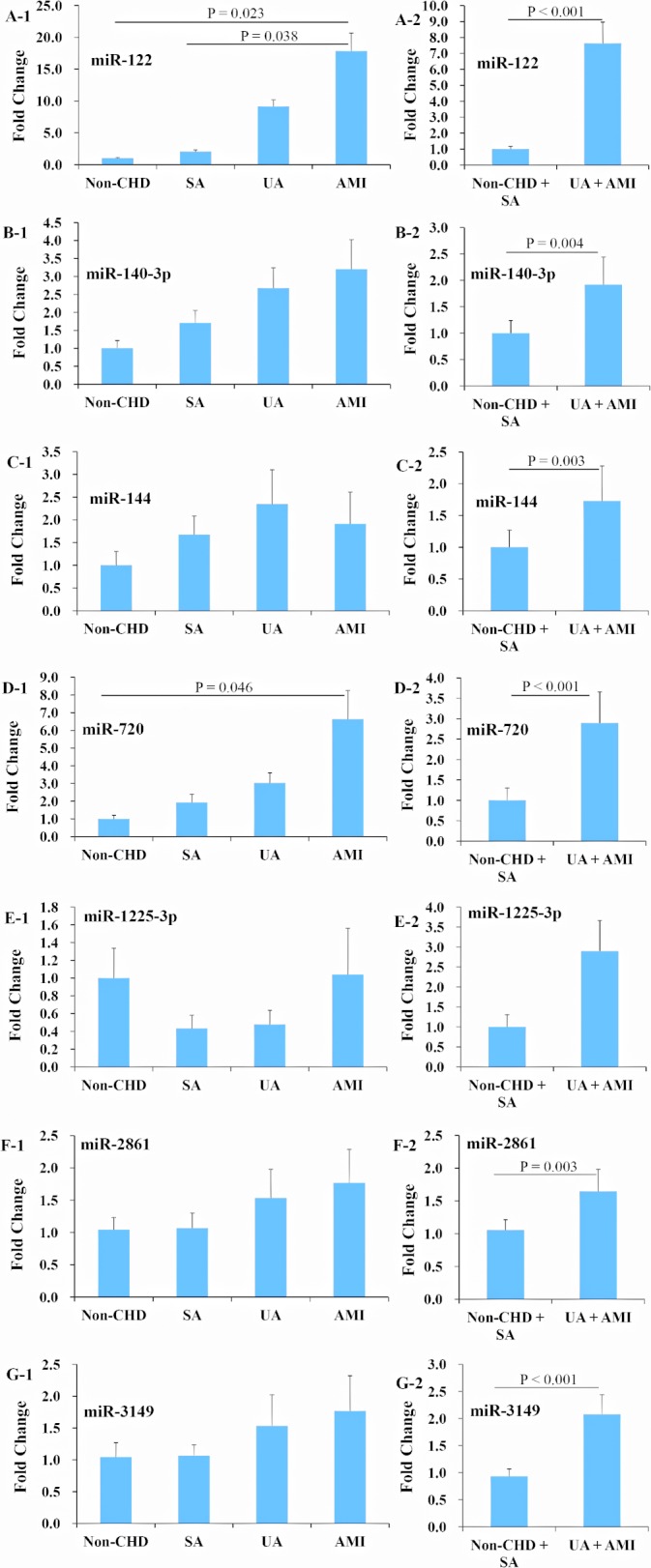
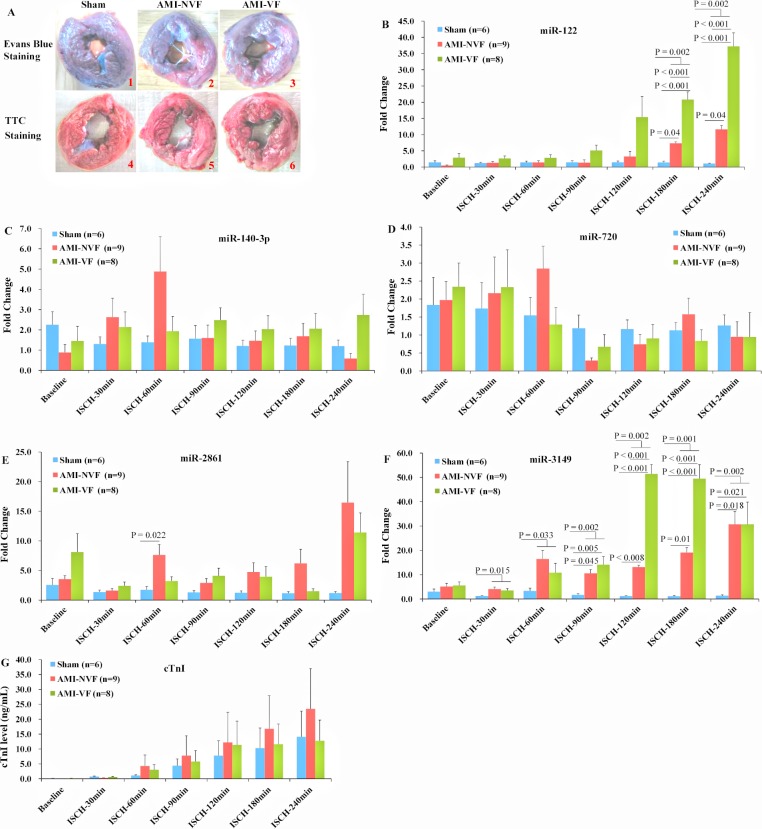
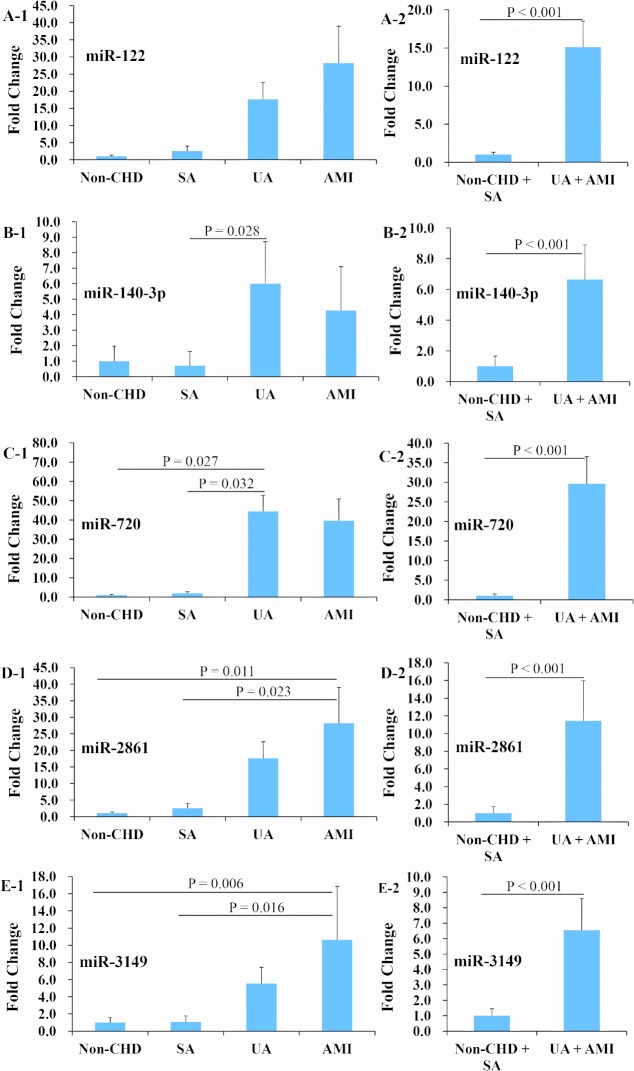
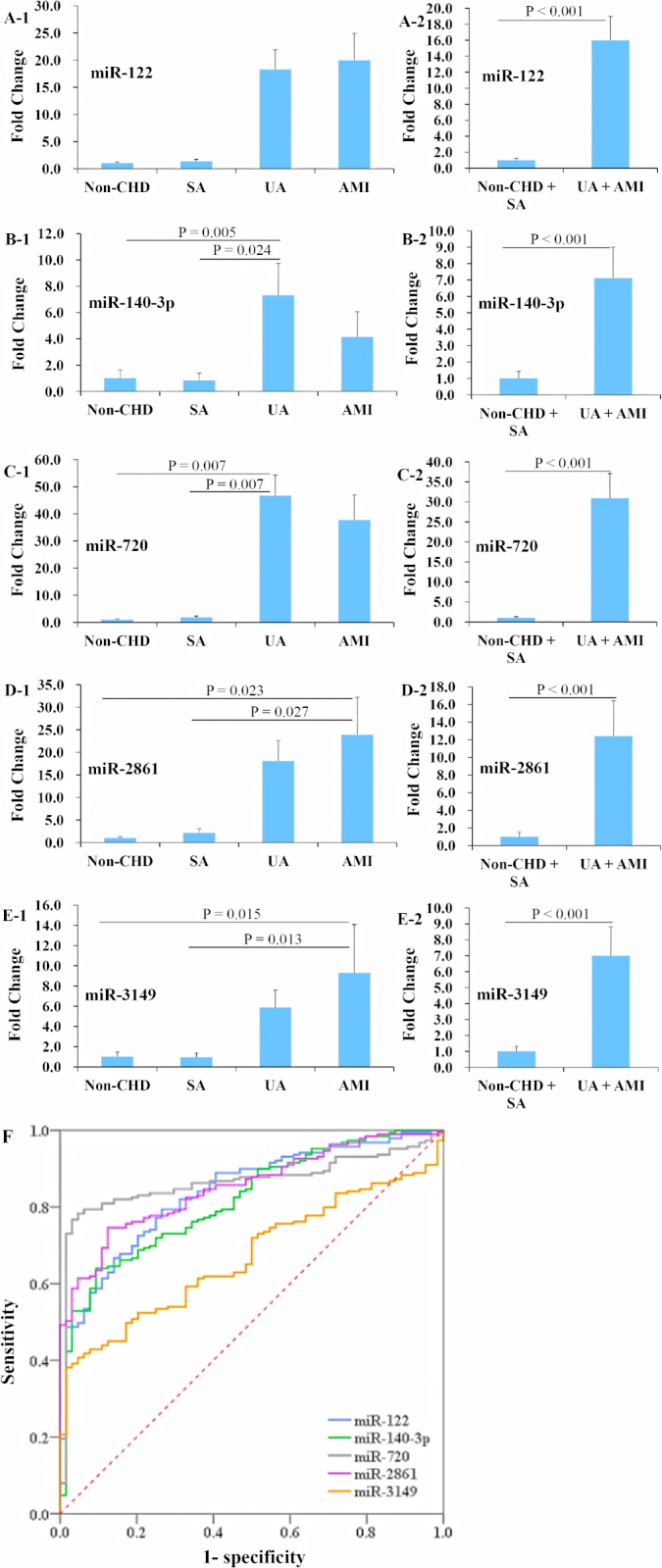
We initially identified plasma miR-122, -140-3p, -144, -720, -1225-3p, -2861, and -3149 as candidate miRNAs associated with AMI (≥2 fold and P < 0.05) by comparing expression differences of miRNAs among AMI, non-coronary heart disease (non-CHD) and stable angina (SA) groups, using miRNA microarrays (n = 8 independent arrays in each group). Those seven plasma miRNAs were further examined with qRT-PCR analyses in two replications including 111 and 428 patients separately, and the results demonstrated that plasma miR-122, -140-3p, -720, -2861, and -3149 were elevated in the ACS group vs. the non-ACS (non-CHD + SA) group (P < 0.01). The area under the receiver operating characteristic curve (AUC) of the five miRNAs for ACS classification was 0.838, 0.818, 0.865, 0.852, and 0.670, respectively (all P < 0.001), while the values reached 0.843 and 0.925 when simultaneously with miR-122 and -3149 or with miR-122, -2861, and -3149 together (all P < 0.001). In plasma of pigs after coronary ligation, miR-122 was increased from 180 min to 240 min and miR-3149 was augmented from 30 min to 240 min compared with the sham pigs (all P < 0.05).
Plasma miR-122, -140-3p, -720, -2861, and -3149 were associated with and potentially novel biomarkers for ACS.
我们评估了血浆微小RNA(miRNA,或miR)作为急性冠状动脉综合征(ACS)(包括急性心肌梗死(AMI)和不稳定型心绞痛(UA))新型生物标志物的潜力。
我们最初通过使用miRNA微阵列(每组n = 8个独立阵列)比较AMI、非冠心病(非CHD)和稳定型心绞痛(SA)组之间miRNA的表达差异,确定血浆miR-122、-140-3p、-144、-720、-1225-3p、-2861和-3149为与AMI相关的候选miRNA(≥2倍且P < 0.05)。在分别包含111例和428例患者的两次重复实验中,用qRT-PCR分析进一步检测了这七种血浆miRNA,结果表明,与非ACS(非CHD + SA)组相比,ACS组中血浆miR-122、-140-3p、-720、-2861和-3149升高(P < 0.01)。这五种miRNA用于ACS分类的受试者工作特征曲线(AUC)下面积分别为0.838、0.818、0.865、0.852和0.670(均P < 0.001),而当与miR-122和-3149或与miR-122、-2861和-3149同时使用时,这些值分别达到0.843和0.925(均P < 0.001)。与假手术猪相比,冠状动脉结扎后猪血浆中的miR-122在180分钟至240分钟升高,miR-3149在30分钟至240分钟升高(均P < 0.05)。
血浆miR-122、-140-3p、-720、-2861和-3149与ACS相关,可能是ACS的新型生物标志物。