Chen Guoqiang, Fang Xiutong, Yu Meng
Department of Orthopedics, Beijing Shijitan Hospital Affiliated to Capital Medical University, Beijing 100038, P.R. China.
Mol Med Rep. 2015 Aug;12(2):2465-72. doi: 10.3892/mmr.2015.3670. Epub 2015 Apr 23.
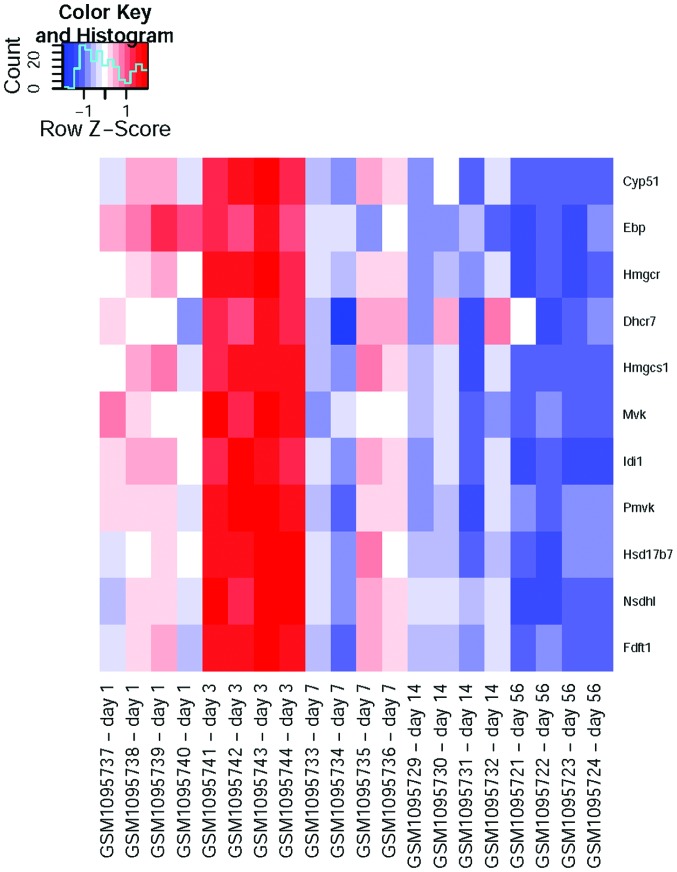
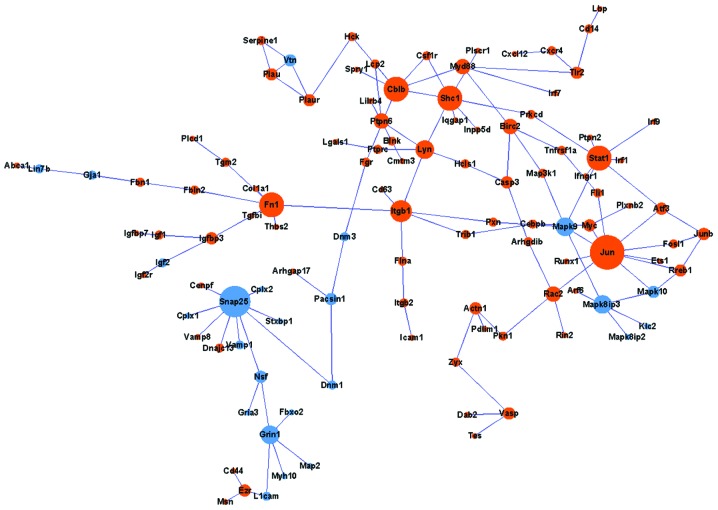
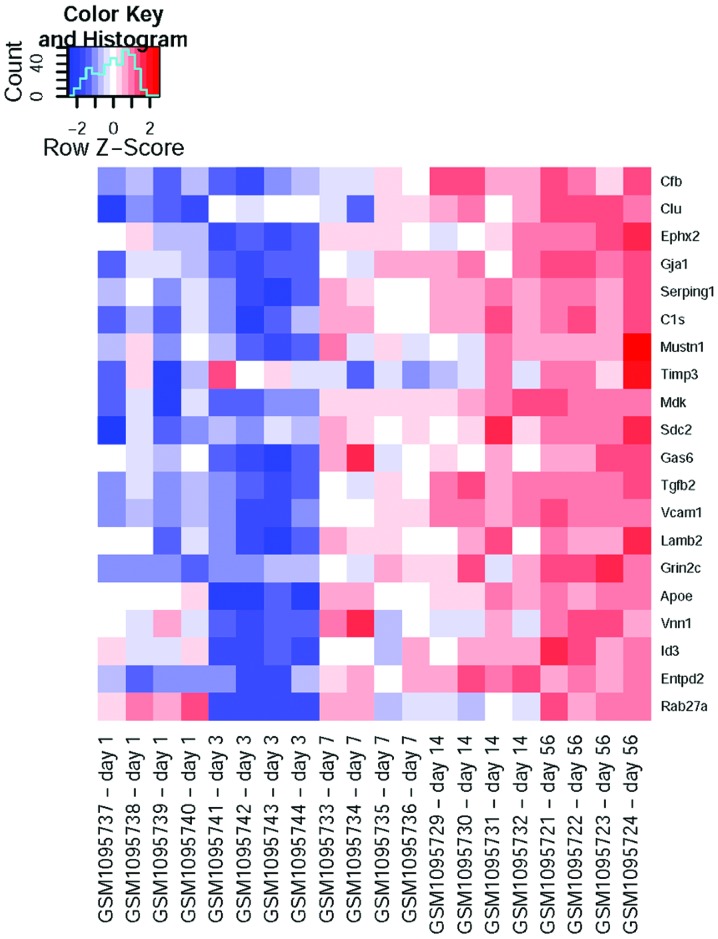
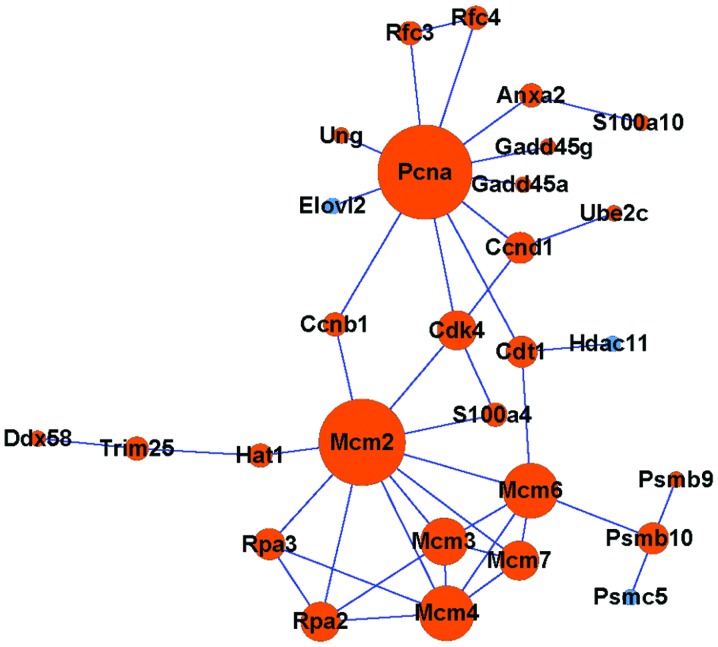
The present study aimed to investigate the molecular mechanisms of spinal cord injury (SCI) in rats. First, the differentially expressed genes (DGEs) were screened based on GSE45006 microarray data downloaded from Gene Expression Omnibus using the significant analysis of microarray (SAM) method. Screening was performed for DEGs which were negatively or possibly correlated with time and subsequently subjected to gene ontology (GO) functional annotation. Furthermore, pathway enrichment analysis using the Kyoto Encyclopedia of Genes and Genomes was also performed. In addition, a protein-protein interaction (PPI) network was constructed using the Search Tool for the Retrieval of Interacting Genes/Proteins database. Finally, GeneCodis was used to seek transcription factors and microRNAs that are involved in the regulation of DEGs. A total of 806 DEGs were upregulated and 549 DEGs were downregulated in the rats with SCI. Cholesterol metabolism-associated genes (e.g. HMGCS1, FDFT1 and IDI1) were negatively correlated with time, while injury genes (e.g. SERPING1, C1S and RAB27A) were positively correlated with time after SCI. PCNA, MCM2, JUN and SNAP25 were the hub proteins of the PPI network. The transcription factors LEF1 and SP1 were observed to be associated with the regulation of two DEGs that were involved in the cholesterol-associated metabolism as well as injury responses. A number of microRNAs (e.g. miR210, miR-487b and miR-16) were observed to target cholesterol metabolism-associated DGEs. The hub genes PCNA, MCM2, JUN and SNAP25 presumably have critical roles in rats with SCI, and the transcription factors LEF1 and SP1 may be important for the regulation of cholesterol metabolism and injury responses following SCI.
本研究旨在探究大鼠脊髓损伤(SCI)的分子机制。首先,基于从基因表达综合数据库(Gene Expression Omnibus)下载的GSE45006芯片数据,使用微阵列显著性分析(SAM)方法筛选差异表达基因(DGE)。对与时间呈负相关或可能相关的DGE进行筛选,随后进行基因本体(GO)功能注释。此外,还使用京都基因与基因组百科全书进行通路富集分析。另外,利用检索相互作用基因/蛋白的搜索工具(Search Tool for the Retrieval of Interacting Genes/Proteins)数据库构建蛋白质-蛋白质相互作用(PPI)网络。最后,使用基因编码分析工具(GeneCodis)寻找参与调控DGE的转录因子和微小RNA。在脊髓损伤大鼠中,共有806个DGE上调,549个DGE下调。胆固醇代谢相关基因(如HMGCS1、FDFT1和IDI1)与时间呈负相关,而损伤相关基因(如SERPING1、C1S和RAB27A)在脊髓损伤后与时间呈正相关。PCNA、MCM2、JUN和SNAP25是PPI网络的枢纽蛋白。观察到转录因子LEF1和SP1与参与胆固醇相关代谢以及损伤反应的两个DGE的调控有关。观察到一些微小RNA(如miR210、miR - 487b和miR - 16)靶向胆固醇代谢相关的DGE。枢纽基因PCNA、MCM2、JUN和SNAP25可能在脊髓损伤大鼠中起关键作用,转录因子LEF1和SP1可能对脊髓损伤后胆固醇代谢和损伤反应的调控很重要。