Department of Biochemistry, Faculty of Medicine, Institute of Basic Medical Sciences, University of Oslo, PO Box 1112 Blindern, 0317 Oslo, Norway.
Department of Biochemistry, Faculty of Medicine, Institute of Basic Medical Sciences, University of Oslo, PO Box 1112 Blindern, 0317 Oslo, Norway; Norwegian Center for Stem Cell Research, PO Box 1112 Blindern, 0317 Oslo, Norway; Institute of Immunology, Oslo University Hospital-Rikshospitalet, PO Box 4950 Nydalen, Oslo 0424, Norway.
Stem Cell Reports. 2015 May 12;4(5):939-52. doi: 10.1016/j.stemcr.2015.04.001. Epub 2015 Apr 30.
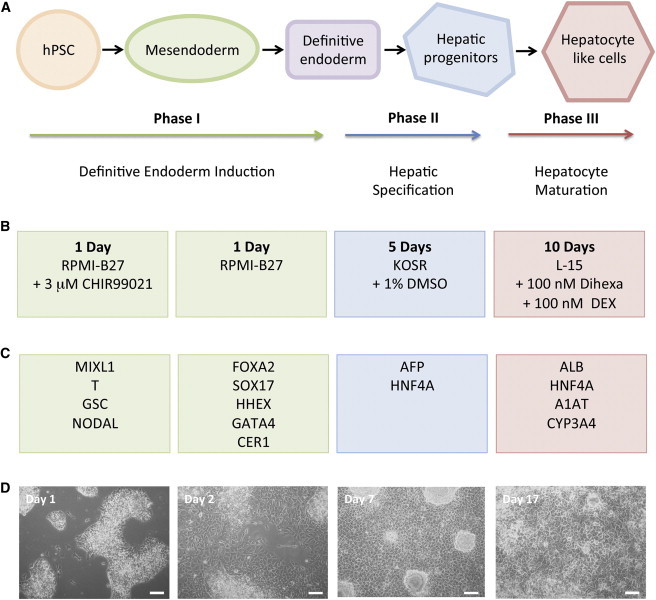
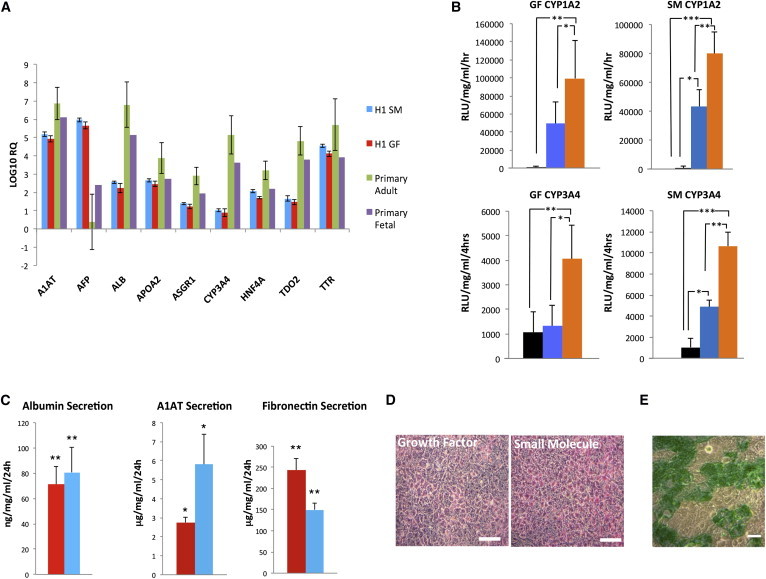
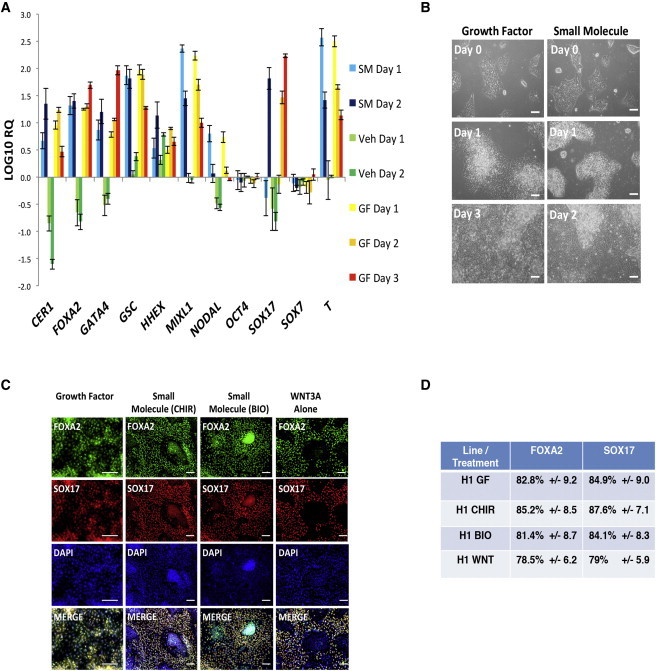
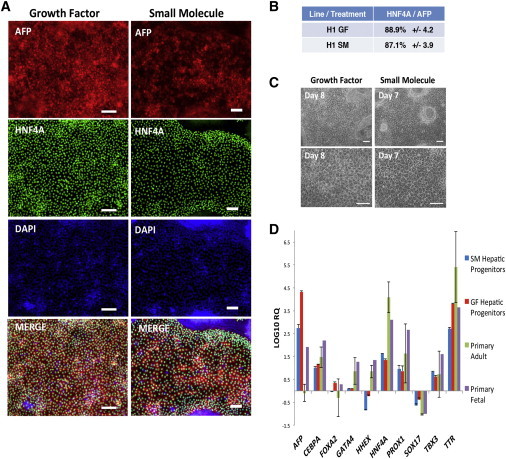
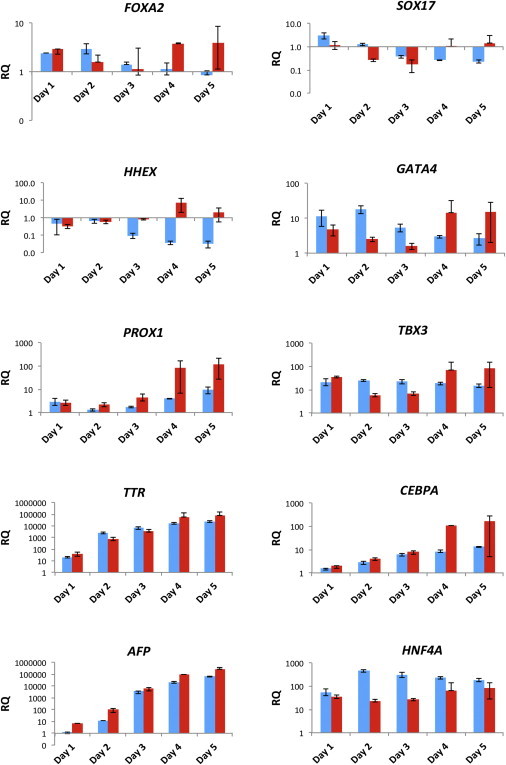
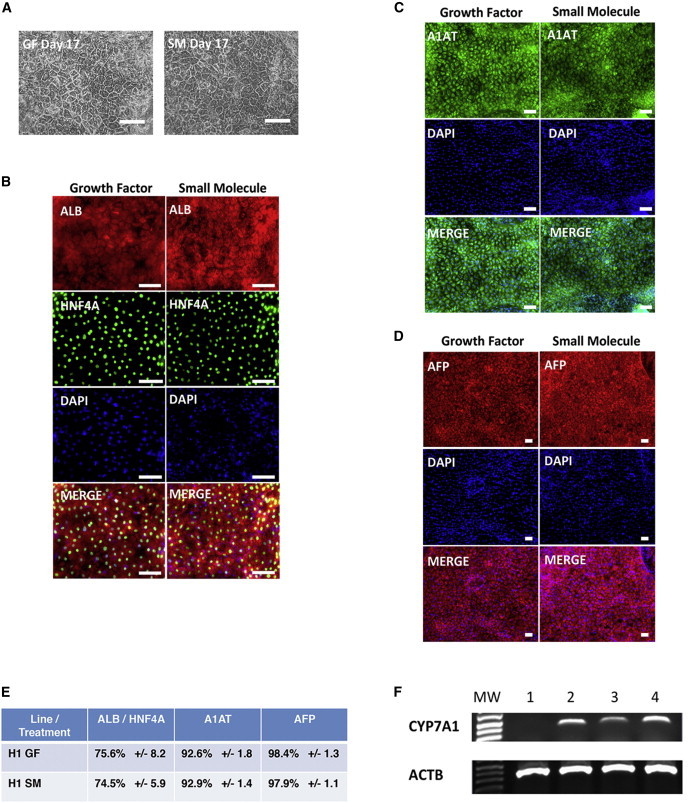
The differentiation of pluripotent stem cells to hepatocytes is well established, yet current methods suffer from several drawbacks. These include a lack of definition and reproducibility, which in part stems from continued reliance on recombinant growth factors. This has remained a stumbling block for the translation of the technology into industry and the clinic for reasons associated with cost and quality. We have devised a growth-factor-free protocol that relies on small molecules to differentiate human pluripotent stem cells toward a hepatic phenotype. The procedure can efficiently direct both human embryonic stem cells and induced pluripotent stem cells to hepatocyte-like cells. The final population of cells demonstrates marker expression at the transcriptional and protein levels, as well as key hepatic functions such as serum protein production, glycogen storage, and cytochrome P450 activity.
多能干细胞向肝细胞的分化已经得到很好的确立,然而目前的方法存在几个缺点。这些缺点包括缺乏定义和可重复性,这在一定程度上源于对重组生长因子的持续依赖。由于与成本和质量相关的原因,该技术在向工业和临床转化方面一直存在障碍。我们设计了一种无生长因子的方案,该方案依赖于小分子将人类多能干细胞向肝表型分化。该程序可以有效地将人类胚胎干细胞和诱导多能干细胞直接分化为肝样细胞。最终的细胞群体在转录和蛋白质水平上表现出标记物的表达,以及关键的肝功能,如血清蛋白的产生、糖原的储存和细胞色素 P450 活性。