Makanya A N, Kavoi B M, Djonov V
Department of Veterinary Anatomy & Physiology, University of Nairobi, Riverside Drive, P.O. Box 30197, Nairobi 00100, Kenya ; Institute of Anatomy, University of Bern, Baltzerstrasse 2, 3000 Bern, Switzerland.
Department of Veterinary Anatomy & Physiology, University of Nairobi, Riverside Drive, P.O. Box 30197, Nairobi 00100, Kenya.
ISRN Anat. 2014 Feb 5;2014:621982. doi: 10.1155/2014/621982. eCollection 2014.
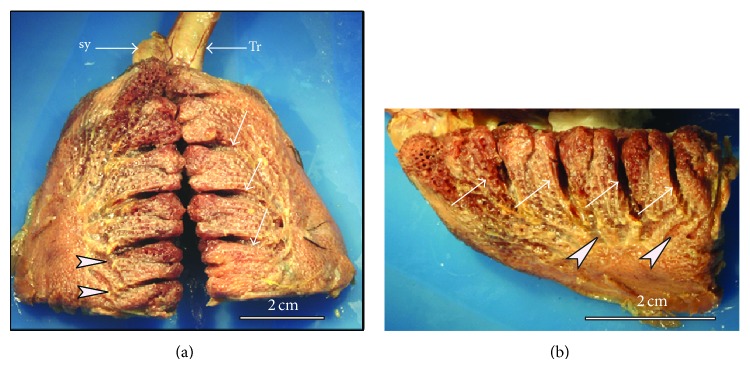
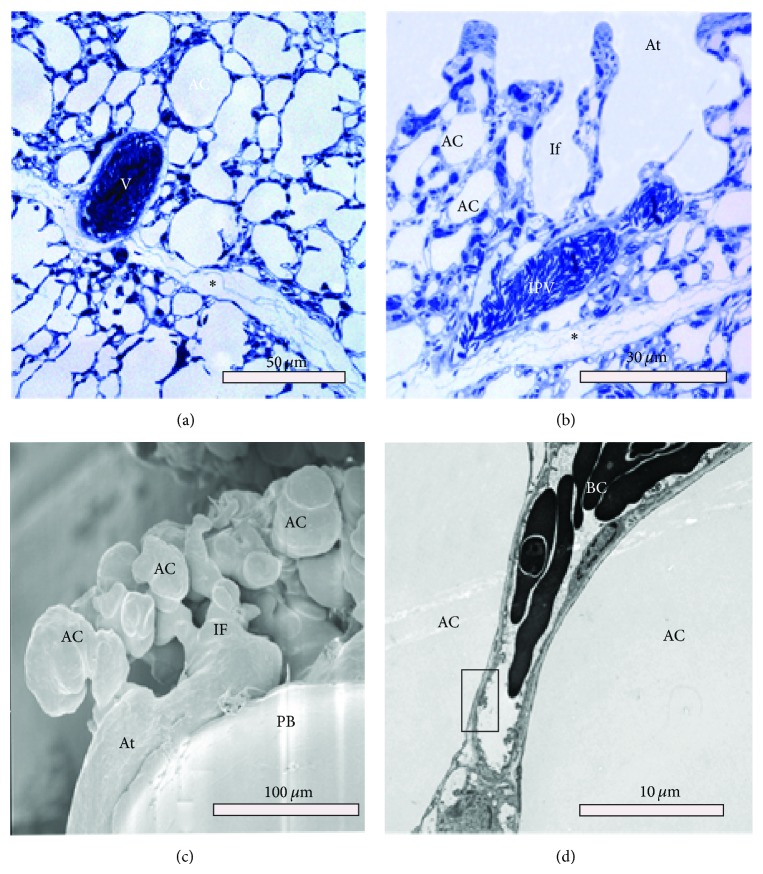
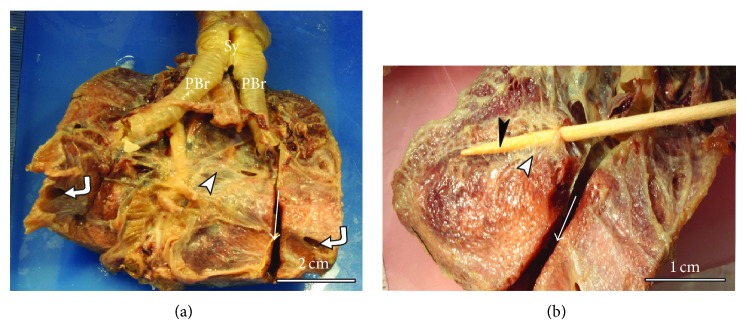
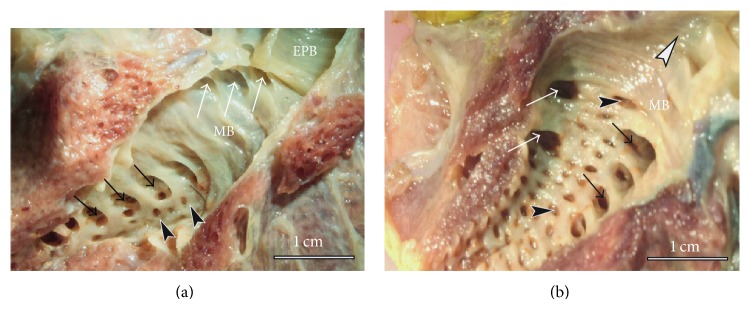
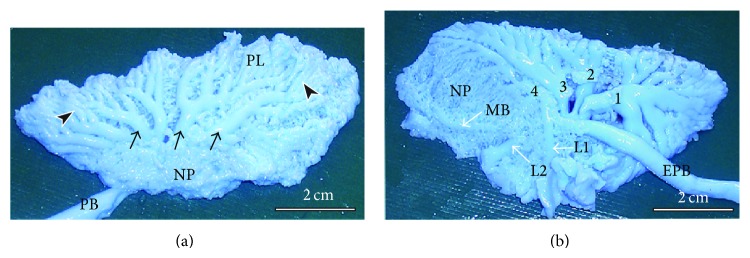
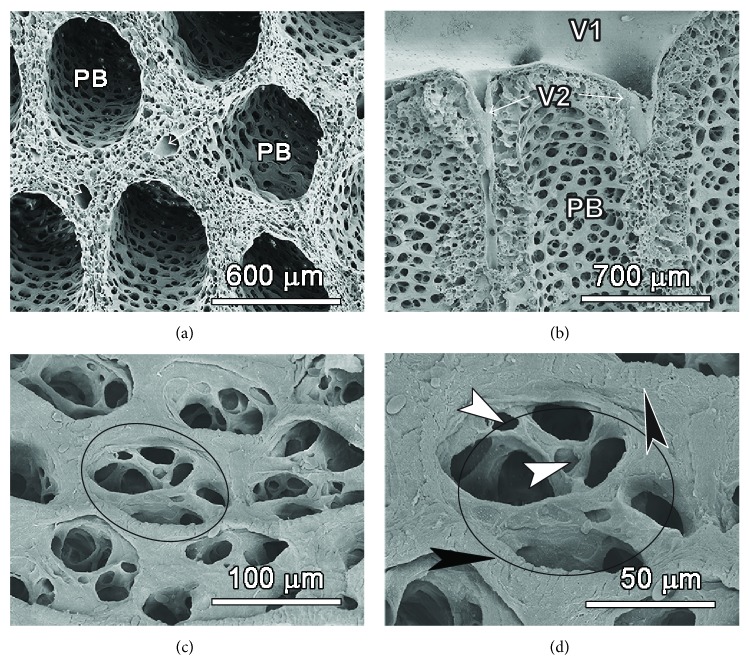
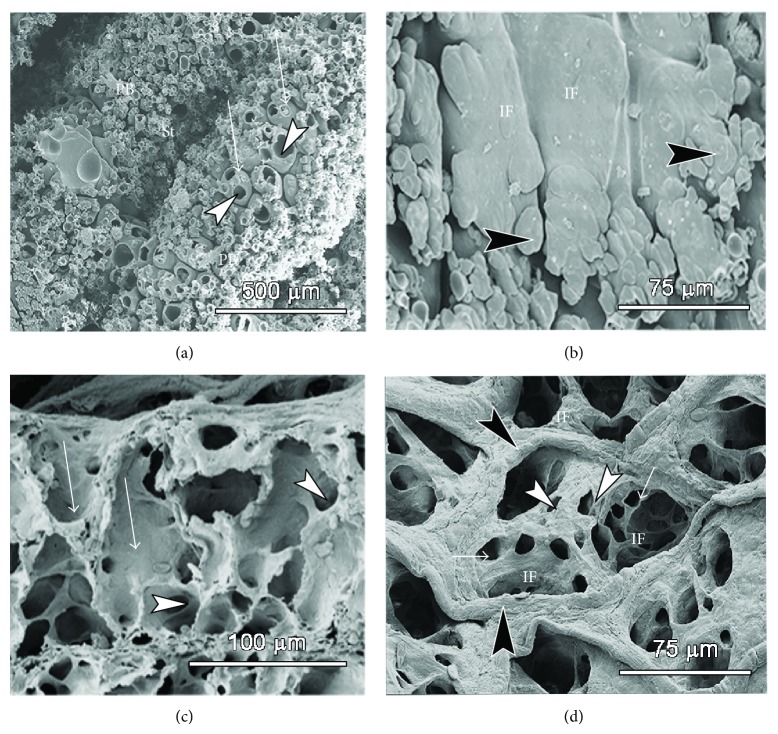
The anatomy of the domestic duck lung was studied macroscopically, by casting and by light, transmission, and scanning electron microscopy. The lung had four categories of secondary bronchi (SB), namely, the medioventral (MV, 4-5), laterodorsal (LD, 6-10), lateroventral (LV, 2-4), and posterior secondary bronchi (PO, 36-44). The neopulmonic parabronchi formed an intricate feltwork on the ventral third of the lung and inosculated those from the other SB. The lung parenchyma was organized into cylindrical parabronchi separated by thin septa containing blood vessels. Atria were shallow and well-fortified by epithelial ridges reinforced by smooth muscle bundles and gave rise to 2-6 elongate infundibulae. Air capillaries arose either directly from the atria or from infundibulae and were tubular or globular in shape with thin interconnecting branches. The newly described spatial disposition of the conducting air conduits closely resembles that of the chicken. This remarkable similarity between the categories, numbers, and 3D arrangement of the SB in the duck and chicken points to a convergence in function-oriented design. To illuminate airflow dynamics in the avian lung, precise directions of airflow in the various categories of SB and parabronchi need to be characterized.
通过铸型、光学显微镜、透射电子显微镜和扫描电子显微镜对家鸭肺的解剖结构进行了宏观研究。肺有四类二级支气管(SB),即中腹支气管(MV,4 - 5条)、背外侧支气管(LD,6 - 10条)、腹外侧支气管(LV,2 - 4条)和后二级支气管(PO,36 - 44条)。新肺段支气管在肺腹侧三分之一处形成复杂的网状结构,并与其他二级支气管的支气管相互吻合。肺实质由被含血管的薄隔膜分隔的圆柱形支气管组成。心房浅,由平滑肌束加强的上皮嵴充分加固,并产生2 - 6个细长的漏斗部。气毛细血管直接起源于心房或漏斗部,呈管状或球状,有细的相互连接的分支。新描述的传导气道的空间布局与鸡的非常相似。鸭和鸡的二级支气管在类别、数量和三维排列上的这种显著相似性表明在功能导向设计上存在趋同现象。为了阐明鸟类肺中的气流动力学,需要确定各类二级支气管和支气管中气流的精确方向。