Yamaguchi Sayaka I, Ueki Arisa, Sugihara Eiji, Onishi Nobuyuki, Yaguchi Tomonori, Kawakami Yutaka, Horiuchi Keisuke, Morioka Hideo, Matsumoto Morio, Nakamura Masaya, Muto Akihiro, Toyama Yoshiaki, Saya Hideyuki, Shimizu Takatsune
Division of Gene Regulation, Institute for Advanced Medical Research (IAMR), Keio University School of Medicine, Tokyo, Japan.
Department of Orthopaedic Surgery, Keio University School of Medicine, Tokyo, Japan.
Cancer Sci. 2015 Jul;106(7):875-82. doi: 10.1111/cas.12686. Epub 2015 May 26.
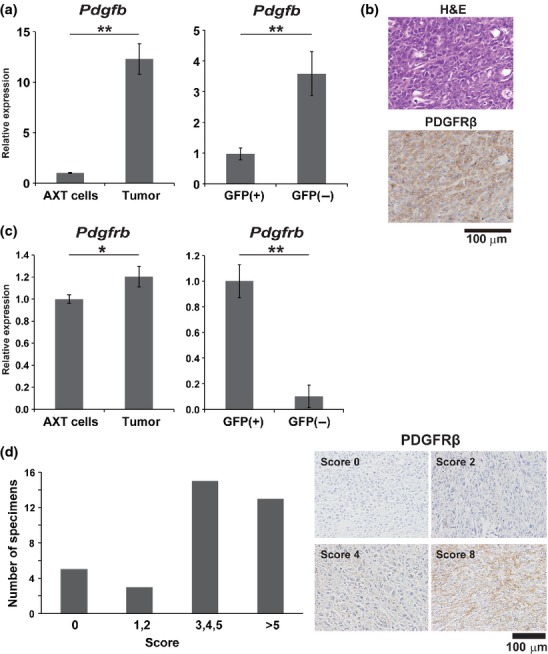
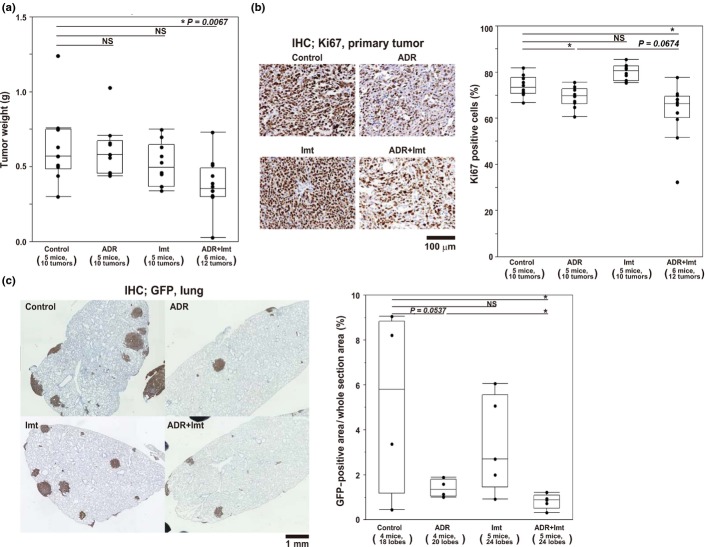
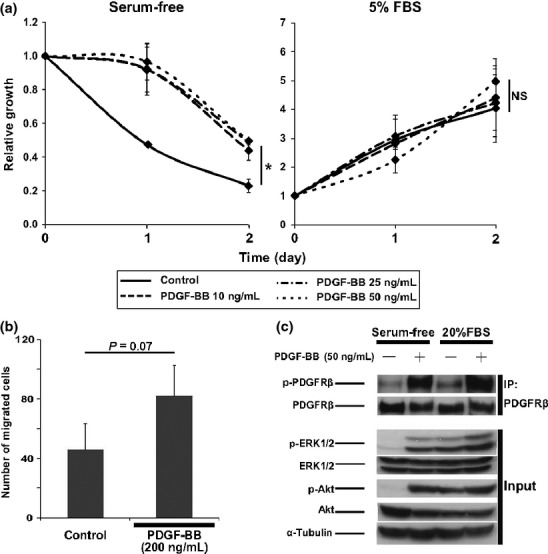
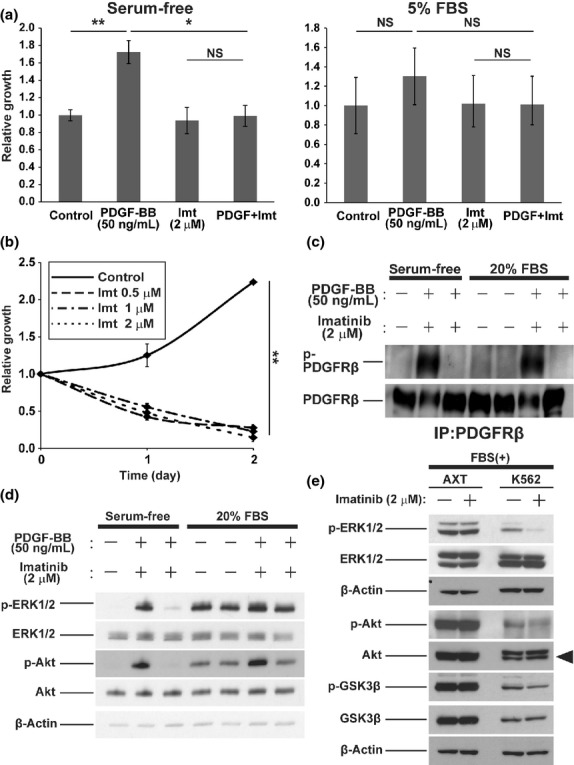
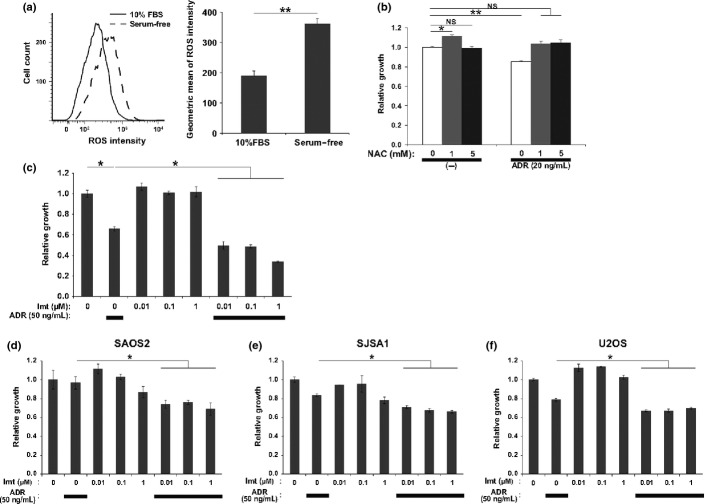
Osteosarcoma (OS) is the most frequent primary solid malignant tumor of bone. Its prognosis remains poor in the substantial proportion of patients who do not respond to chemotherapy and novel therapeutic options are therefore needed. We previously established a mouse model that mimics the aggressive behavior of human OS. Enzyme-linked immunosorbent assay-based screening of such mouse tumor lysates identified platelet-derived growth factor-BB (PDGF-BB) as an abundant soluble factor, the gene for which was expressed dominantly in surrounding non-malignant cells of the tumor, whereas that for the cognate receptor (PDGF receptor β) was highly expressed in OS cells. Platelet-derived growth factor-BB induced activation of both MEK-ERK and phosphatidylinositol 3-kinase-protein kinase B signaling pathways and promoted survival in OS cells deprived of serum, and these effects were blocked by the PDGF receptor inhibitor imatinib. However, these actions of PDGF-BB and imatinib were mostly masked in the presence of serum. Whereas imatinib alone did not manifest an antitumor effect in mice harboring OS tumors, combined treatment with imatinib and adriamycin exerted a synergistic antiproliferative effect on OS cells in vivo. These results suggest that treatment of OS with imatinib is effective only when cell survival is dependent on PDGF signaling or when imatinib is combined with another therapeutic intervention that renders the tumor cells susceptible to imatinib action, such as by inducing cellular stress.
骨肉瘤(OS)是最常见的原发性骨实体恶性肿瘤。在相当一部分对化疗无反应的患者中,其预后仍然很差,因此需要新的治疗选择。我们之前建立了一种模拟人类OS侵袭性的小鼠模型。基于酶联免疫吸附测定法对这种小鼠肿瘤裂解物进行筛选,确定血小板衍生生长因子-BB(PDGF-BB)是一种丰富的可溶性因子,其基因在肿瘤周围的非恶性细胞中占主导地位表达,而同源受体(PDGF受体β)的基因在OS细胞中高表达。血小板衍生生长因子-BB诱导MEK-ERK和磷脂酰肌醇3激酶-蛋白激酶B信号通路的激活,并促进血清剥夺的OS细胞的存活,而这些作用被PDGF受体抑制剂伊马替尼阻断。然而,在有血清存在的情况下,PDGF-BB和伊马替尼的这些作用大多被掩盖。虽然单独使用伊马替尼在患有OS肿瘤的小鼠中未表现出抗肿瘤作用,但伊马替尼与阿霉素联合治疗在体内对OS细胞发挥了协同抗增殖作用。这些结果表明,仅当细胞存活依赖于PDGF信号传导时,或当伊马替尼与另一种使肿瘤细胞对伊马替尼作用敏感的治疗干预措施(如诱导细胞应激)联合使用时,用伊马替尼治疗OS才有效。