Bauer B, Baumann M P O
Institute for Parasitology and Tropical Veterinary Medicine, Freie Universitaet Berlin, Robert-von-Ostertagstr. 7-13, Berlin, 14163, Germany,
Parasitol Res. 2015 Aug;114(8):2919-23. doi: 10.1007/s00436-015-4493-0. Epub 2015 May 6.
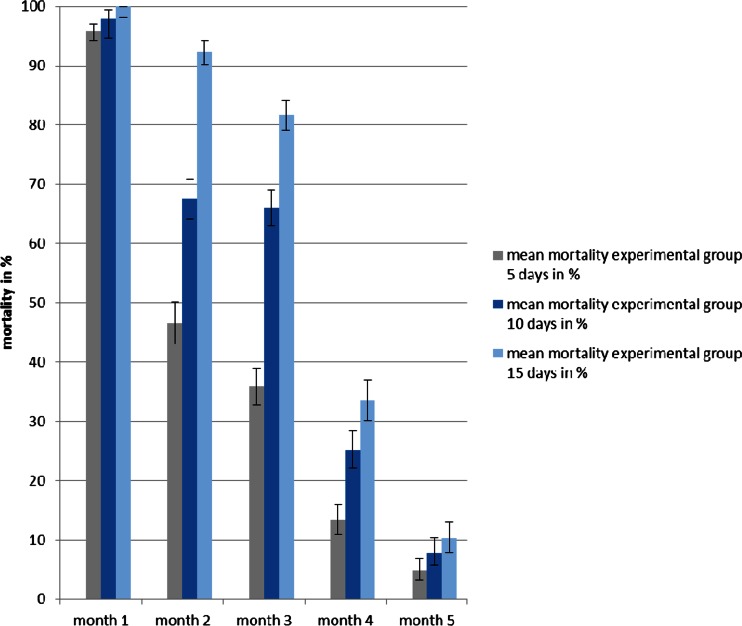
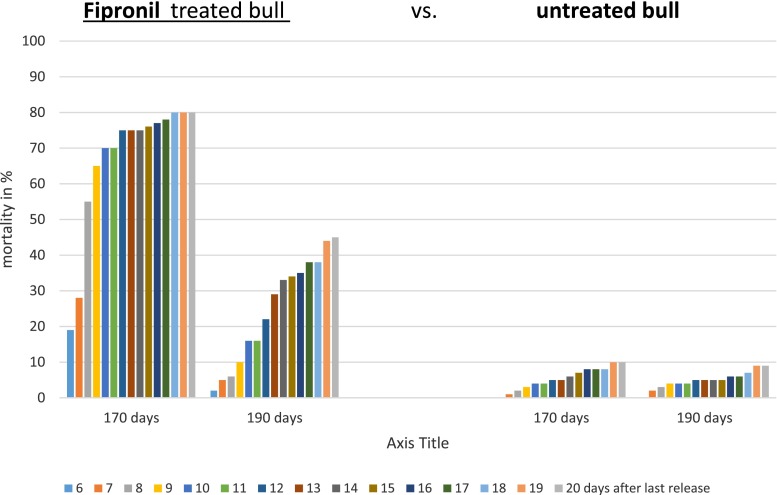
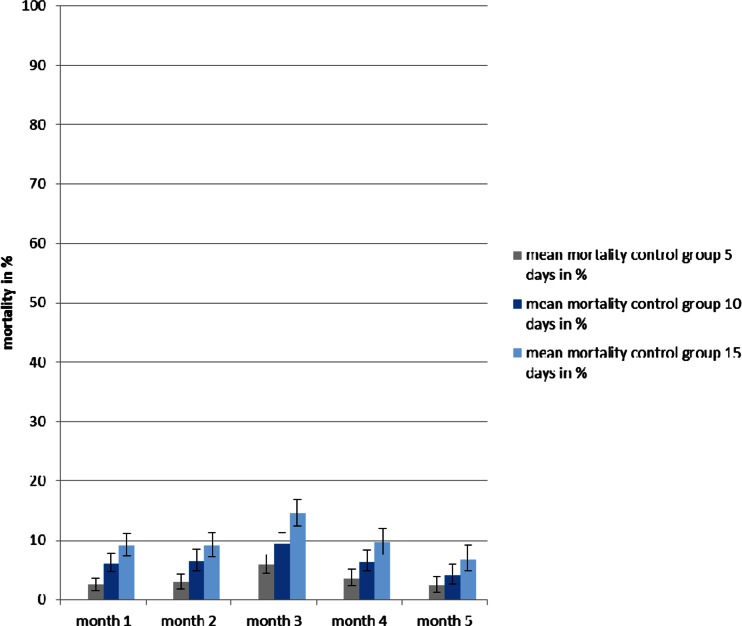
One zebu bull of 365 kg live weight was treated along the back line with 36 mL of fipronil as a pour-on formulation. Long-lasting mortalities of Glossina palpalis gambiensis were recorded despite exposure to sunlight and regular rinsing with 50 L of water during the following 5 months. Significantly higher mortalities were still observed even 140, 170 and 190 days after treatment following their triple releases or triple feeding of caged tsetse on the treated bull. Mortalities of 70, 80 and 44%, respectively, were recorded after 15 days of observation. This contrasted with the mortalities of control flies that were released in the presence of the untreated bull or fed in cages on the animal, amounting to 20 and twice 10% after 170 and 190 days. The feeding successes of the released or caged flies were higher than 95% and did not differ between control and experimental groups, indicating no repulsive or irritant effects of fipronil. The findings of this study are discussed, particularly in view of the potential of fipronil as an effective means for tsetse control.
一头体重365千克的瘤牛,在其背部用36毫升氟虫腈浇泼剂进行处理。尽管在接下来的5个月里暴露于阳光下且定期用50升水冲洗,但仍记录到冈比亚采采蝇的长期死亡率。在对处理后的公牛进行三次释放或三次用笼养采采蝇喂食后,即使在处理后140、170和190天,仍观察到显著更高的死亡率。观察15天后,死亡率分别为70%、80%和44%。这与在未处理的公牛面前释放的对照蝇或在笼中以该动物为食的对照蝇的死亡率形成对比,在170天和190天后,对照蝇的死亡率分别为20%和两倍的10%。释放或笼养的采采蝇的取食成功率高于95%,对照组和实验组之间没有差异,这表明氟虫腈没有驱避或刺激作用。本文对该研究结果进行了讨论,特别是考虑到氟虫腈作为采采蝇控制有效手段的潜力。