Sonego Martina, Oberoi Michelle, Stoddart Jake, Gajendra Sangeetha, Hendricusdottir Rita, Oozeer Fazal, Worth Daniel C, Hobbs Carl, Eickholt Britta J, Gordon-Weeks Phillip R, Doherty Patrick, Lalli Giovanna
Wolfson Centre for Age-Related Diseases, King's College London, London, United Kingdom.
Department of Anatomy and Neurobiology, University of California Irvine, Irvine, California, United States of America.
PLoS One. 2015 May 6;10(5):e0126478. doi: 10.1371/journal.pone.0126478. eCollection 2015.
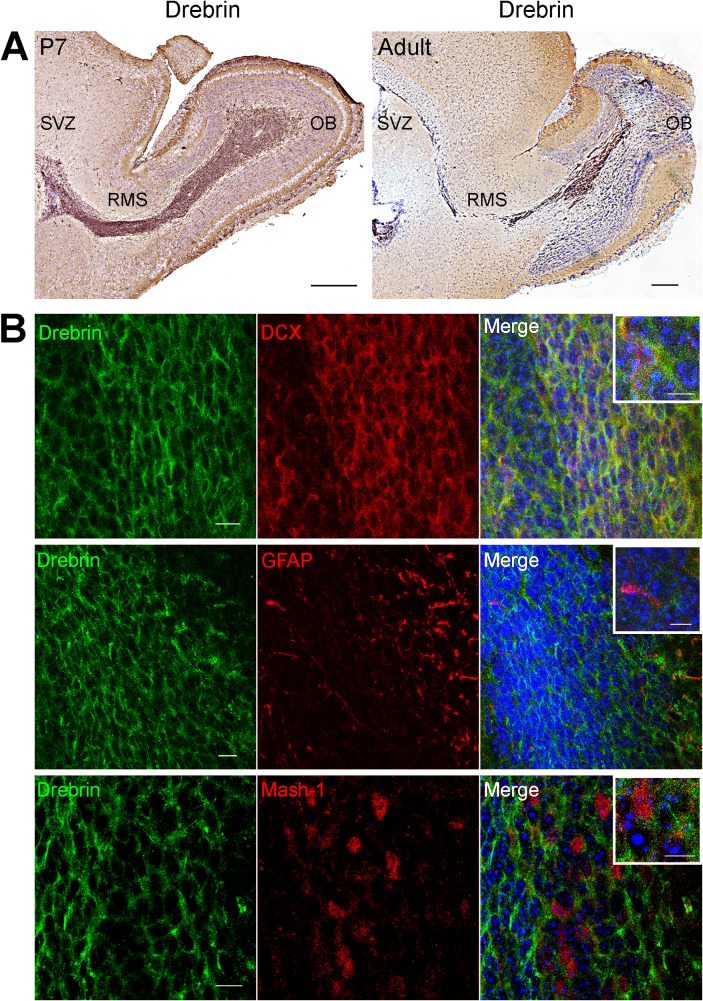
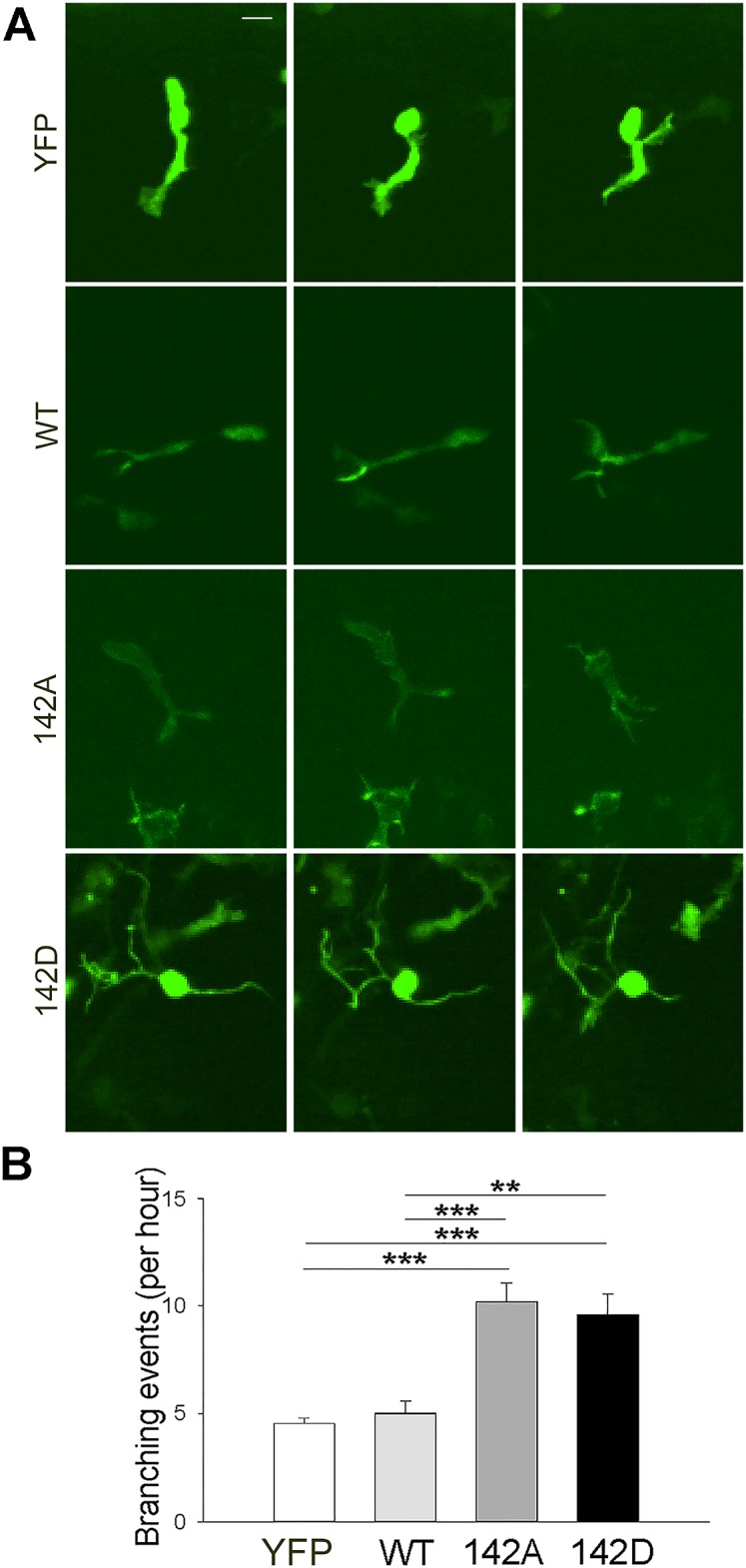
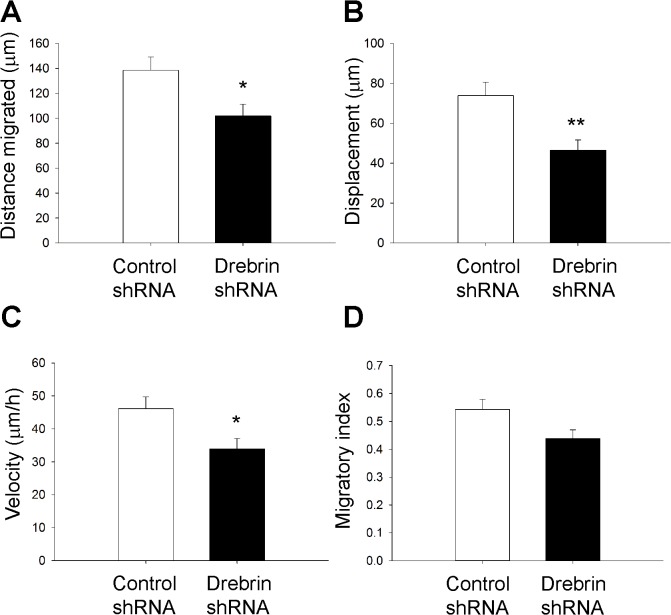
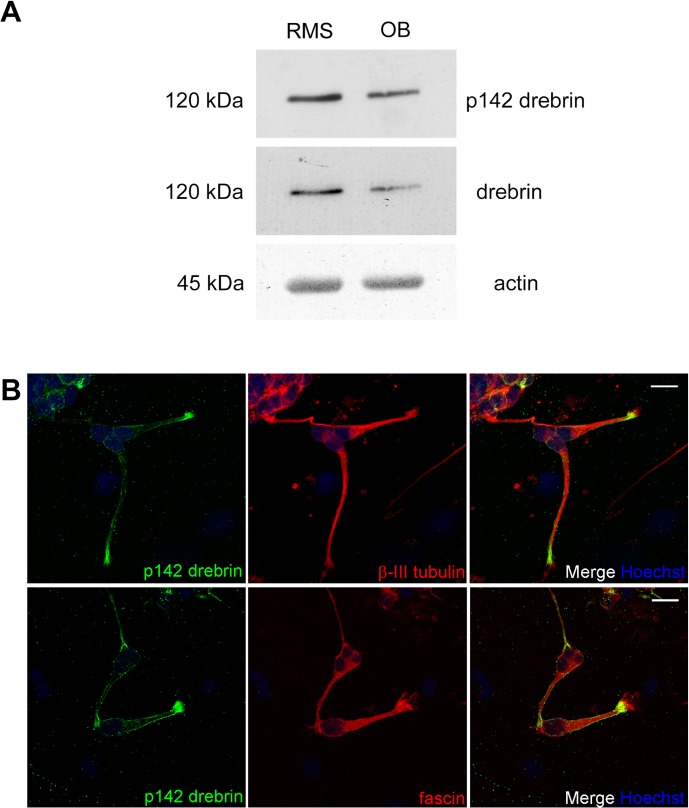
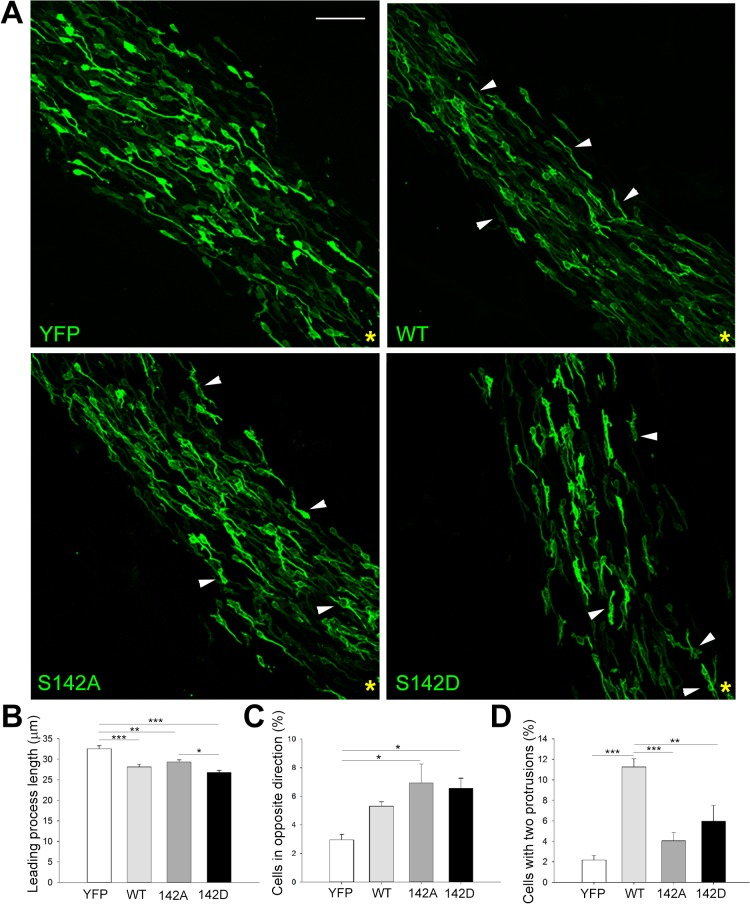
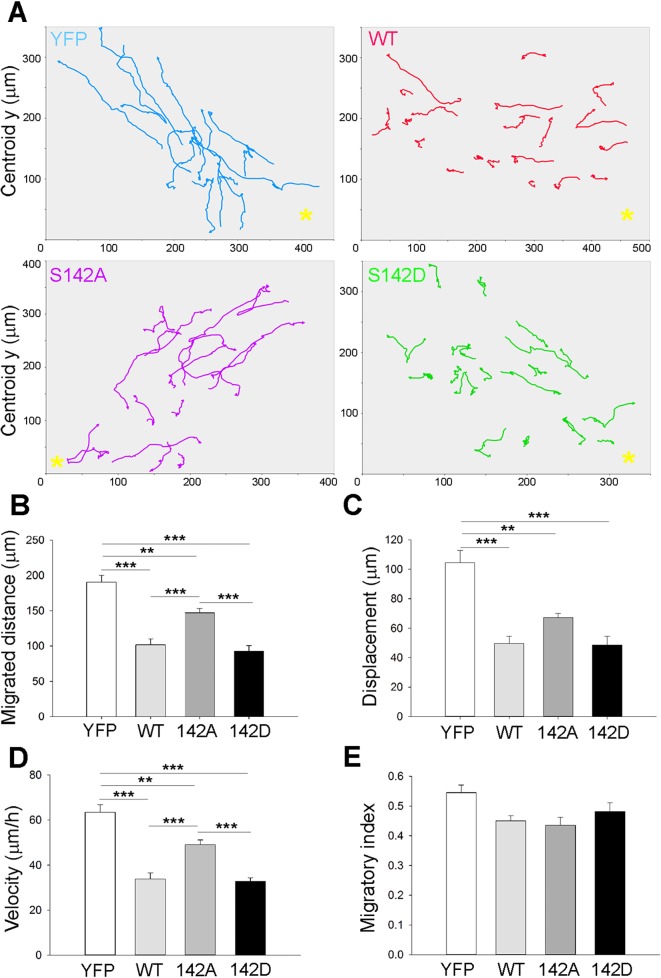
After birth, stem cells in the subventricular zone (SVZ) generate neuroblasts that migrate along the rostral migratory stream (RMS) to become interneurons in the olfactory bulb (OB). This migration is crucial for the proper integration of newborn neurons in a pre-existing synaptic network and is believed to play a key role in infant human brain development. Many regulators of neuroblast migration have been identified; however, still very little is known about the intracellular molecular mechanisms controlling this process. Here, we have investigated the function of drebrin, an actin-binding protein highly expressed in the RMS of the postnatal mammalian brain. Neuroblast migration was monitored both in culture and in brain slices obtained from electroporated mice by time-lapse spinning disk confocal microscopy. Depletion of drebrin using distinct RNAi approaches in early postnatal mice affects neuroblast morphology and impairs neuroblast migration and orientation in vitro and in vivo. Overexpression of drebrin also impairs migration along the RMS and affects the distribution of neuroblasts at their final destination, the OB. Drebrin phosphorylation on Ser142 by Cyclin-dependent kinase 5 (Cdk5) has been recently shown to regulate F-actin-microtubule coupling in neuronal growth cones. We also investigated the functional significance of this phosphorylation in RMS neuroblasts using in vivo postnatal electroporation of phosphomimetic (S142D) or non-phosphorylatable (S142A) drebrin in the SVZ of mouse pups. Preventing or mimicking phosphorylation of S142 in vivo caused similar effects on neuroblast dynamics, leading to aberrant neuroblast branching. We conclude that drebrin is necessary for efficient migration of SVZ-derived neuroblasts and propose that regulated phosphorylation of drebrin on S142 maintains leading process stability for polarized migration along the RMS, thus ensuring proper neurogenesis.
出生后,脑室下区(SVZ)的干细胞产生神经母细胞,这些神经母细胞沿着吻侧迁移流(RMS)迁移,最终在嗅球(OB)中成为中间神经元。这种迁移对于新生神经元在预先存在的突触网络中的正确整合至关重要,并且被认为在婴儿人类大脑发育中起关键作用。许多神经母细胞迁移的调节因子已被确定;然而,对于控制这一过程的细胞内分子机制仍知之甚少。在这里,我们研究了肌动蛋白结合蛋白drebrin的功能,该蛋白在出生后哺乳动物大脑的RMS中高度表达。通过延时旋转盘共聚焦显微镜,在培养物和从电穿孔小鼠获得的脑片中监测神经母细胞的迁移。在出生后早期小鼠中使用不同的RNAi方法耗尽drebrin会影响神经母细胞的形态,并损害体外和体内神经母细胞的迁移和定向。drebrin的过表达也会损害沿RMS的迁移,并影响神经母细胞在其最终目的地OB的分布。最近发现,细胞周期蛋白依赖性激酶5(Cdk5)使drebrin的Ser142位点磷酸化,从而调节神经元生长锥中的F-肌动蛋白-微管偶联。我们还使用磷酸模拟物(S142D)或不可磷酸化(S142A)的drebrin对小鼠幼崽的SVZ进行体内出生后电穿孔,研究了这种磷酸化在RMS神经母细胞中的功能意义。在体内阻止或模拟S142的磷酸化对神经母细胞动力学产生类似影响,导致神经母细胞分支异常。我们得出结论,drebrin是SVZ衍生的神经母细胞有效迁移所必需的,并提出drebrin在S142位点的磷酸化调节维持了沿RMS极化迁移的领先过程稳定性,从而确保了正常的神经发生。