Liu Gaojie, Zhu Jie, Yu Menglei, Cai Canfeng, Zhou Yu, Yu Min, Fu Zhiqiang, Gong Yuanfeng, Yang Bin, Li Yingru, Zhou Quanbo, Lin Qin, Ye Huilin, Ye Liangtao, Zhao Xiaohui, Li Zhihua, Chen Rufu, Han Fanghai, Tang Chaoming, Zeng Bing
Department of Gastrointestinal Surgery, Sun Yat-sen Memorial Hospital of Sun Yat-sen University, Guangzhou, 510120, China.
Key Laboratory of Malignant Tumor Gene Regulation and Target Therapy of Guangdong Higher Education Institutes, Sun Yat-sen Memorial Hospital of Sun Yat-sen University, Guangzhou, 510120, China.
J Transl Med. 2015 May 7;13:144. doi: 10.1186/s12967-015-0500-6.
Glutamate dehydrogenase (GDH) is a key enzyme that catalyzes the final reaction of the glutamine metabolic pathway, and has been reported implicated in tumor growth and metastasis. However, it's clinical significance and role in colorectal cancer (CRC) pathogenesis is largely unknown.
The expression of GDH was determined by qPCR, western blot and immunohistochemistry in CRC cells and samples. The correlation of GDH expression with clinicopathologic features and prognosis was analyzed. The functional role of GDH in CRC cell proliferation, motility and metastasis was evaluated.
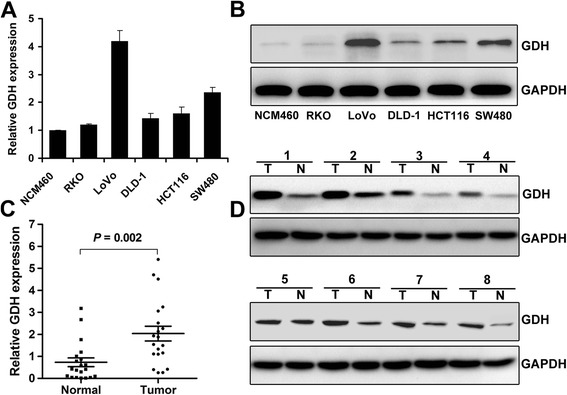
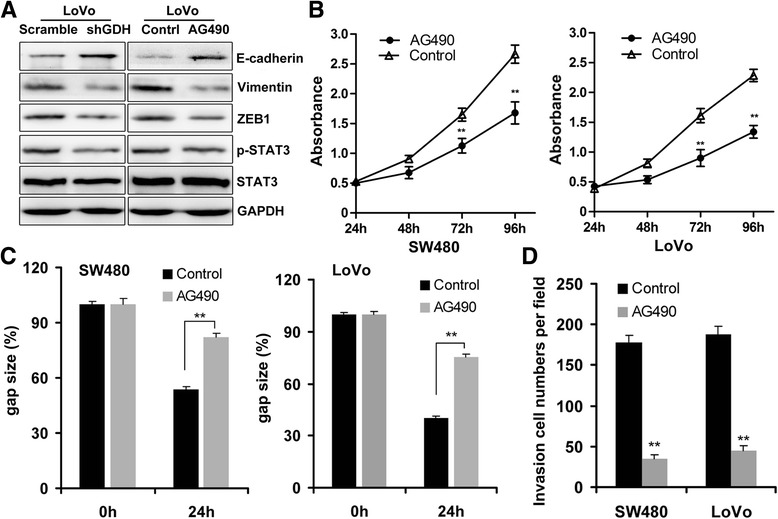
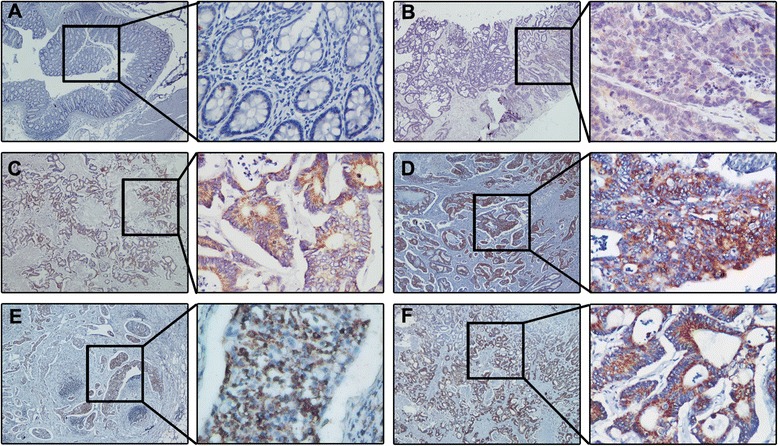
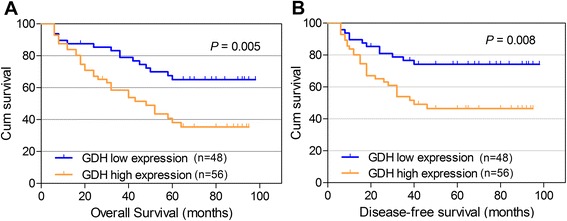
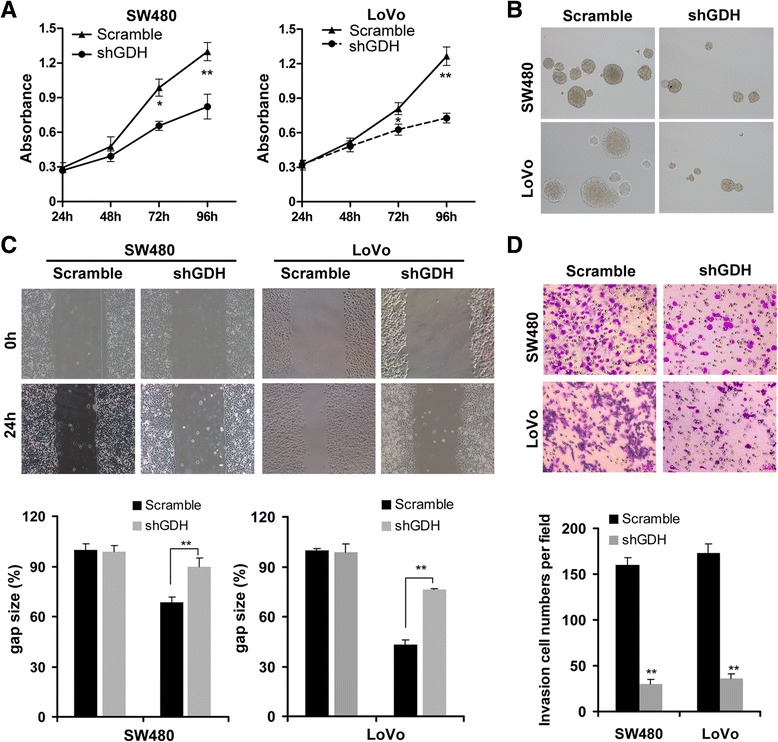
We found that GDH was up-regulated both in colorectal cancer and metastatic lesions (n = 104). Patients with high GDH expression had poorer overall survival (HR 2.32; 95% CI 1.26-4.26; P = 0.007) and poorer disease-free survival rates (HR 2.48; 95% CI 1.25-4.92; P = 0.009) than those with low GDH expression. Furthermore, we showed that GDH expression was an independent prognostic factor for CRC. In addition, over-expression of GDH promoted cell proliferation, migration and invasion in vitro, whereas loss function of GDH did the opposite. Finally, we demonstrated that the promotion of CRC progression by GDH correlated with activation of STAT3 mediated epithelial-mesenchymal transition (EMT) induction.
These results indicate that GDH plays a critical role in CRC progression, and may provide a novel metabolism therapeutic target for CRC treatment.
谷氨酸脱氢酶(GDH)是催化谷氨酰胺代谢途径最终反应的关键酶,已有报道称其与肿瘤生长和转移有关。然而,其在结直肠癌(CRC)发病机制中的临床意义和作用尚不清楚。
采用qPCR、蛋白质免疫印迹和免疫组织化学方法检测CRC细胞和样本中GDH的表达。分析GDH表达与临床病理特征及预后的相关性。评估GDH在CRC细胞增殖、运动和转移中的功能作用。
我们发现GDH在结直肠癌和转移灶中均上调(n = 104)。与低GDH表达患者相比,高GDH表达患者的总生存期较差(HR 2.32;95%CI 1.26 - 4.26;P = 0.007),无病生存率也较差(HR 2.48;95%CI 1.25 - 4.92;P = 0.009)。此外,我们表明GDH表达是CRC的独立预后因素。此外,GDH的过表达促进体外细胞增殖、迁移和侵袭,而GDH功能缺失则产生相反的效果。最后,我们证明GDH对CRC进展的促进作用与激活STAT3介导的上皮-间质转化(EMT)诱导相关。
这些结果表明GDH在CRC进展中起关键作用,并可能为CRC治疗提供新的代谢治疗靶点。