Drake John M
Odum School of Ecology, University of Georgia, 140 E Green Street, Athens, GA 30602-2202, USA
J R Soc Interface. 2015 Jun 6;12(107). doi: 10.1098/rsif.2015.0086.
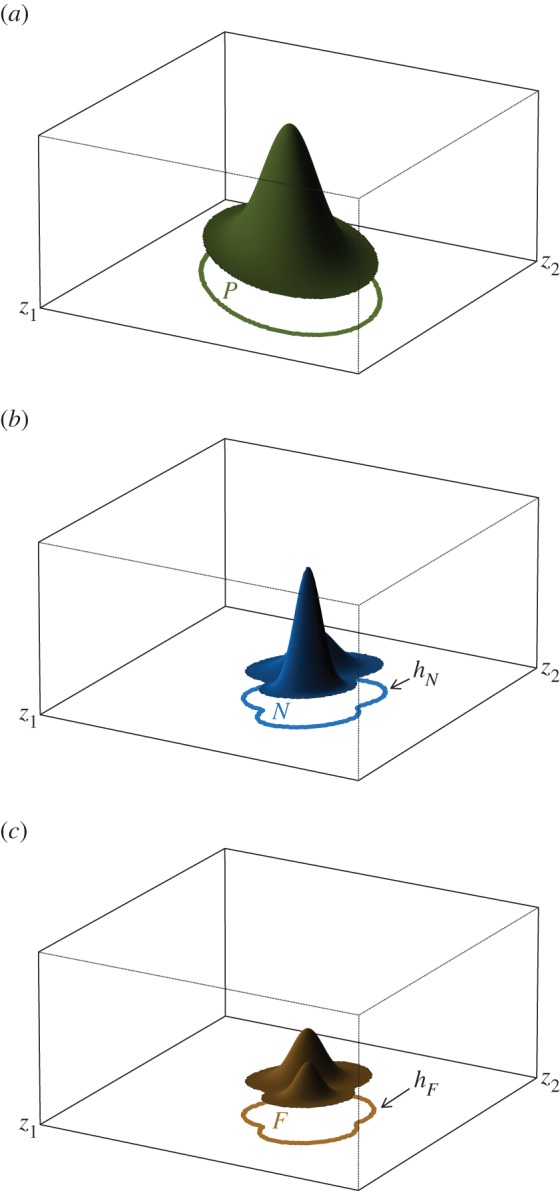
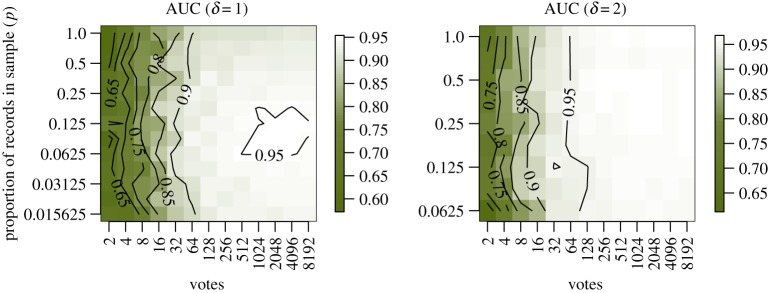
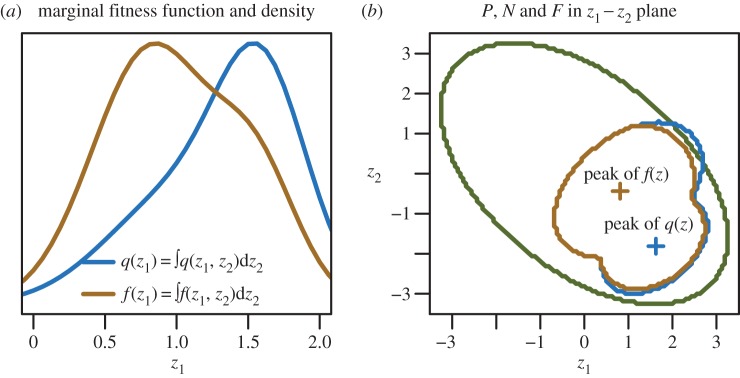
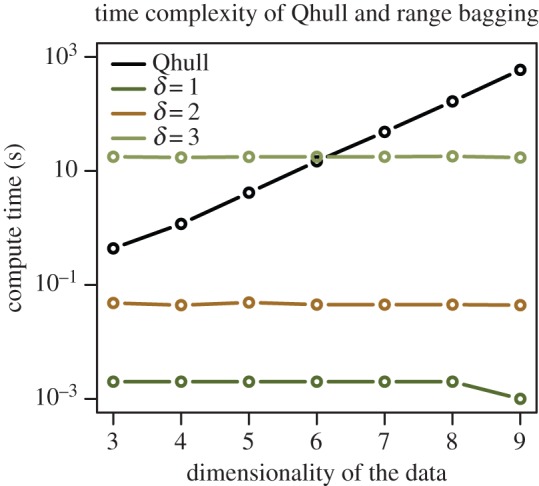
The ecological niche is the set of environments in which a population of a species can persist without introduction of individuals from other locations. A good mathematical or computational representation of the niche is a prerequisite to addressing many questions in ecology, biogeography, evolutionary biology and conservation. A particularly challenging question for ecological niche modelling is the problem of presence-only modelling. That is, can an ecological niche be identified from records drawn only from the set of niche environments without records from non-niche environments for comparison? Here, I introduce a new method for ecological niche modelling from presence-only data called range bagging. Range bagging draws on the concept of a species' environmental range, but was inspired by the empirical performance of ensemble learning algorithms in other areas of ecological research. This paper extends the concept of environmental range to multiple dimensions and shows that range bagging is computationally feasible even when the number of environmental dimensions is large. The target of the range bagging base learner is an environmental tolerance of the species in a projection of its niche and is therefore an ecologically interpretable property of a species' biological requirements. The computational complexity of range bagging is linear in the number of examples, which compares favourably with the main alternative, Qhull. In conclusion, range bagging appears to be a reasonable choice for niche modelling in applications in which a presence-only method is desired and may provide a solution to problems in other disciplines where one-class classification is required, such as outlier detection and concept learning.
生态位是指一个物种的种群能够在不引入其他地点个体的情况下持续生存的一组环境。对生态位进行良好的数学或计算表示是解决生态学、生物地理学、进化生物学和保护学中许多问题的先决条件。生态位建模中一个特别具有挑战性的问题是仅存在建模问题。也就是说,能否仅从生态位环境集合中的记录来识别生态位,而无需非生态位环境的记录进行比较?在此,我介绍一种用于从仅存在数据进行生态位建模的新方法,称为范围装袋法。范围装袋法借鉴了物种环境范围的概念,但受到生态研究其他领域中集成学习算法实证表现的启发。本文将环境范围的概念扩展到多个维度,并表明即使环境维度数量很大,范围装袋法在计算上也是可行的。范围装袋法基础学习器的目标是物种在其生态位投影中的环境耐受性,因此是物种生物学需求的一种生态学上可解释的属性。范围装袋法的计算复杂度与示例数量呈线性关系,与主要替代方法Qhull相比具有优势。总之,在需要仅存在方法的应用中,范围装袋法似乎是生态位建模的合理选择,并且可能为其他需要一类分类的学科中的问题提供解决方案,例如异常值检测和概念学习。