Ali Naushad, Chandrakesan Parthasarathy, Nguyen Charles B, Husain Sanam, Gillaspy Allison F, Huycke Mark, Berry William L, May Randal, Qu Dongfeng, Weygant Nathaniel, Sureban Sripathi M, Bronze Michael S, Dhanasekaran Danny N, Houchen Courtney W
Department of Internal Medicine, Section of Digestive Diseases and Nutrition, University of Oklahoma Health Sciences Center, Oklahoma, OK, USA.
Peggy and Charles Stephenson Cancer Center, University of Oklahoma Health Sciences Center, Oklahoma, OK, USA.
Oncotarget. 2015 Aug 21;6(24):20327-44. doi: 10.18632/oncotarget.3972.
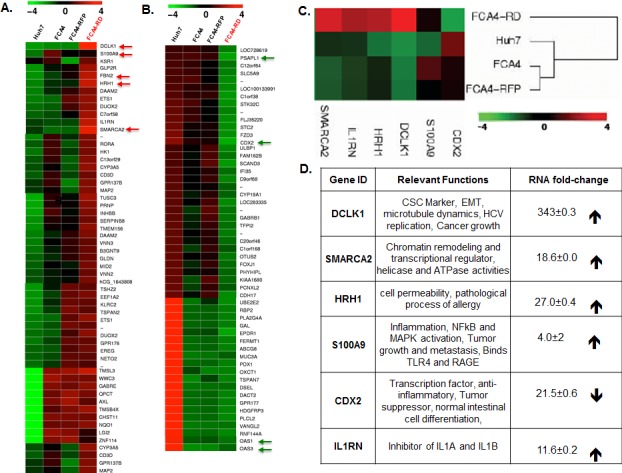
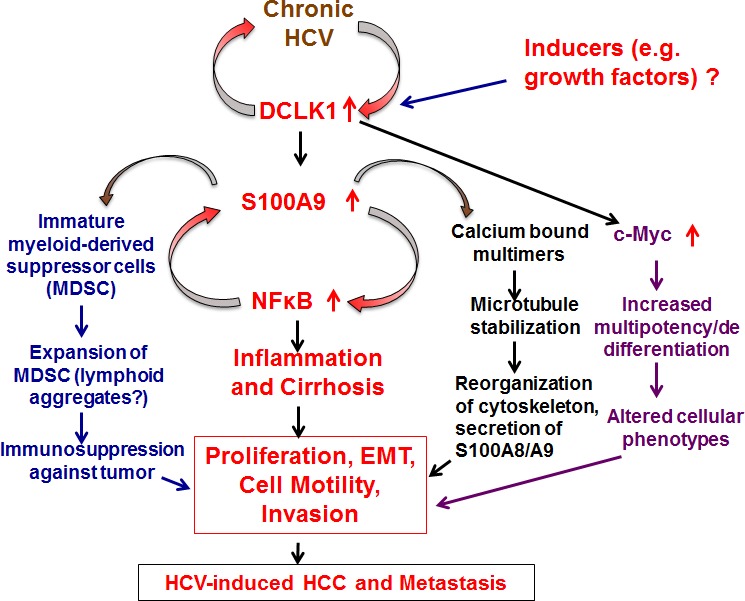
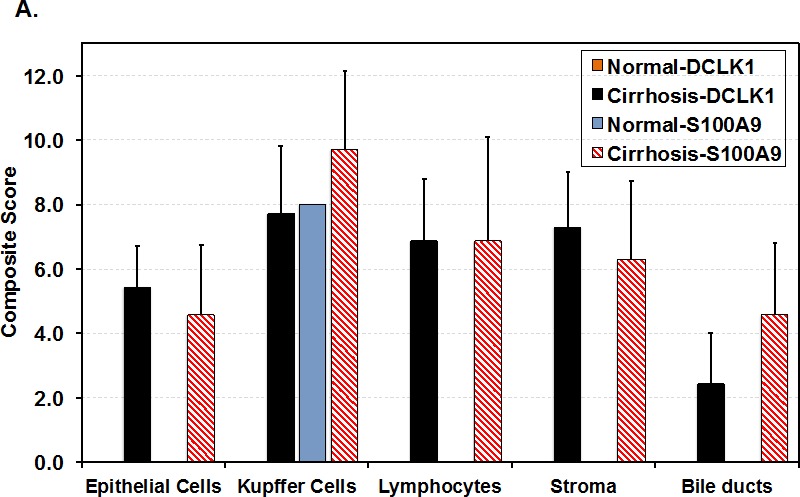
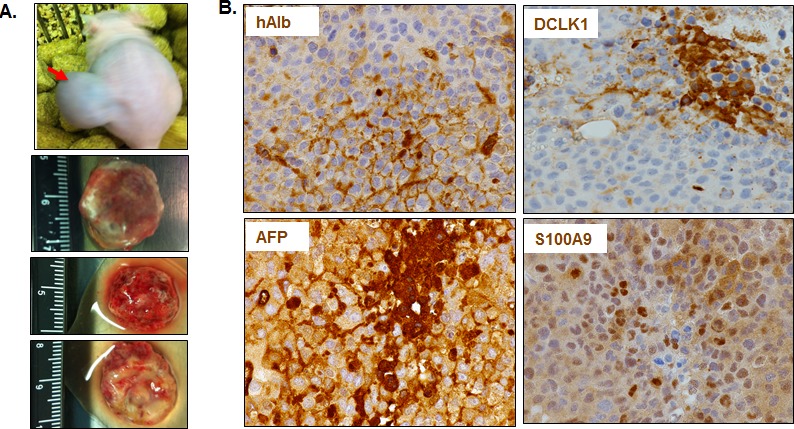
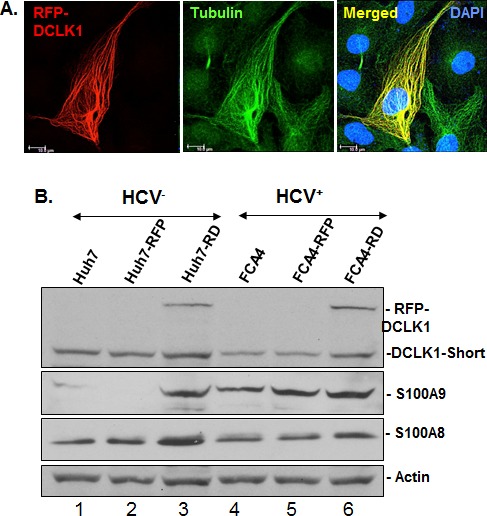
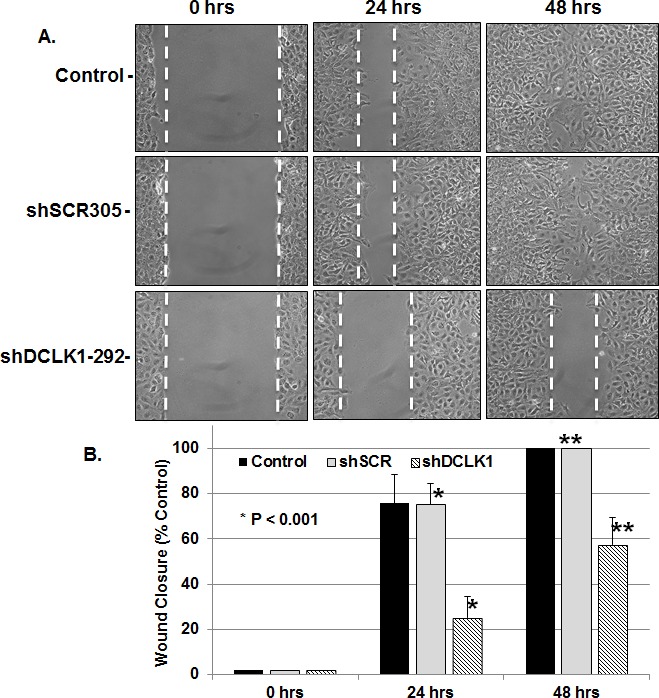
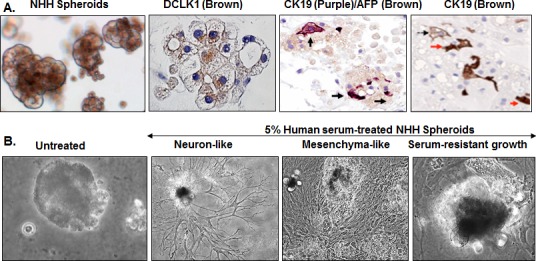
Hepatocellular carcinoma (HCC) is the third most common cause of cancer-related mortality worldwide. We previously showed that a tumor/cancer stem cell (CSC) marker, doublecortin-like kinase (DCLK1) positively regulates hepatitis C virus (HCV) replication, and promotes tumor growth in colon and pancreas. Here, we employed transcriptome analysis, RNA interference, tumor xenografts, patient's liver tissues and hepatospheroids to investigate DCLK1-regulated inflammation and tumorigenesis in the liver. Our studies unveiled novel DCLK1-controlled feed-forward signaling cascades involving calprotectin subunit S100A9 and NFκB activation as a driver of inflammation. Validation of transcriptome data suggests that DCLK1 co-expression with HCV induces BRM/SMARCA2 of SW1/SNF1 chromatin remodeling complexes. Frequently observed lymphoid aggregates including hepatic epithelial and stromal cells of internodular septa extensively express DCLK1 and S100A9. The DCLK1 overexpression also correlates with increased levels of S100A9, c-Myc, and BRM levels in HCV/HBV-positive patients with cirrhosis and HCC. DCLK1 silencing inhibits S100A9 expression and hepatoma cell migration. Normal human hepatocytes (NHH)-derived spheroids exhibit CSC properties. These results provide new insights into the molecular mechanism of the hepatitis B/C-virus induced liver inflammation and tumorigenesis via DCLK1-controlled networks. Thus, DCLK1 appears to be a novel therapeutic target for the treatment of inflammatory diseases and HCC.
肝细胞癌(HCC)是全球癌症相关死亡的第三大常见原因。我们之前表明,一种肿瘤/癌症干细胞(CSC)标志物,双皮质素样激酶(DCLK1)正向调节丙型肝炎病毒(HCV)复制,并促进结肠和胰腺中的肿瘤生长。在此,我们采用转录组分析、RNA干扰、肿瘤异种移植、患者肝脏组织和肝球来研究DCLK1在肝脏中调节的炎症和肿瘤发生。我们的研究揭示了涉及钙卫蛋白亚基S100A9和NFκB激活作为炎症驱动因素的新型DCLK1控制的前馈信号级联反应。转录组数据的验证表明,DCLK1与HCV共表达诱导SWI/SNF1染色质重塑复合物的BRM/SMARCA2。经常观察到的包括结节间间隔的肝上皮和基质细胞在内的淋巴样聚集物广泛表达DCLK1和S100A9。在患有肝硬化和HCC的HCV/HBV阳性患者中,DCLK过表达也与S100A9、c-Myc和BRM水平升高相关。DCLK1沉默抑制S100A9表达和肝癌细胞迁移。源自正常人肝细胞(NHH)的球状体表现出CSC特性。这些结果为乙型/丙型肝炎病毒通过DCLK1控制的网络诱导肝脏炎症和肿瘤发生的分子机制提供了新的见解。因此,DCLK1似乎是治疗炎症性疾病和HCC的新型治疗靶点。