van Wyk Michiel, Pielecka-Fortuna Justyna, Löwel Siegrid, Kleinlogel Sonja
Institute for Physiology, University of Bern, Bern, Switzerland; Institute for Animal Pathology, Vetsuisse Faculty, University of Bern, Bern, Switzerland.
Systems Neuroscience, Bernstein Fokus Neurotechnology and Johann-Friedrich-Blumenbach Institut für Zoologie und Anthropologie, Universität Göttingen, Von-Siebold-Str. 6, Göttingen, Germany.
PLoS Biol. 2015 May 7;13(5):e1002143. doi: 10.1371/journal.pbio.1002143. eCollection 2015 May.
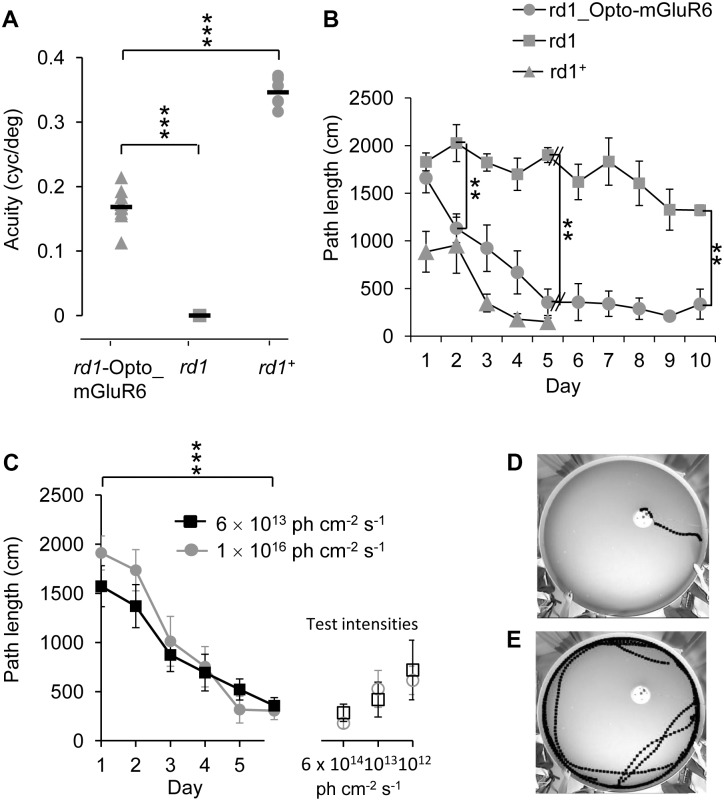
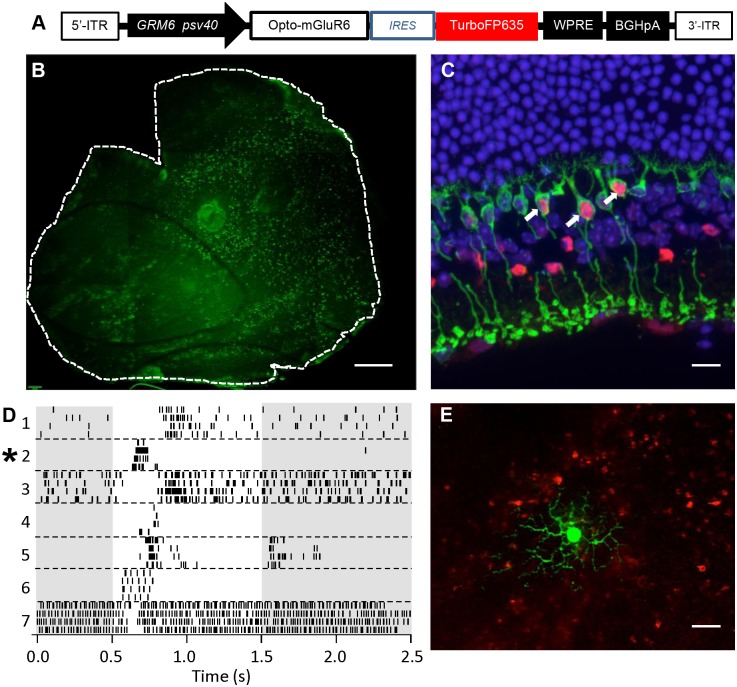
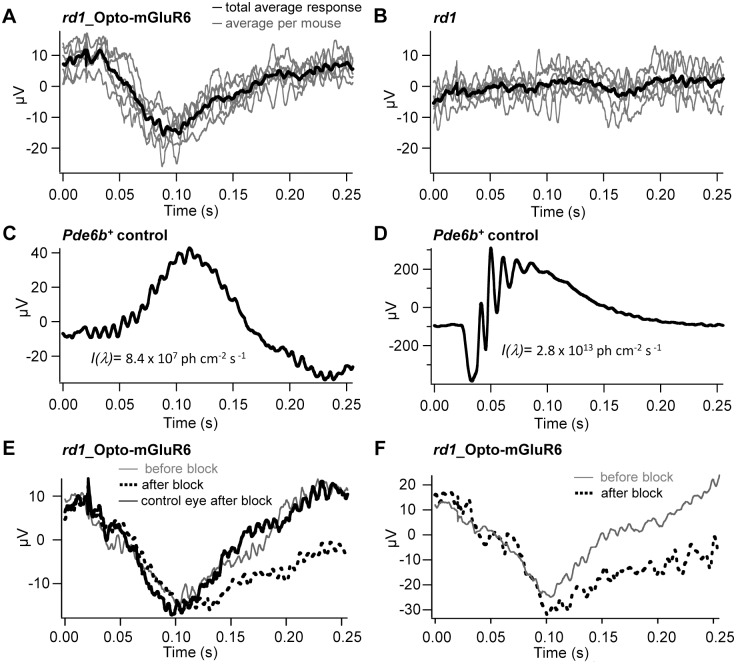
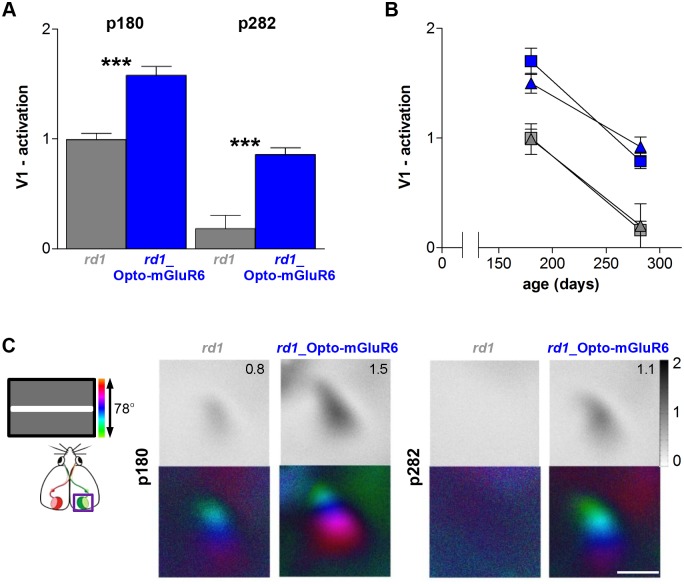
Photoreceptor degeneration is one of the most prevalent causes of blindness. Despite photoreceptor loss, the inner retina and central visual pathways remain intact over an extended time period, which has led to creative optogenetic approaches to restore light sensitivity in the surviving inner retina. The major drawbacks of all optogenetic tools recently developed and tested in mouse models are their low light sensitivity and lack of physiological compatibility. Here we introduce a next-generation optogenetic tool, Opto-mGluR6, designed for retinal ON-bipolar cells, which overcomes these limitations. We show that Opto-mGluR6, a chimeric protein consisting of the intracellular domains of the ON-bipolar cell-specific metabotropic glutamate receptor mGluR6 and the light-sensing domains of melanopsin, reliably recovers vision at the retinal, cortical, and behavioral levels under moderate daylight illumination.
光感受器退化是导致失明的最常见原因之一。尽管光感受器丧失,但在较长一段时间内,视网膜内层和中枢视觉通路仍保持完整,这促使人们采用创新性的光遗传学方法来恢复存活的视网膜内层的光敏感性。最近在小鼠模型中开发和测试的所有光遗传学工具的主要缺点是它们的光敏感性低且缺乏生理兼容性。在此,我们介绍一种为视网膜ON双极细胞设计的下一代光遗传学工具Opto-mGluR6,它克服了这些局限性。我们表明,Opto-mGluR6是一种嵌合蛋白,由ON双极细胞特异性代谢型谷氨酸受体mGluR6的细胞内结构域和黑视蛋白的光感应结构域组成,在适度的日光照射下,能在视网膜、皮层和行为水平可靠地恢复视觉。