Oh S Y, Lee S-J, Jung Y H, Lee H J, Han H J
Department of Veterinary Physiology, College of Veterinary Medicine, Research Institute for Veterinary Science, and BK21 PLUS Creative Veterinary Research Center, Seoul National University, Seoul, 151-741, Korea.
Cell Death Dis. 2015 May 7;6(5):e1750. doi: 10.1038/cddis.2015.114.
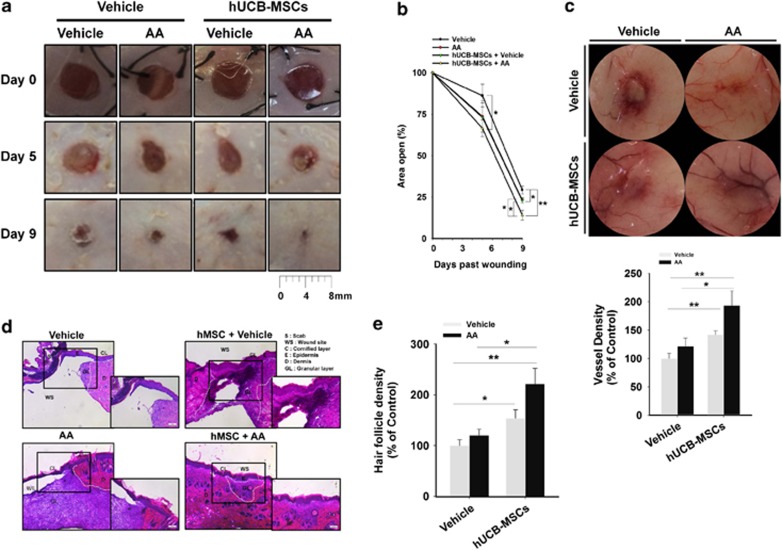
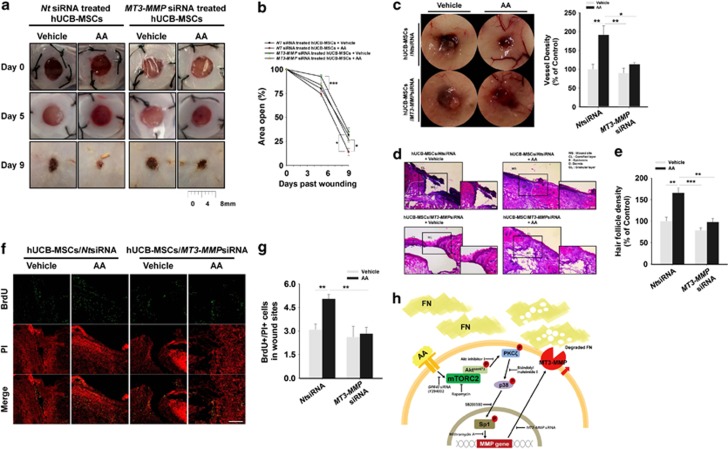
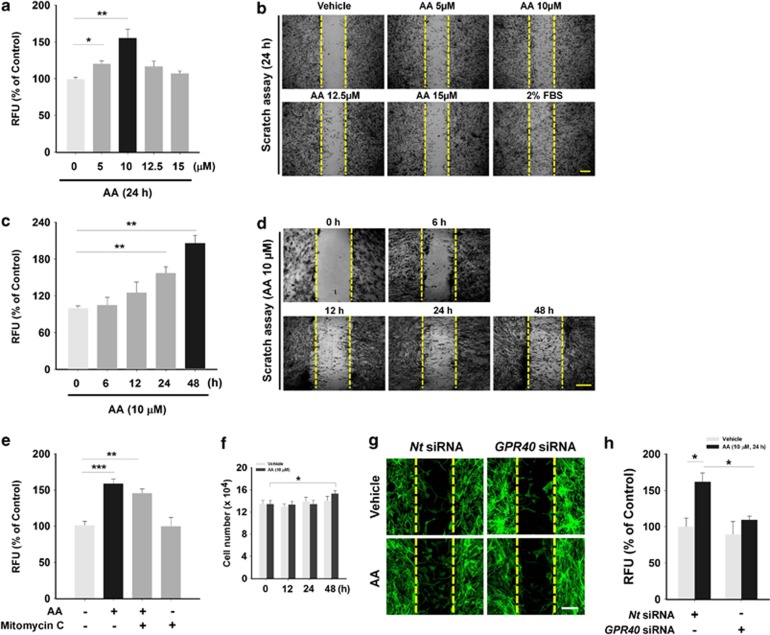
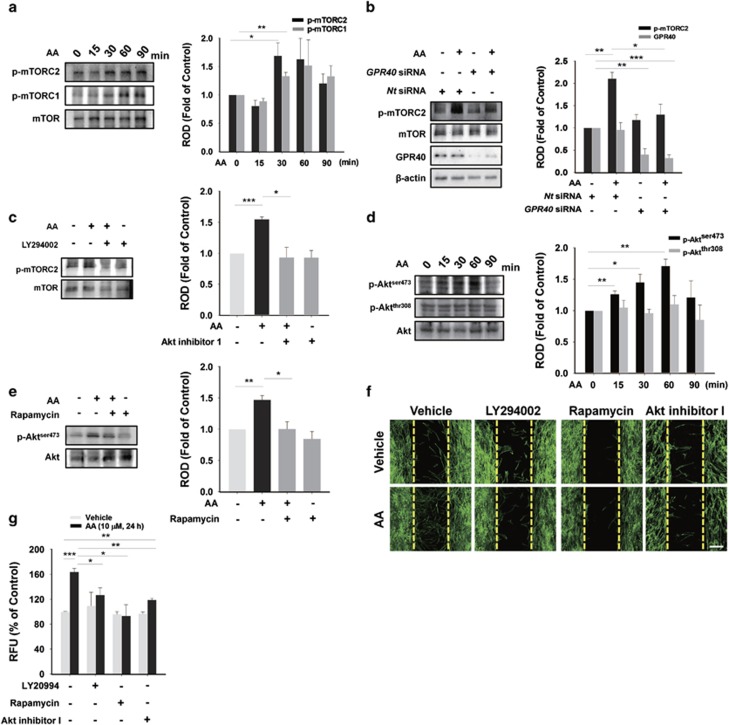
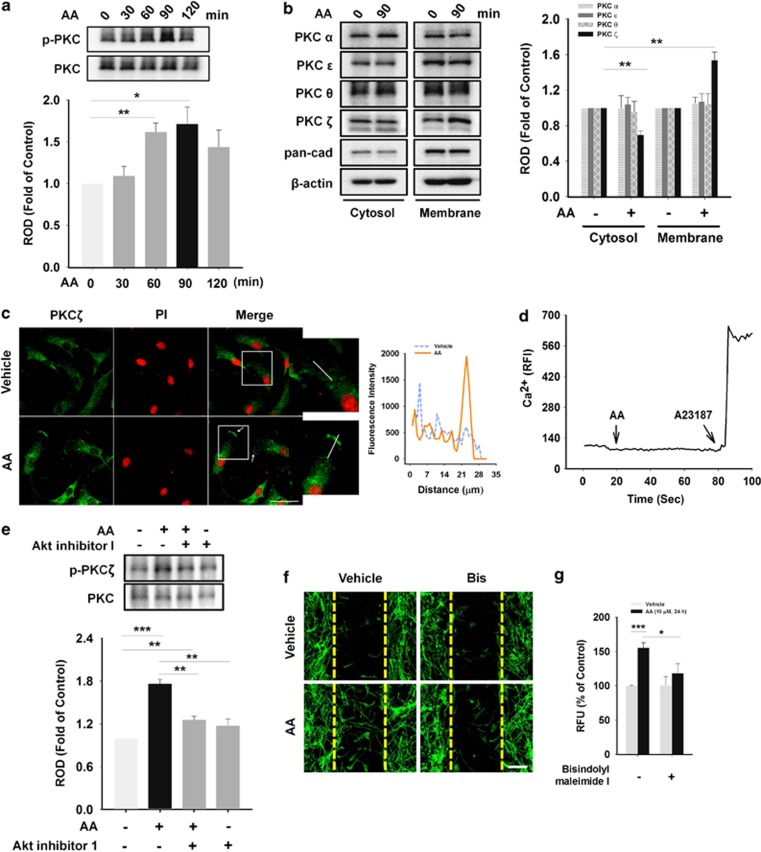
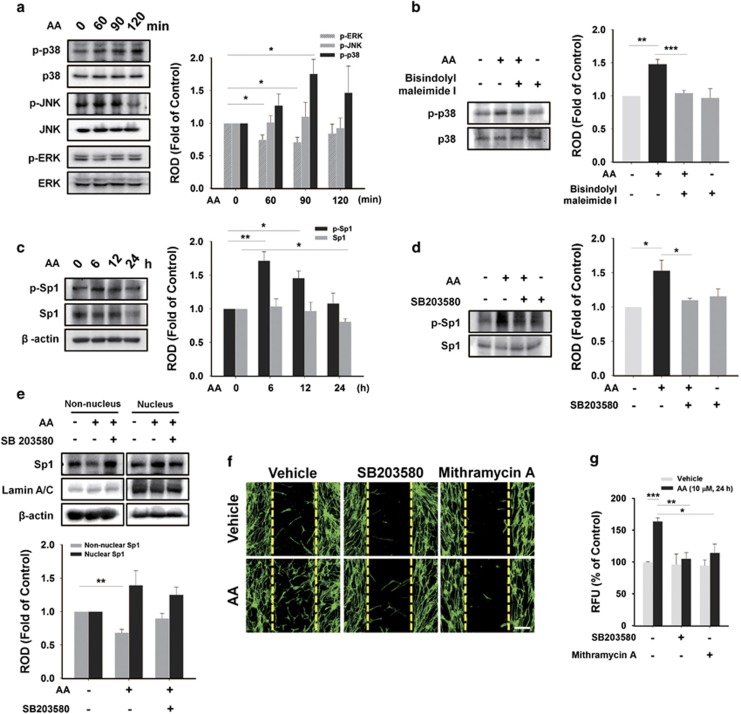
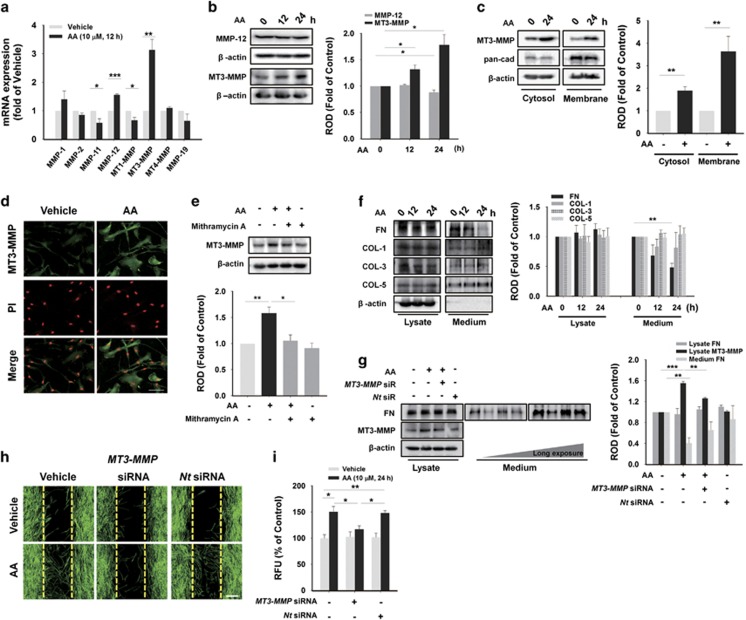
Arachidonic acid (AA) is largely released during injury, but it has not been fully studied yet how AA modulates wound repair with stem cells. Therefore, we investigated skin wound-healing effect of AA-stimulated human umbilical cord blood-derived mesenchymal stem cells (hUCB-MSCs) in vivo and its molecular mechanism in vitro. We found that transplantation of hUCB-MSCs pre-treated with AA enhanced wound filling, re-epithelization, and angiogenesis in a mouse skin excisional wound model. AA significantly promoted hUCB-MSCs migration after a 24 h incubation, which was inhibited by the knockdown of G-protein-coupled receptor 40 (GPR40). AA activated mammalian target of rapamycin complex 2 (mTORC2) and Aktser473 through the GPR40/phosphoinositide 3-kinase (PI3K) signaling, which was responsible for the stimulation of an atypical protein kinase C (PKC) isoform, PKCζ. Subsequently, AA stimulated phosphorylation of p38 MAPK and transcription factor Sp1, and induced membrane type 3-matrix metalloproteinase (MT3-MMP)-dependent fibronectin degradation in promoting hUCB-MSCs motility. Finally, the silencing of MT3-MMP in AA-stimulated hUCB-MSCs failed to promote the repair of skin wounds owing to impaired cell motility. In conclusion, AA enhances skin wound healing through induction of hUCB-MSCs motility by MT3-MMP-mediated fibronectin degradation, which relies on GPR40-dependent mTORC2 signaling pathways.
花生四烯酸(AA)在损伤过程中大量释放,但AA如何通过干细胞调节伤口修复尚未得到充分研究。因此,我们研究了AA刺激的人脐带血间充质干细胞(hUCB-MSCs)在体内的皮肤伤口愈合作用及其体外分子机制。我们发现,用AA预处理的hUCB-MSCs移植可增强小鼠皮肤切除伤口模型中的伤口填充、再上皮化和血管生成。孵育24小时后,AA显著促进hUCB-MSCs迁移,而G蛋白偶联受体40(GPR40)的敲低可抑制这种迁移。AA通过GPR40/磷酸肌醇3激酶(PI3K)信号激活雷帕霉素复合物2(mTORC2)的哺乳动物靶点和Aktser473,这负责刺激非典型蛋白激酶C(PKC)亚型PKCζ。随后,AA刺激p38丝裂原活化蛋白激酶(MAPK)和转录因子Sp1的磷酸化,并在促进hUCB-MSCs运动中诱导膜型3基质金属蛋白酶(MT3-MMP)依赖性纤连蛋白降解。最后,由于细胞运动受损,AA刺激的hUCB-MSCs中MT3-MMP的沉默未能促进皮肤伤口的修复。总之,AA通过MT3-MMP介导的纤连蛋白降解诱导hUCB-MSCs运动来增强皮肤伤口愈合,这依赖于GPR40依赖性mTORC2信号通路。