Drevin Jennifer, Stern Jenny, Annerbäck Eva-Maria, Peterson Magnus, Butler Stephen, Tydén Tanja, Berglund Anna, Larsson Margareta, Kristiansson Per
Department of Public Health and Caring Sciences, Uppsala University, Uppsala, Sweden.
Centre for Clinical Research Sörmland, Uppsala University, Eskilstuna, Sweden.
Acta Obstet Gynecol Scand. 2015 Aug;94(8):840-6. doi: 10.1111/aogs.12674. Epub 2015 Jun 3.
To investigate the association between adverse childhood experiences (ACE) and pain with onset during pregnancy.
Cross-sectional study.
Eighteen antenatal clinics in southern Mid-Sweden.
Of 293 women invited to participate, 232 (79%) women agreed to participate in early pregnancy and were assessed in late pregnancy.
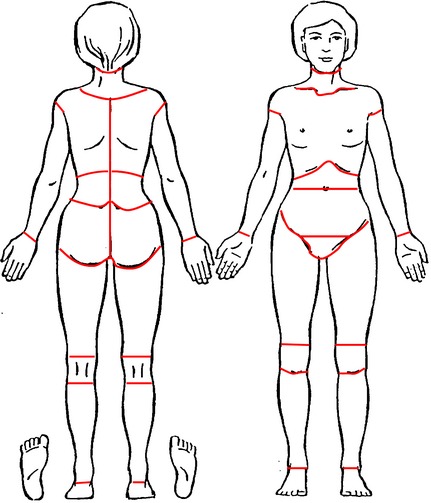
Questionnaires were distributed in early and late pregnancy. The questionnaires sought information on socio-demography, ACE, pain location by pain drawing and pain intensity by visual analogue scales. Distribution of pain was coded in 41 predetermined areas.
Pain in third trimester with onset during present pregnancy: intensity, location and number of pain locations.
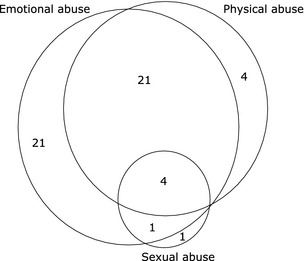
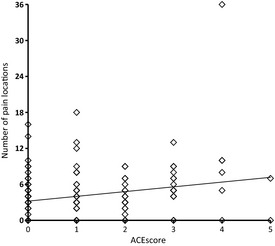
In late pregnancy, 62% of the women reported any ACE and 72% reported any pain location with onset during the present pregnancy. Among women reporting any ACE the median pain intensity was higher compared with women without such an experience (p = 0.01). The accumulated ACE displayed a positive association with the number of reported pain locations in late pregnancy (rs = 0.19, p = 0.02). This association remained significant after adjusting for background factors in multiple regression analysis (p = 0.01). When ACE was dichotomized the prevalence of pain did not differ between women with and without ACE. The subgroup of women reporting physical abuse as a child reported a higher prevalence of sacral and pelvic pain (p = 0.0003 and p = 0.02, respectively).
Adverse childhood experiences were associated with higher pain intensities and larger pain distributions in late pregnancy, which are risk factors for transition to chronic pain postpartum.
探讨童年不良经历(ACE)与孕期发作性疼痛之间的关联。
横断面研究。
瑞典中南部的18家产前诊所。
在受邀参与的293名女性中,232名(79%)女性同意在孕早期参与研究,并在孕晚期接受评估。
在孕早期和孕晚期发放问卷。问卷收集社会人口统计学、ACE、通过疼痛绘图确定的疼痛部位以及通过视觉模拟量表确定的疼痛强度等信息。疼痛分布在41个预先确定的区域进行编码。
本次孕期发作的孕晚期疼痛:强度、部位及疼痛部位数量。
在孕晚期,62%的女性报告有任何ACE,72%的女性报告有本次孕期发作的任何疼痛部位。在报告有任何ACE的女性中,与没有此类经历的女性相比,疼痛强度中位数更高(p = 0.01)。累积的ACE与孕晚期报告的疼痛部位数量呈正相关(rs = 0.19,p = 0.02)。在多元回归分析中调整背景因素后,这种关联仍然显著(p = 0.01)。当将ACE二分法分类时,有ACE和无ACE的女性疼痛患病率无差异。报告童年期遭受身体虐待的女性亚组中,骶骨和盆腔疼痛的患病率更高(分别为p = 0.0003和p = 0.02)。
童年不良经历与孕晚期更高的疼痛强度和更大的疼痛分布相关,而这是产后转变为慢性疼痛的危险因素。