Schumann Tim, Adhikary Till, Wortmann Annika, Finkernagel Florian, Lieber Sonja, Schnitzer Evelyn, Legrand Nathalie, Schober Yvonne, Nockher W Andreas, Toth Philipp M, Diederich Wibke E, Nist Andrea, Stiewe Thorsten, Wagner Uwe, Reinartz Silke, Müller-Brüsselbach Sabine, Müller Rolf
Institute of Molecular Biology and Tumor Research (IMT), Philipps University, Marburg, Germany.
Metabolomics Core Facility and Institute of Laboratory Medicine and Pathobiochemistry, Philipps University, Marburg, Germany.
Oncotarget. 2015 May 30;6(15):13416-33. doi: 10.18632/oncotarget.3826.
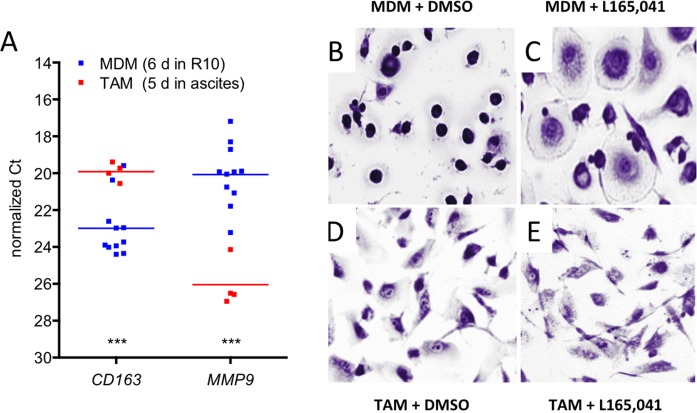
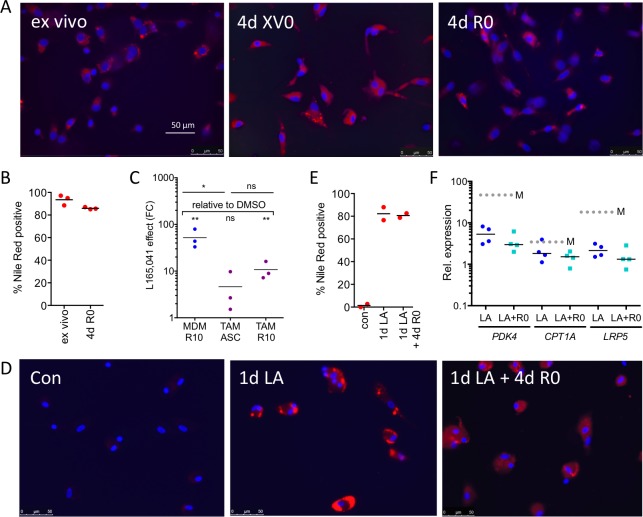
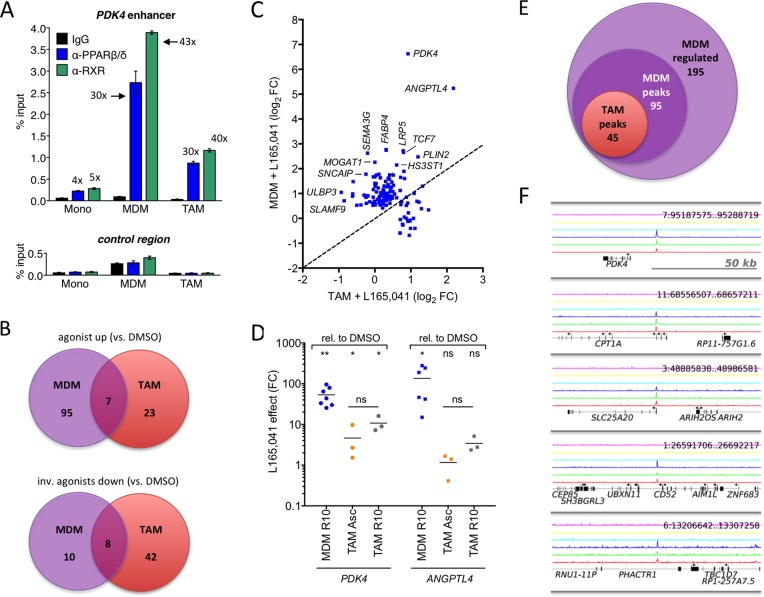
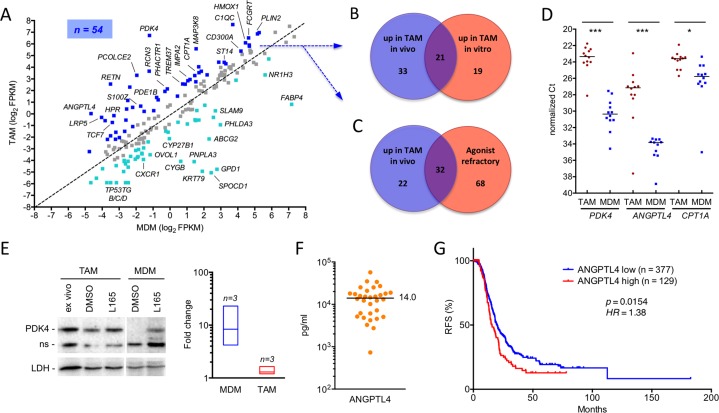
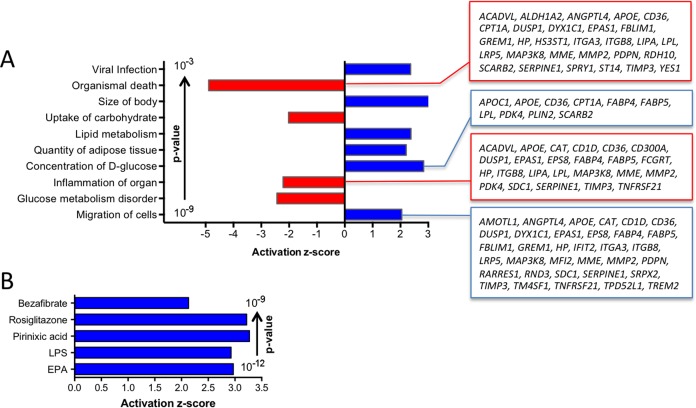
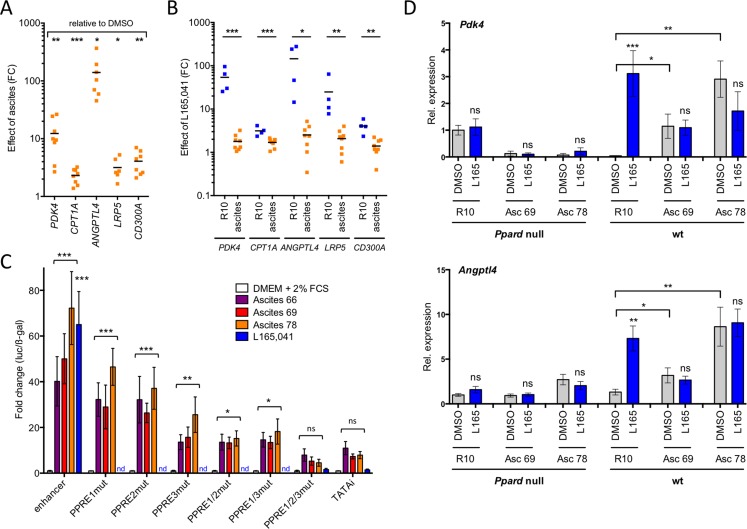
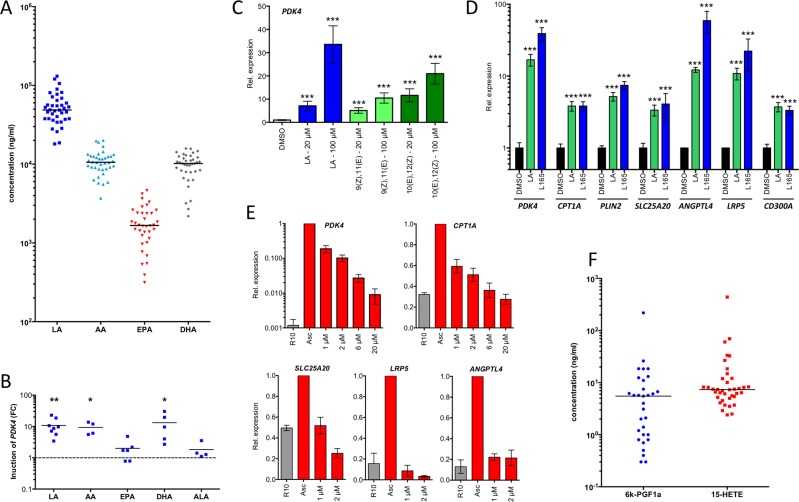
The nuclear receptor peroxisome proliferator-activated receptor β/δ (PPARβ/δ) is a lipid ligand-inducible transcription factor associated with macrophage polarization. However, its function in tumor-associated macrophages (TAMs) has not been investigated to date. Here, we report the PPARβ/δ-regulated transcriptome and cistrome for TAMs from ovarian carcinoma patients. Comparison with monocyte-derived macrophages shows that the vast majority of direct PPARβ/δ target genes are upregulated in TAMs and largely refractory to synthetic agonists, but repressible by inverse agonists. Besides genes with metabolic functions, these include cell type-selective genes associated with immune regulation and tumor progression, e.g., LRP5, CD300A, MAP3K8 and ANGPTL4. This deregulation is not due to increased expression of PPARβ/δ or its enhanced recruitment to target genes. Instead, lipidomic analysis of malignancy-associated ascites revealed high concentrations of polyunsaturated fatty acids, in particular linoleic acid, acting as potent PPARβ/δ agonists in macrophages. These fatty acid ligands accumulate in lipid droplets in TAMs, thereby providing a reservoir of PPARβ/δ ligands. These observations suggest that the deregulation of PPARβ/δ target genes by ligands of the tumor microenvironment contributes to the pro-tumorigenic polarization of ovarian carcinoma TAMs. This conclusion is supported by the association of high ANGPTL4 expression with a shorter relapse-free survival in serous ovarian carcinoma.
核受体过氧化物酶体增殖物激活受体β/δ(PPARβ/δ)是一种与巨噬细胞极化相关的脂质配体诱导型转录因子。然而,其在肿瘤相关巨噬细胞(TAM)中的功能迄今尚未得到研究。在此,我们报告了来自卵巢癌患者TAM的PPARβ/δ调控的转录组和顺式作用组。与单核细胞衍生的巨噬细胞比较表明,绝大多数直接的PPARβ/δ靶基因在TAM中上调,并且对合成激动剂基本无反应,但可被反向激动剂抑制。除了具有代谢功能的基因外,这些还包括与免疫调节和肿瘤进展相关的细胞类型选择性基因,例如LRP5、CD300A、MAP3K8和ANGPTL4。这种失调并非由于PPARβ/δ表达增加或其向靶基因的募集增强所致。相反,对恶性腹水的脂质组学分析揭示了高浓度的多不饱和脂肪酸,特别是亚油酸,在巨噬细胞中作为有效的PPARβ/δ激动剂起作用。这些脂肪酸配体积聚在TAM的脂滴中,从而提供了PPARβ/δ配体的储存库。这些观察结果表明,肿瘤微环境的配体对PPARβ/δ靶基因的失调促成了卵巢癌TAM的促肿瘤极化。这一结论得到了高ANGPTL4表达与浆液性卵巢癌无复发生存期较短之间关联的支持。