Gras Navarro Andrea, Björklund Andreas T, Chekenya Martha
Department of Biomedicine, University of Bergen , Bergen , Norway.
Karolinska University Hospital, Hematology Center and Karolinska Institute , Stockholm , Sweden.
Front Immunol. 2015 Apr 29;6:202. doi: 10.3389/fimmu.2015.00202. eCollection 2015.
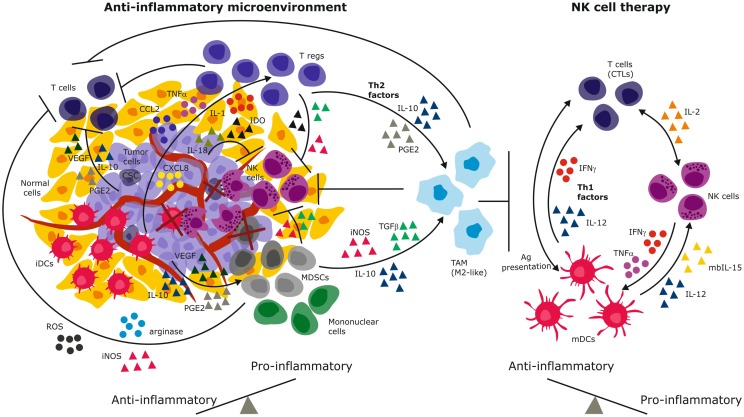
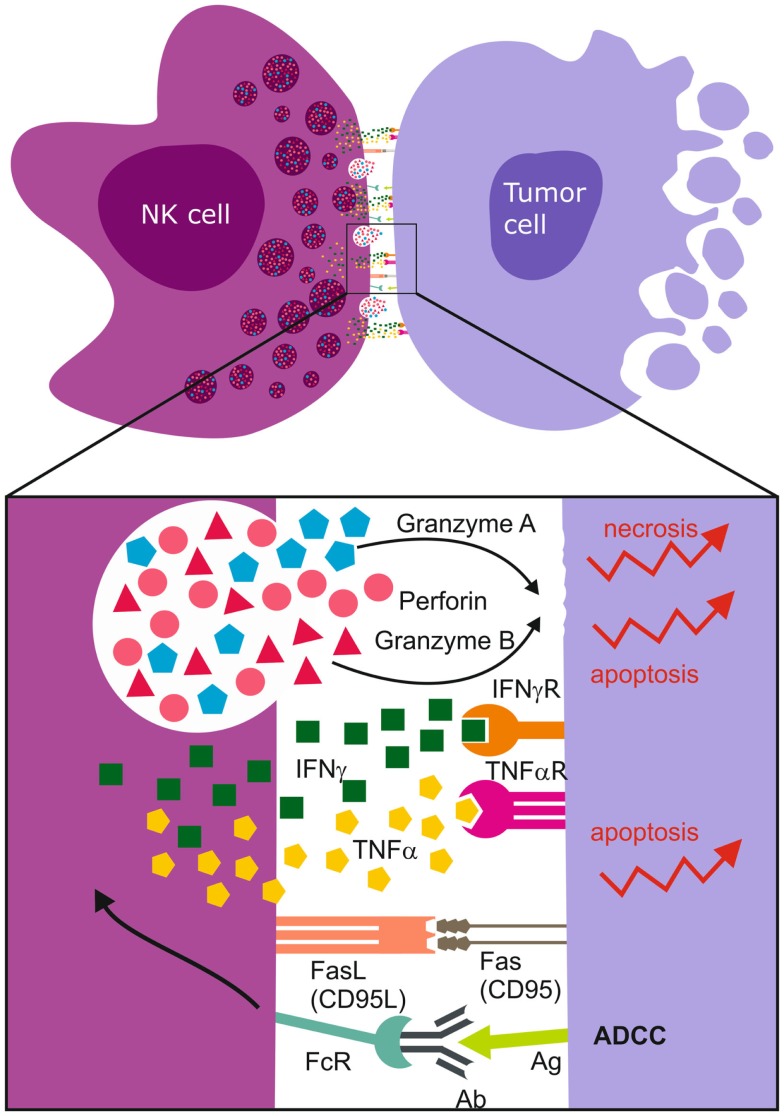
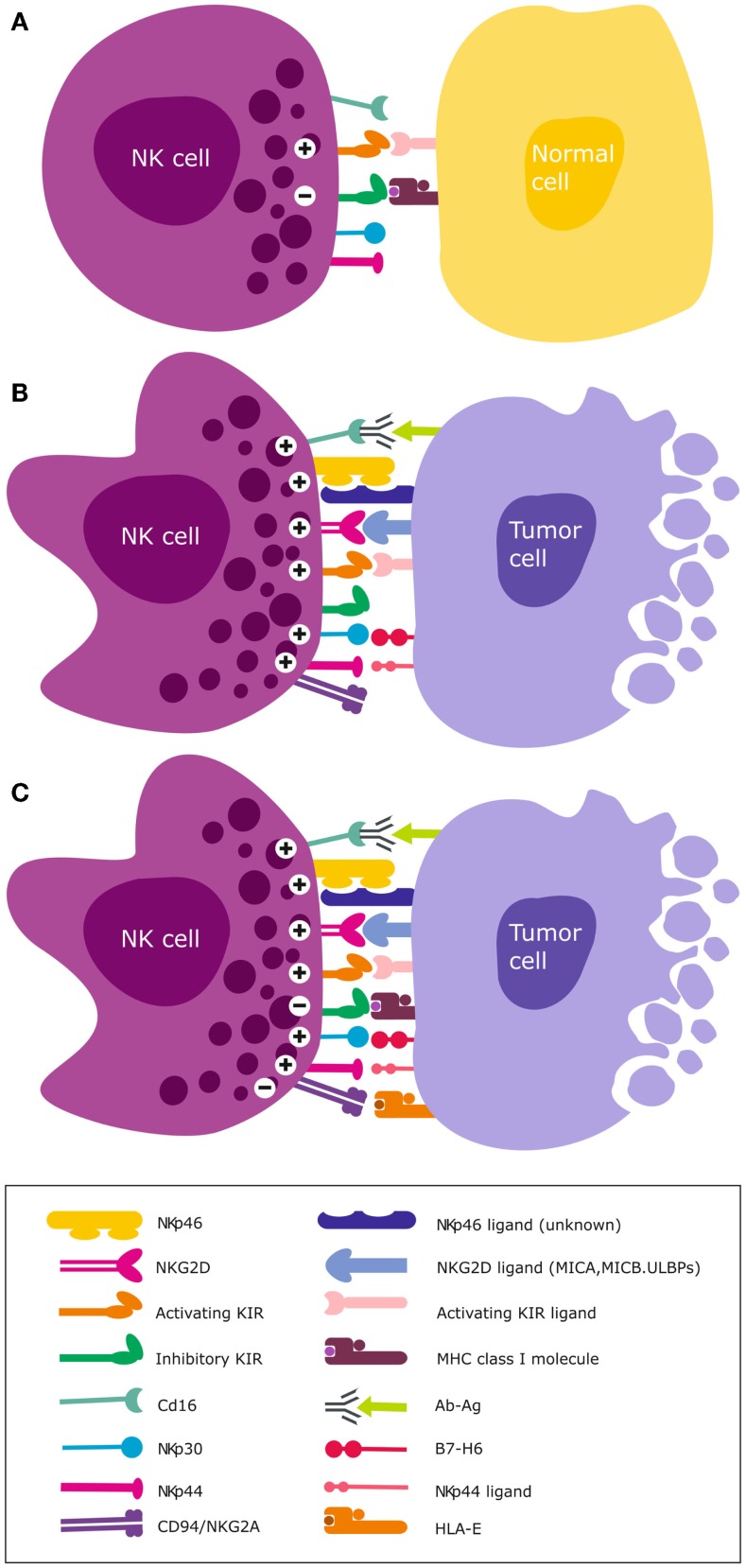
Natural killer (NK) cells are innate lymphoid cells that hold tremendous potential for effective immunotherapy for a broad range of cancers. Due to the mode of NK cell killing, requiring one-to-one target engagement and site-directed release of cytolytic granules, the therapeutic potential of NK cells has been most extensively explored in hematological malignancies. However, their ability to precisely kill antibody coated cells, cancer stem cells, and genotoxically altered cells, while maintaining tolerance to healthy cells makes them appealing therapeutic effectors for all cancer forms, including metastases. Due to their release of pro-inflammatory cytokines, NK cells may potently reverse the anti-inflammatory tumor microenvironment (TME) and augment adaptive immune responses by promoting differentiation, activation, and/or recruitment of accessory immune cells to sites of malignancy. Nevertheless, integrated and coordinated mechanisms of subversion of NK cell activity against the tumor and its microenvironment exist. Although our understanding of the receptor ligand interactions that regulate NK cell functionality has evolved remarkably, the diversity of ligands and receptors is complex, as is their mechanistic foundations in regulating NK cell function. In this article, we review the literature and highlight how the TME manipulates the NK cell phenotypes, genotypes, and tropism to evade tumor recognition and elimination. We discuss counter strategies that may be adopted to augment the efficacy of NK cell anti-tumor surveillance, the clinical trials that have been undertaken so far in solid malignancies, critically weighing the challenges and opportunities with this approach.
自然杀伤(NK)细胞是先天性淋巴细胞,在广泛的癌症有效免疫治疗方面具有巨大潜力。由于NK细胞的杀伤模式需要一对一的靶细胞结合和细胞毒性颗粒的定点释放,NK细胞的治疗潜力在血液系统恶性肿瘤中得到了最广泛的探索。然而,它们精确杀伤抗体包被细胞、癌症干细胞和基因毒性改变细胞的能力,同时对健康细胞保持耐受性,使其成为包括转移瘤在内的所有癌症形式具有吸引力的治疗效应细胞。由于NK细胞释放促炎细胞因子,它们可能有效地逆转抗炎性肿瘤微环境(TME),并通过促进辅助免疫细胞向恶性肿瘤部位的分化、激活和/或募集来增强适应性免疫反应。然而,针对肿瘤及其微环境存在NK细胞活性被颠覆的综合协调机制。尽管我们对调节NK细胞功能的受体-配体相互作用的理解有了显著进展,但配体和受体的多样性很复杂,它们在调节NK细胞功能方面的机制基础也是如此。在本文中,我们回顾了文献,并强调了TME如何操纵NK细胞的表型、基因型和趋向性以逃避肿瘤识别和清除。我们讨论了可能采取的对策,以提高NK细胞抗肿瘤监测的疗效,以及迄今为止在实体恶性肿瘤中进行的临床试验,审慎权衡这种方法面临的挑战和机遇。