Chopra Amandeep, Rao Nanak Chand, Gupta Nidhi, Vashisth Shelja, Lakhanpal Manav
Senior Lecturer, Public Health Dentistry, National Dental College and Hospital, Dera Bassi, Punjab, India.
Professor, Public Health Dentistry, Swami Devi Dyal Hospital and Dental College, Panchkula, Haryana, India.
N Am J Med Sci. 2015 Apr;7(4):151-9. doi: 10.4103/1947-2714.156011.
Dental caries and deviations from normal weight are two conditions which share several broadly predisposing factors. So it's important to understand any relationship between dental state and body weight if either is to be managed appropriately.
The study was done to find out the correlation between body mass index (BMI), diet, and dental caries among 12-15-year-old schoolgoing children in Panchkula District.
A multistage sample of 12-15-year-old school children (n = 810) in Panchkula district, Haryana was considered. Child demographic details and diet history for 5 days was recorded. Data regarding dental caries status was collected using World Health Organization (1997) format. BMI was calculated and categorized according to the World Health Organization classification system for BMI. The data were subjected to statistical analysis using chi-square test and binomial regression developed using the Statistical Package for Social Sciences (SPSS) 20.0.
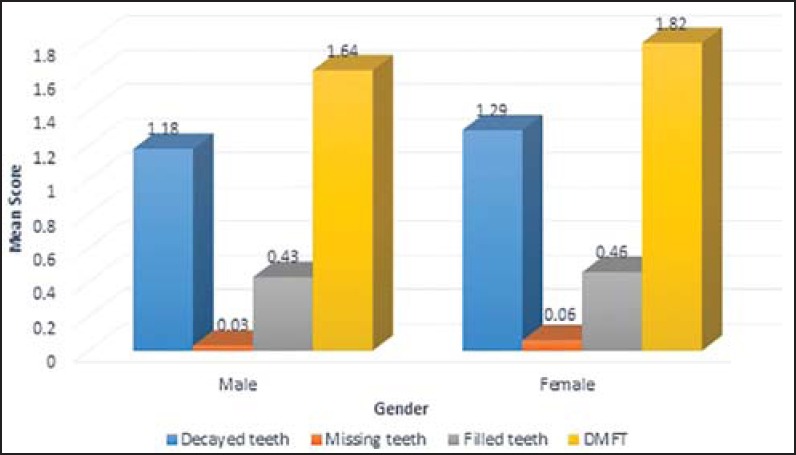
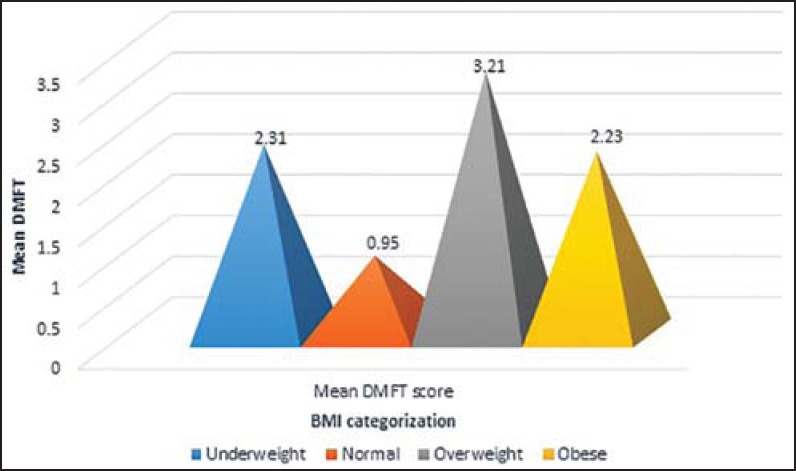
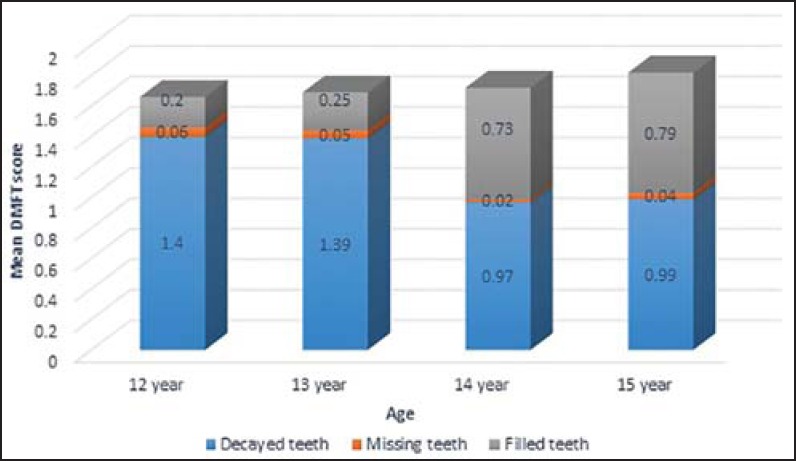
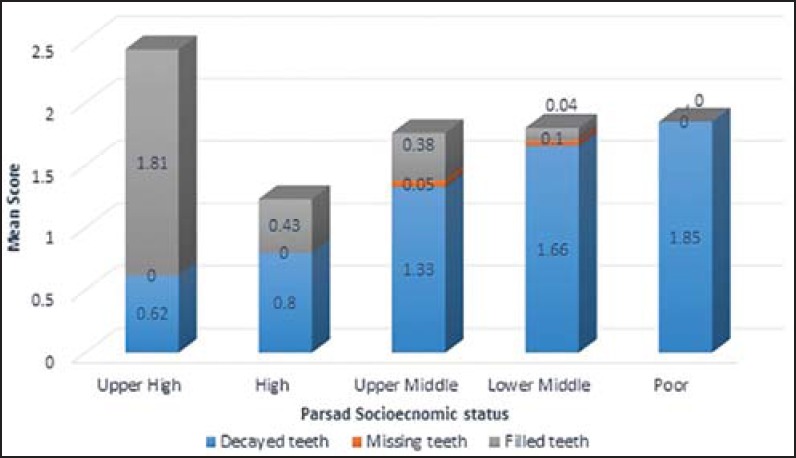
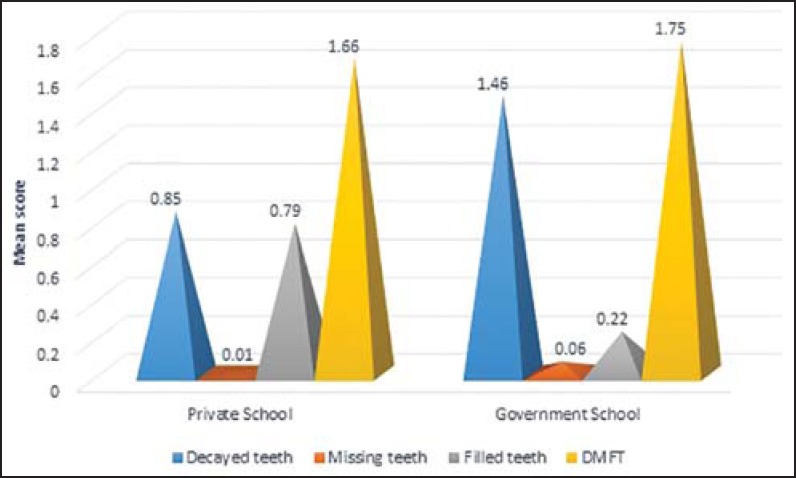
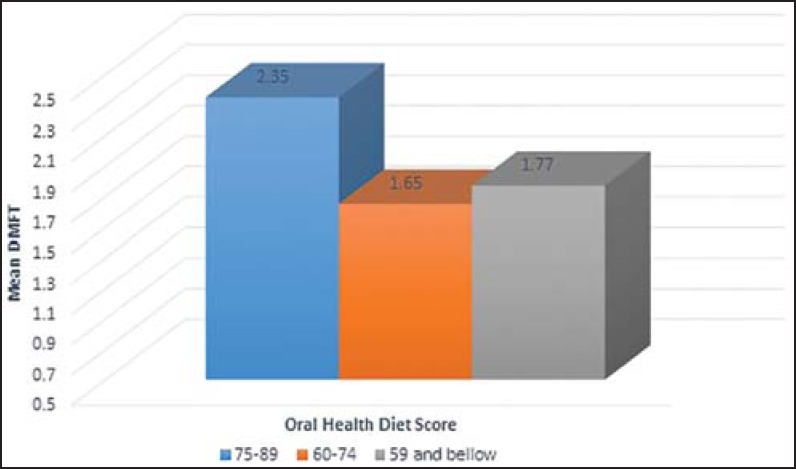
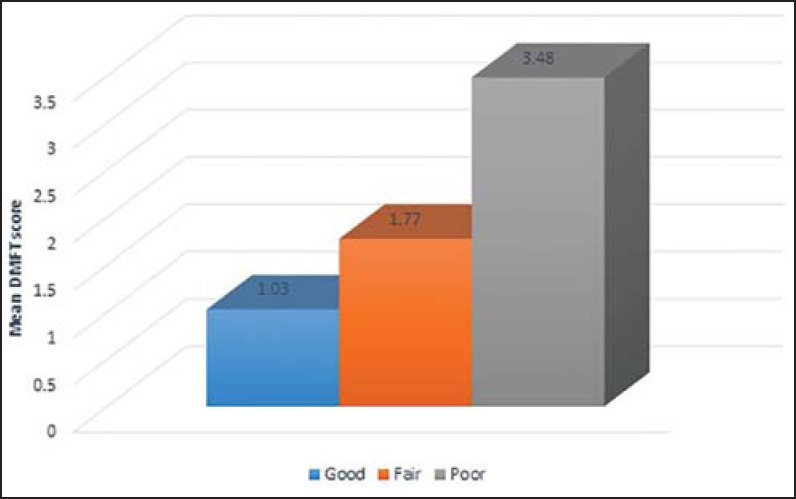
The mean Decayed Missing Filled Teeth (DMFT) score was found to be 1.72 with decayed, missing, and filled teeth to be 1.22, 0.04, and 0.44, respectively. When the sample was assessed based on type of diet, it was found that vegetarians had higher mean DMFT (1.72) as compared to children having mixed diet. Overweight children had highest DMFT (3.21) which was followed by underweight (2.31) and obese children (2.23). Binomial regression revealed that females were 1.293 times at risk of developing caries as compared to males. Fair and poor Simplified-Oral Hygiene Index (OHI-S) showed 3.920 and 4.297 times risk of developing caries as compared to good oral hygiene, respectively. Upper high socioeconomic status (SES) is at most risk of developing caries. Underweight, overweight, and obese are at 2.7, 2.5, and 3 times risk of developing caries as compared to children with normal BMI, respectively.
Dental caries and deviations from normal weight are two conditions which share several broadly predisposing factors such as diet, SES, lifestyle and other environmental factors.
龋齿和体重异常是两种有若干共同易感因素的情况。因此,如果要对其中任何一种进行适当管理,了解牙齿状况与体重之间的关系很重要。
本研究旨在找出哈里亚纳邦潘切库拉地区12至15岁在校儿童的体重指数(BMI)、饮食与龋齿之间的相关性。
以哈里亚纳邦潘切库拉地区12至15岁学童(n = 810)为多阶段抽样样本。记录了儿童的人口统计学细节和5天的饮食史。使用世界卫生组织(1997年)的格式收集有关龋齿状况的数据。根据世界卫生组织的BMI分类系统计算并分类BMI。使用卡方检验和社会科学统计软件包(SPSS)20.0开发的二项式回归对数据进行统计分析。
发现平均龋失补牙数(DMFT)得分为1.72,其中龋牙、失牙和补牙数分别为1.22、0.04和0.44。根据饮食类型对样本进行评估时,发现素食者的平均DMFT(1.72)高于混合饮食的儿童。超重儿童的DMFT最高(3.21),其次是体重过轻儿童(2.23)和肥胖儿童(2.23)。二项式回归显示,女性患龋齿的风险是男性的1.293倍。与良好口腔卫生相比,口腔卫生指数(OHI-S)为中等和差的儿童患龋齿的风险分别为3.920倍和4.297倍。社会经济地位高的上层人群患龋齿的风险最大。与BMI正常的儿童相比,体重过轻、超重和肥胖儿童患龋齿的风险分别为2.7倍、2.5倍和3倍。
龋齿和体重异常是两种有若干共同易感因素的情况,如饮食、社会经济地位、生活方式和其他环境因素。