Kondo Hirohito M, Nomura Michio, Kashino Makio
Human Information Science Laboratory, NTT Communication Science Laboratories, NTT Corporation, Atsugi, Kanagawa 243-0198, Japan; Department of Child Development, United Graduate School of Child Development, Osaka University, Suita, Osaka 565-0871, Japan.
Division of Cognitive Psychology in Education, Graduate School of Education, Kyoto University, Kyoto 606-8501, Japan.
PLoS One. 2015 May 14;10(5):e0126511. doi: 10.1371/journal.pone.0126511. eCollection 2015.
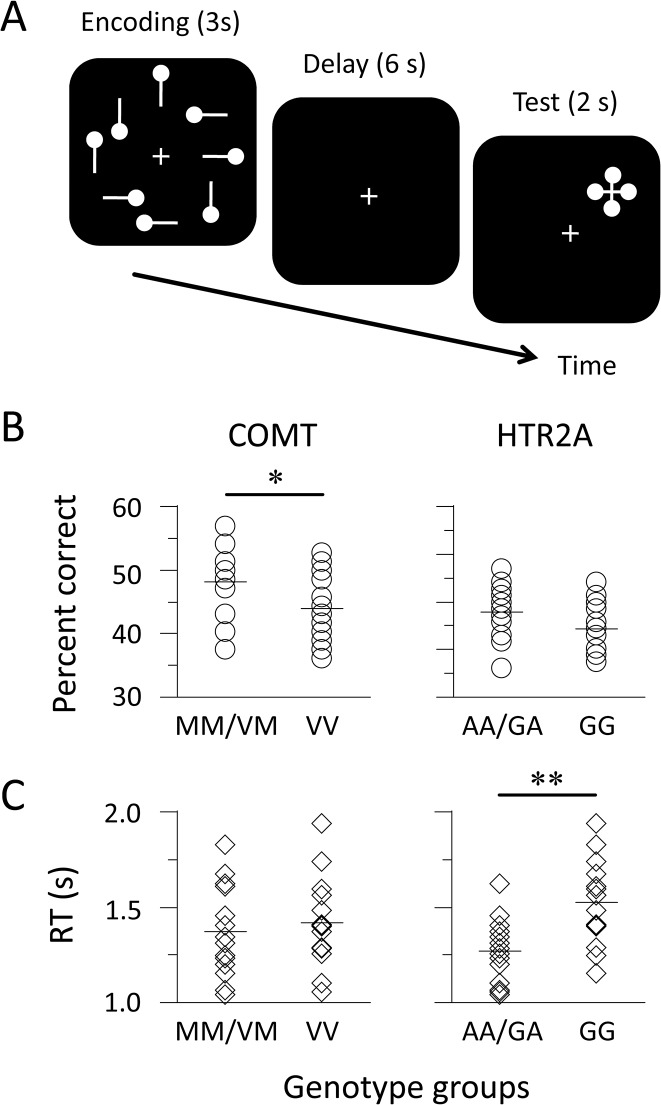
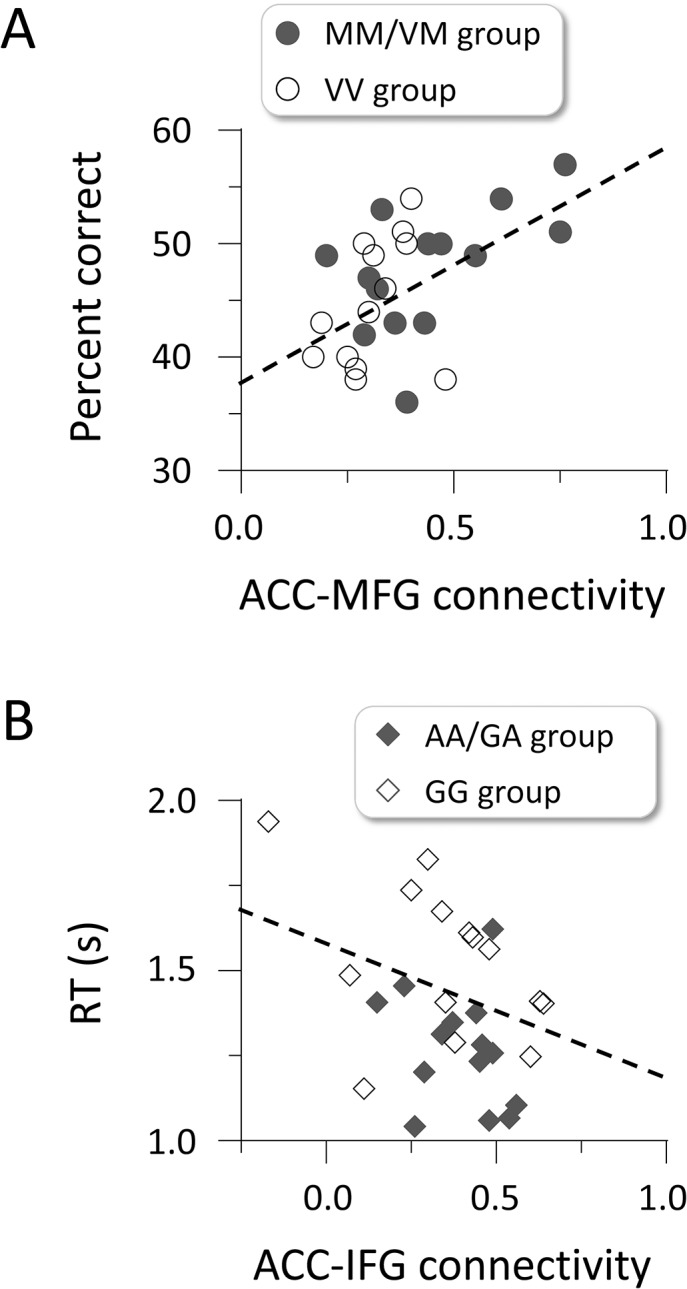
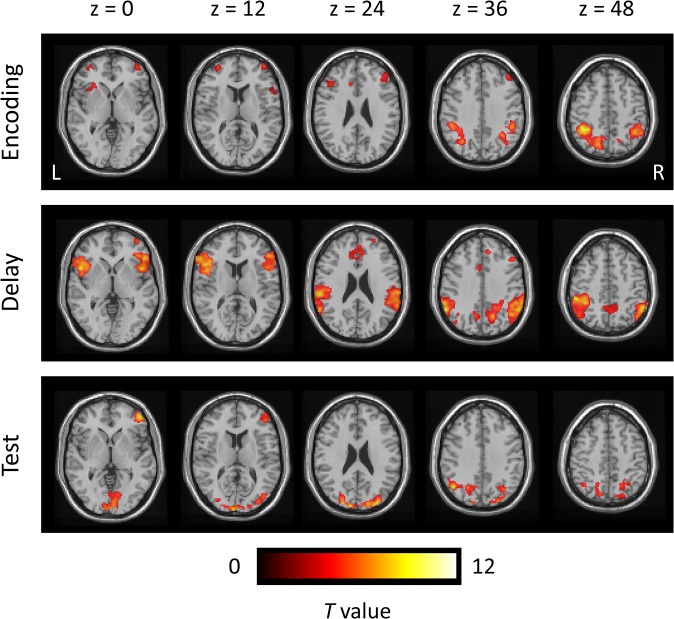
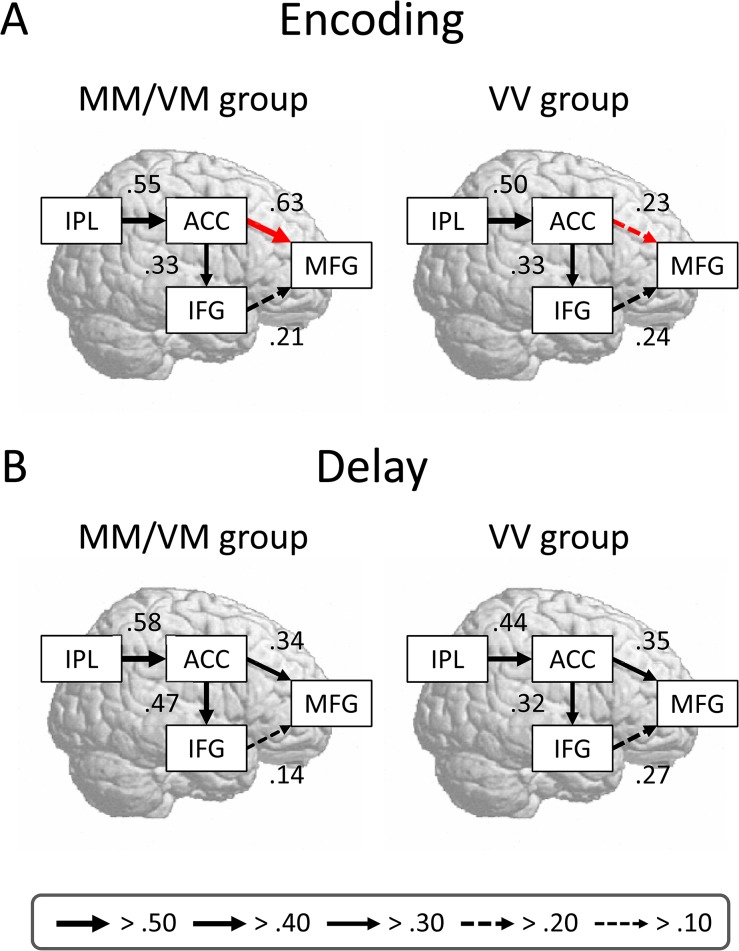
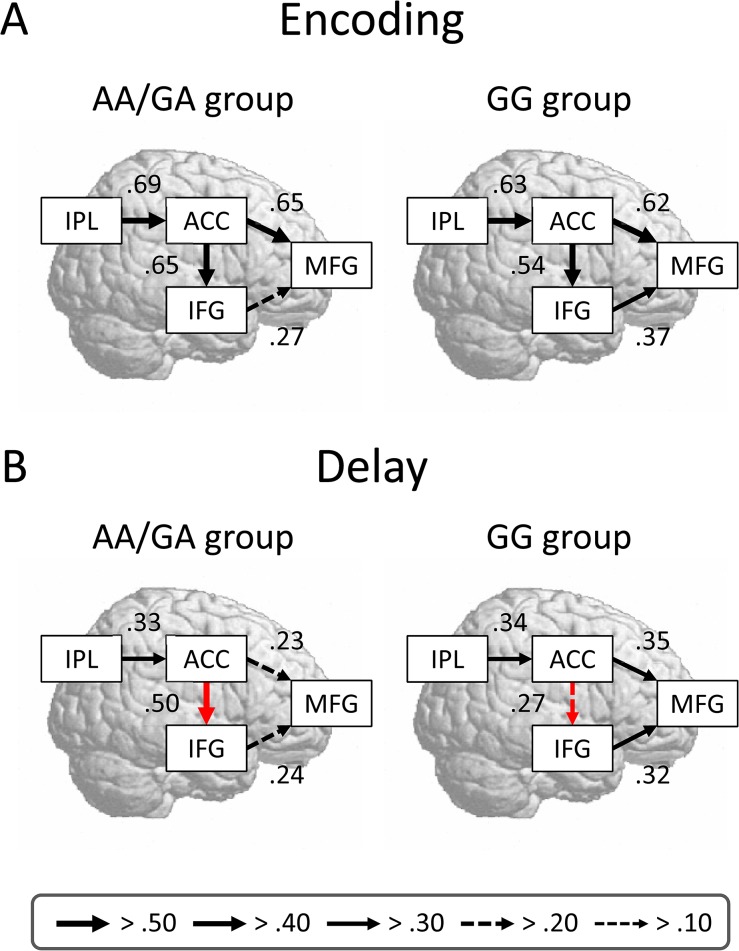
Working memory is linked to the functions of the frontal areas, in which neural activity is mediated by dopaminergic and serotonergic tones. However, there is no consensus regarding how the dopaminergic and serotonergic systems influence working memory subprocesses. The present study used an imaging genetics approach to examine the interaction between neurochemical functions and working memory performance. We focused on functional polymorphisms of the catechol-O-methyltransferase (COMT) Val(158)Met and serotonin 2A receptor (HTR2A) -1438G/A genes, and devised a delayed recognition task to isolate the encoding, retention, and retrieval processes for visual information. The COMT genotypes affected recognition accuracy, whereas the HTR2A genotypes were associated with recognition response times. Activations specifically related to working memory were found in the right frontal and parietal areas, such as the middle frontal gyrus (MFG), inferior frontal gyrus (IFG), anterior cingulate cortex (ACC), and inferior parietal lobule (IPL). MFG and ACC/IPL activations were sensitive to differences between the COMT genotypes and between the HTR2A genotypes, respectively. Structural equation modeling demonstrated that stronger connectivity in the ACC-MFG and ACC-IFG networks is related to better task performance. The behavioral and fMRI results suggest that the dopaminergic and serotonergic systems play different roles in the working memory subprocesses and modulate closer cooperation between lateral and medial frontal activations.
工作记忆与额叶区域的功能相关联,其中神经活动由多巴胺能和5-羟色胺能神经调质介导。然而,关于多巴胺能和5-羟色胺能系统如何影响工作记忆子过程,目前尚无定论。本研究采用成像遗传学方法来检验神经化学功能与工作记忆表现之间的相互作用。我们聚焦于儿茶酚-O-甲基转移酶(COMT)Val(158)Met和5-羟色胺2A受体(HTR2A)-1438G/A基因的功能多态性,并设计了一项延迟识别任务,以分离视觉信息的编码、保持和检索过程。COMT基因分型影响识别准确性,而HTR2A基因分型与识别反应时间相关。在右侧额叶和顶叶区域发现了与工作记忆特异性相关的激活,如额中回(MFG)、额下回(IFG)、前扣带回皮质(ACC)和顶下小叶(IPL)。MFG和ACC/IPL的激活分别对COMT基因分型之间和HTR2A基因分型之间的差异敏感。结构方程模型表明,ACC-MFG和ACC-IFG网络中更强的连通性与更好的任务表现相关。行为和功能磁共振成像结果表明,多巴胺能和5-羟色胺能系统在工作记忆子过程中发挥不同作用,并调节外侧和内侧额叶激活之间更紧密的协作。