Hanč Pavel, Fujii Takashi, Iborra Salvador, Yamada Yurika, Huotari Jatta, Schulz Oliver, Ahrens Susan, Kjær Svend, Way Michael, Sancho David, Namba Keiichi, Reis e Sousa Caetano
Immunobiology Laboratory, The Francis Crick Institute, Lincoln's Inn Fields Laboratory, 44 Lincoln's Inn Fields, London WC2A 3LY, UK.
Riken Quantitative Biology Center, 1-3 Yamadaoka, Suita, Osaka 565-0871, Japan.
Immunity. 2015 May 19;42(5):839-849. doi: 10.1016/j.immuni.2015.04.009. Epub 2015 May 12.
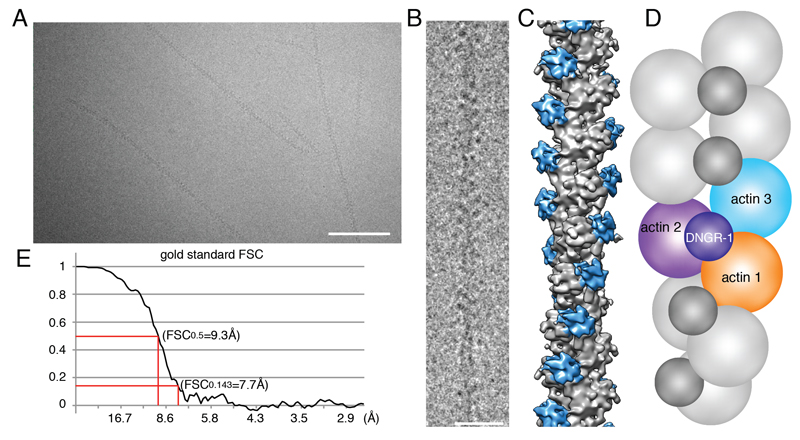
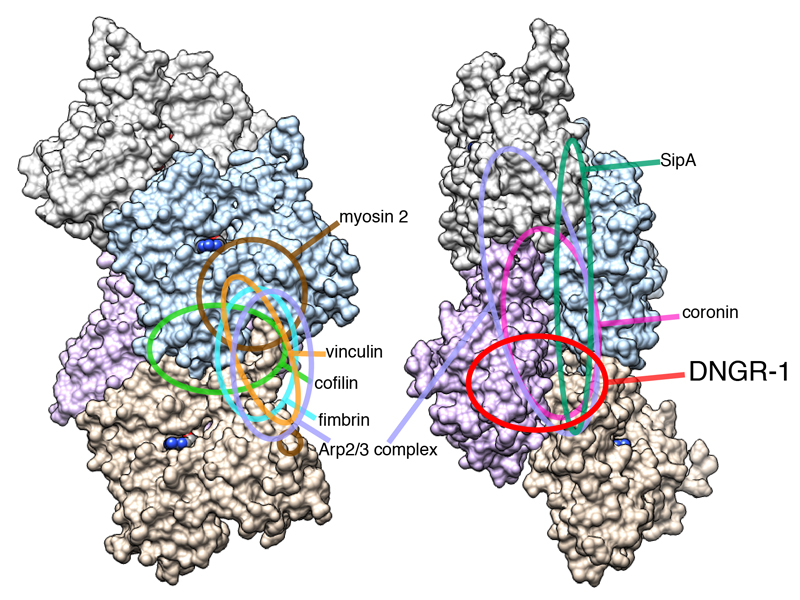
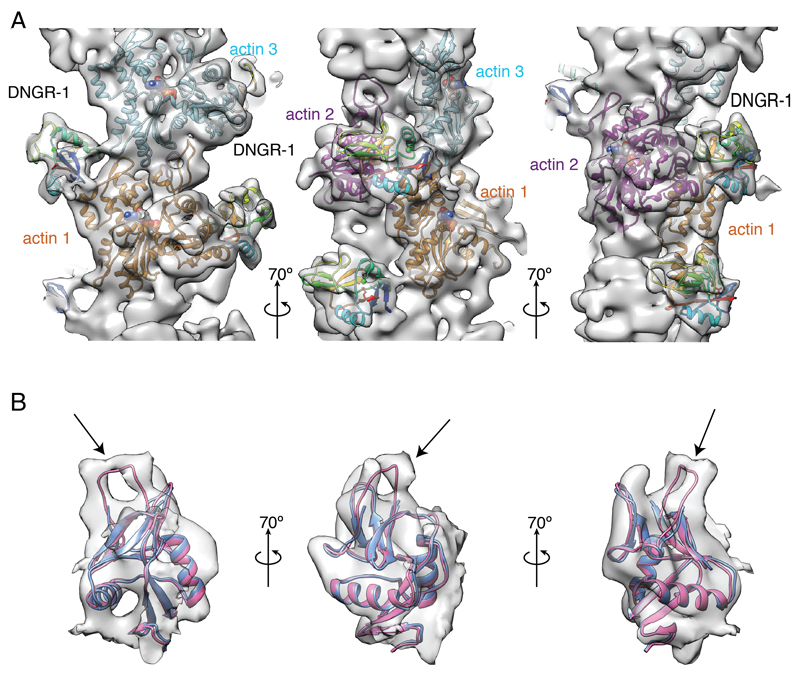
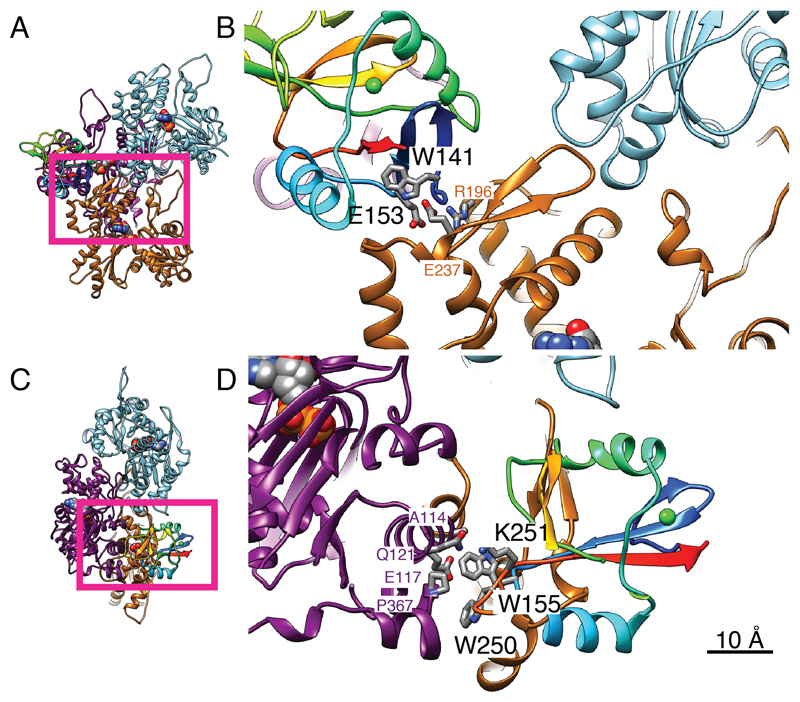
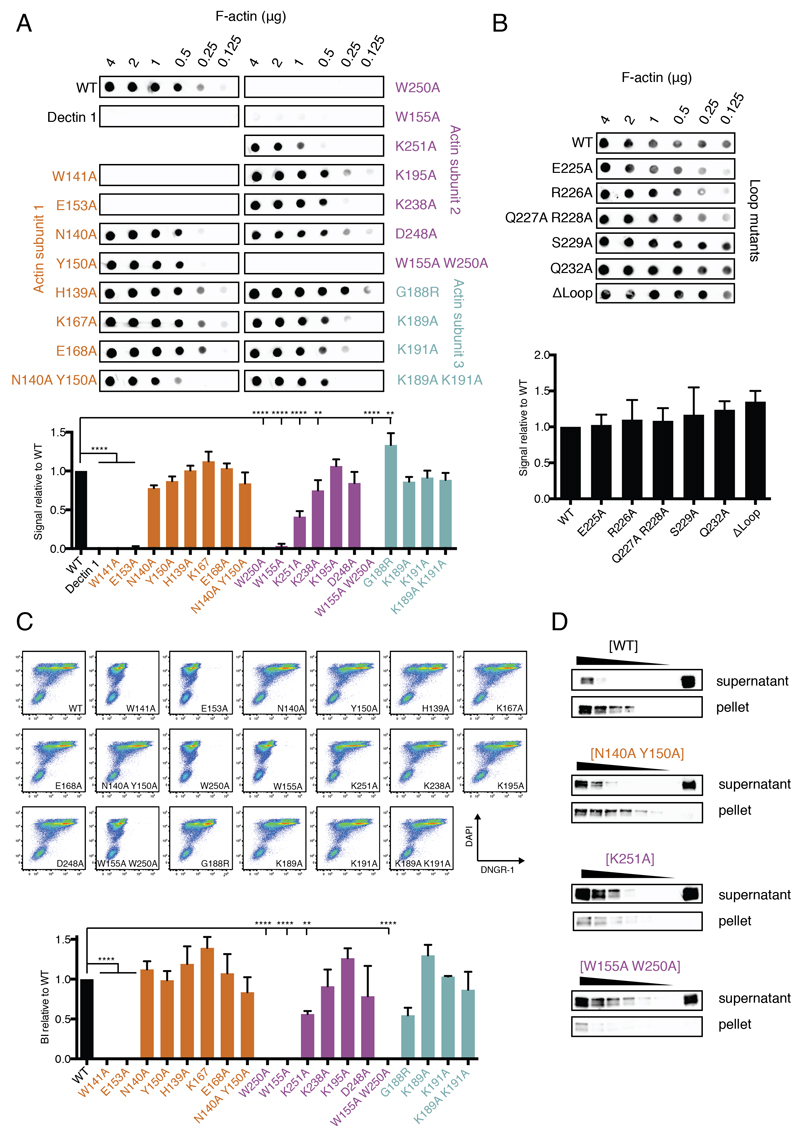
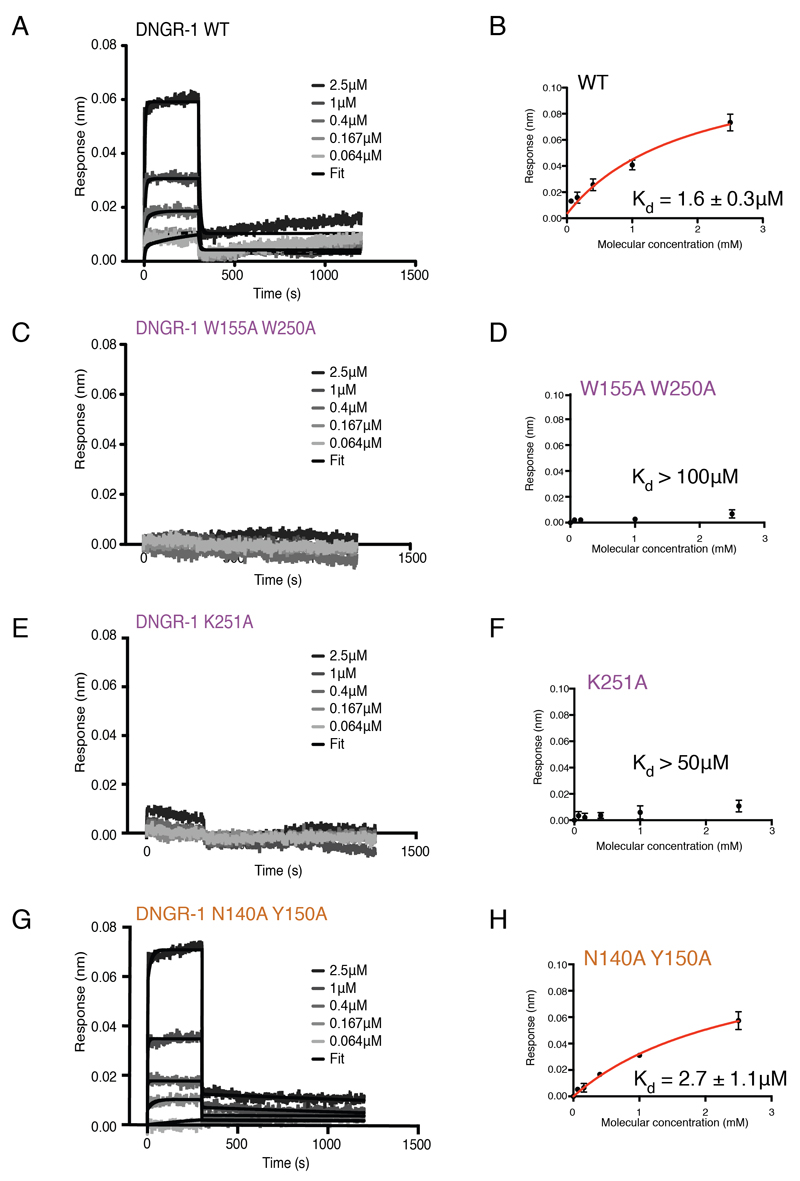
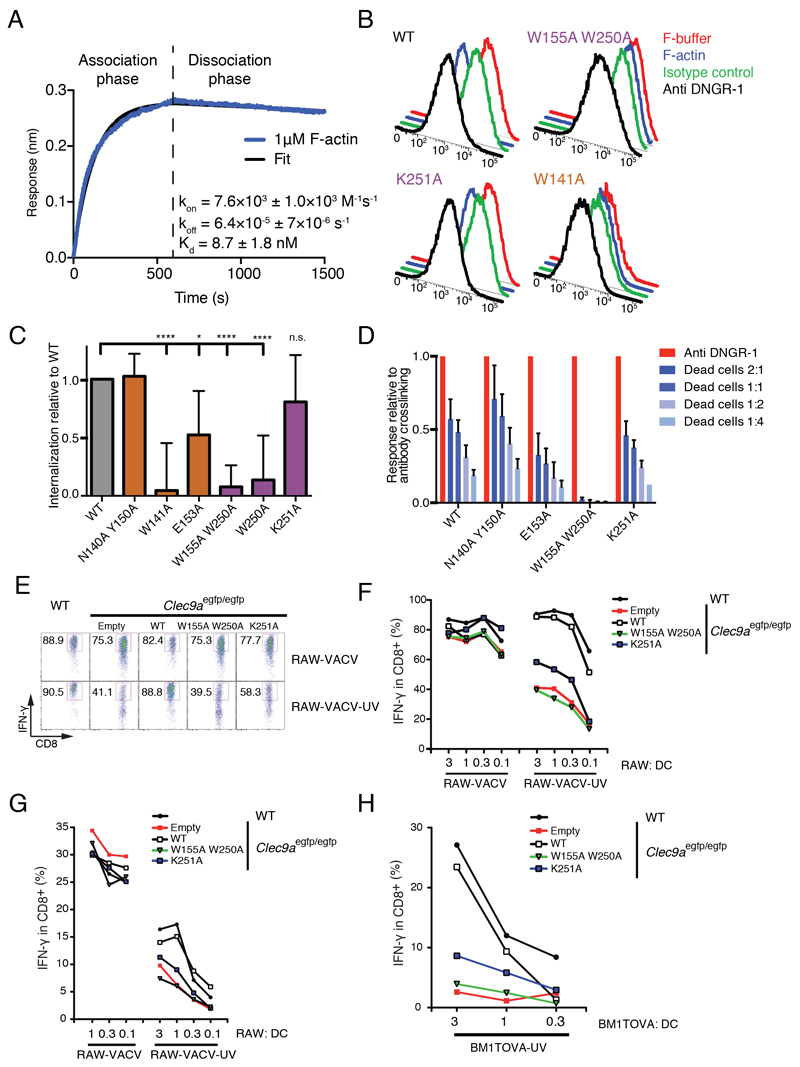
DNGR-1 is a C-type lectin receptor that binds F-actin exposed by dying cells and facilitates cross-presentation of dead cell-associated antigens by dendritic cells. Here we present the structure of DNGR-1 bound to F-actin at 7.7 Å resolution. Unusually for F-actin binding proteins, the DNGR-1 ligand binding domain contacts three actin subunits helically arranged in the actin filament, bridging over two protofilaments, as well as two neighboring actin subunits along one protofilament. Mutation of residues predicted to mediate ligand binding led to loss of DNGR-1-dependent cross-presentation of dead cell-associated antigens, formally demonstrating that the latter depends on F-actin recognition. Notably, DNGR-1 has relatively modest affinity for F-actin but multivalent interactions allow a marked increase in binding strength. Our findings shed light on modes of actin binding by cellular proteins and reveal how extracellular detection of cytoskeletal components by dedicated receptors allows immune monitoring of loss of cellular integrity.
DNGR-1是一种C型凝集素受体,它能结合垂死细胞暴露的F-肌动蛋白,并促进树突状细胞对与死细胞相关抗原的交叉呈递。在此,我们展示了以7.7 Å分辨率解析的与F-肌动蛋白结合的DNGR-1的结构。与F-肌动蛋白结合蛋白不同的是,DNGR-1配体结合结构域与肌动蛋白丝中呈螺旋排列的三个肌动蛋白亚基接触,横跨两条原纤维,以及沿着一条原纤维的两个相邻肌动蛋白亚基。预测介导配体结合的残基发生突变会导致与死细胞相关抗原的DNGR-1依赖性交叉呈递丧失,正式证明后者依赖于F-肌动蛋白识别。值得注意的是,DNGR-1对F-肌动蛋白的亲和力相对适中,但多价相互作用可使结合强度显著增加。我们的研究结果揭示了细胞蛋白与肌动蛋白结合的模式,并揭示了专用受体对细胞骨架成分的细胞外检测如何实现对细胞完整性丧失的免疫监测。