Checconi Paola, Salzano Sonia, Bowler Lucas, Mullen Lisa, Mengozzi Manuela, Hanschmann Eva-Maria, Lillig Christopher Horst, Sgarbanti Rossella, Panella Simona, Nencioni Lucia, Palamara Anna Teresa, Ghezzi Pietro
Institute Pasteur, Cenci-Bolognetti Foundation, "Sapienza" University of Rome, Rome, Italy; Brighton & Sussex Medical School, Falmer, Brighton, United Kingdom.
Brighton & Sussex Medical School, Falmer, Brighton, United Kingdom.
PLoS One. 2015 May 18;10(5):e0127086. doi: 10.1371/journal.pone.0127086. eCollection 2015.
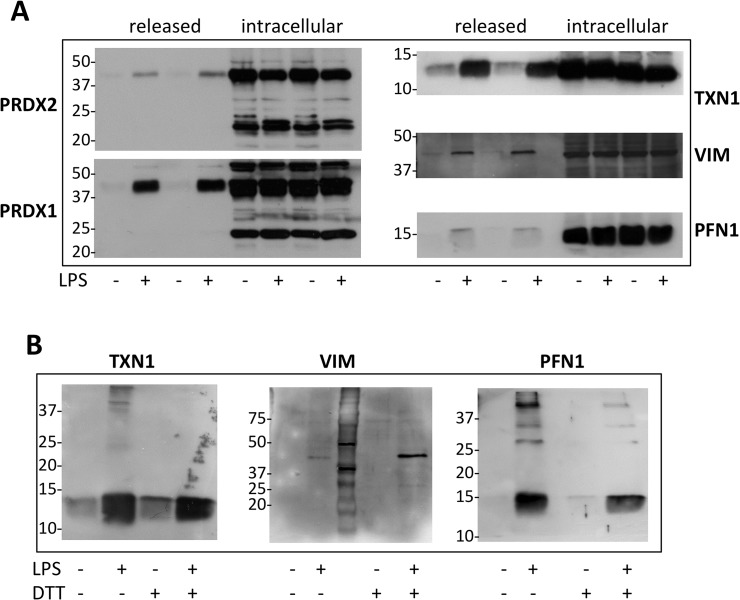
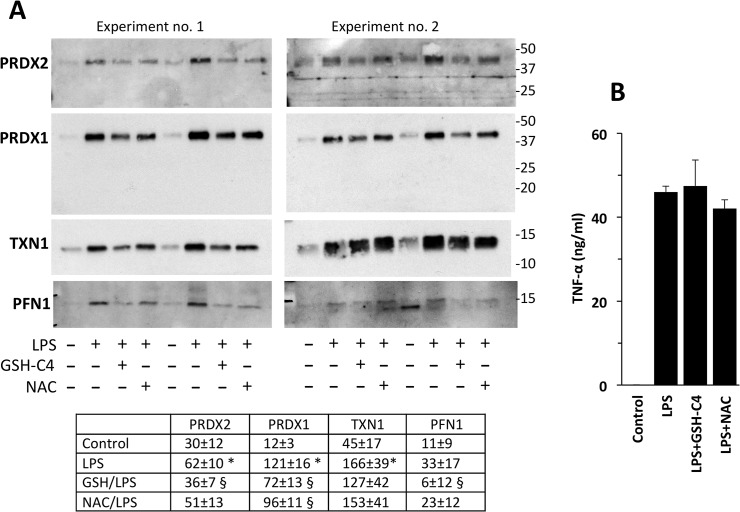
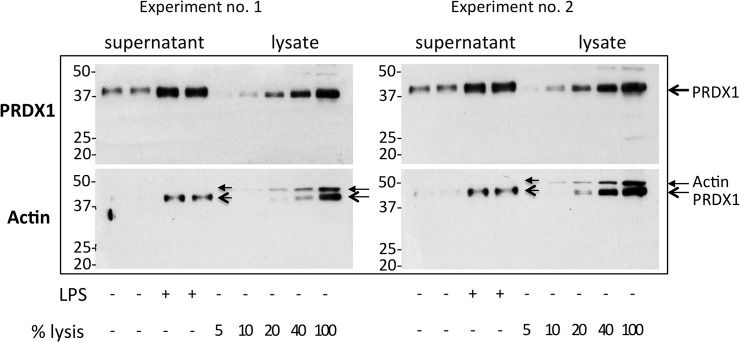
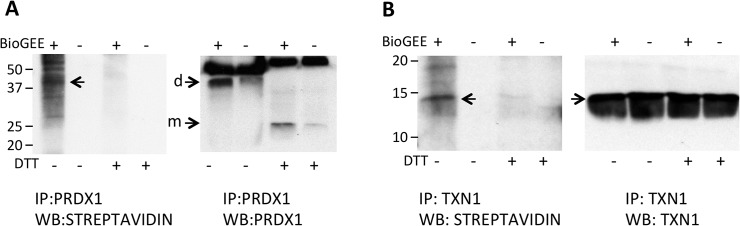
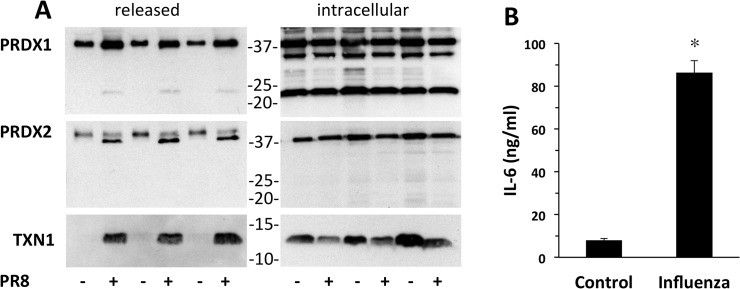
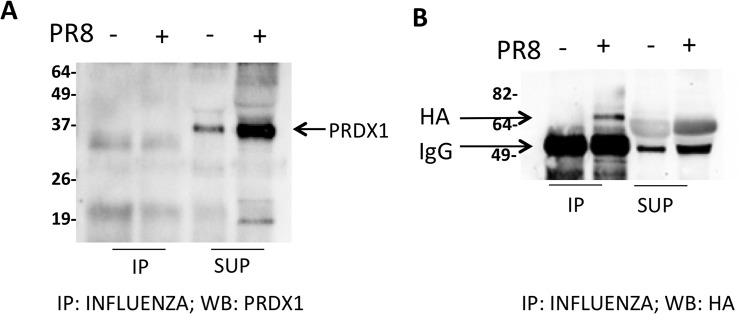
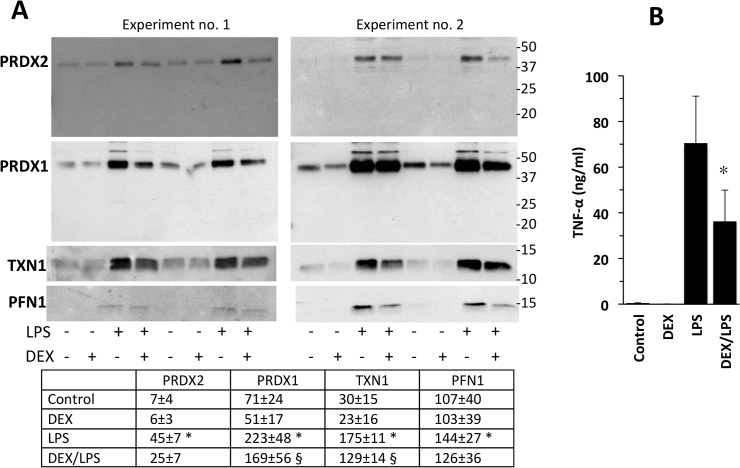
Protein cysteines can form transient disulfides with glutathione (GSH), resulting in the production of glutathionylated proteins, and this process is regarded as a mechanism by which the redox state of the cell can regulate protein function. Most studies on redox regulation of immunity have focused on intracellular proteins. In this study we have used redox proteomics to identify those proteins released in glutathionylated form by macrophages stimulated with lipopolysaccharide (LPS) after pre-loading the cells with biotinylated GSH. Of the several proteins identified in the redox secretome, we have selected a number for validation. Proteomic analysis indicated that LPS stimulated the release of peroxiredoxin (PRDX) 1, PRDX2, vimentin (VIM), profilin1 (PFN1) and thioredoxin 1 (TXN1). For PRDX1 and TXN1, we were able to confirm that the released protein is glutathionylated. PRDX1, PRDX2 and TXN1 were also released by the human pulmonary epithelial cell line, A549, infected with influenza virus. The release of the proteins identified was inhibited by the anti-inflammatory glucocorticoid, dexamethasone (DEX), which also inhibited tumor necrosis factor (TNF)-α release, and by thiol antioxidants (N-butanoyl GSH derivative, GSH-C4, and N-acetylcysteine (NAC), which did not affect TNF-α production. The proteins identified could be useful as biomarkers of oxidative stress associated with inflammation, and further studies will be required to investigate if the extracellular forms of these proteins has immunoregulatory functions.
蛋白质半胱氨酸可与谷胱甘肽(GSH)形成瞬时二硫键,从而产生谷胱甘肽化蛋白,这一过程被视为细胞氧化还原状态调节蛋白质功能的一种机制。大多数关于免疫氧化还原调节的研究都集中在细胞内蛋白质上。在本研究中,我们使用氧化还原蛋白质组学来鉴定在用生物素化GSH预加载细胞后,经脂多糖(LPS)刺激的巨噬细胞以谷胱甘肽化形式释放的那些蛋白质。在氧化还原分泌组中鉴定出的几种蛋白质中,我们选择了一些进行验证。蛋白质组学分析表明,LPS刺激了过氧化物酶1(PRDX)1、PRDX2、波形蛋白(VIM)、丝切蛋白1(PFN1)和硫氧还蛋白1(TXN1)的释放。对于PRDX1和TXN1,我们能够证实释放的蛋白质是谷胱甘肽化的。PRDX1、PRDX2和TXN1也由感染流感病毒的人肺上皮细胞系A549释放。鉴定出的蛋白质的释放受到抗炎糖皮质激素地塞米松(DEX)的抑制,DEX也抑制肿瘤坏死因子(TNF)-α的释放,同时受到硫醇抗氧化剂(N-丁酰GSH衍生物,GSH-C4,和N-乙酰半胱氨酸(NAC))的抑制,而这些抗氧化剂不影响TNF-α的产生。鉴定出的蛋白质可能作为与炎症相关的氧化应激的生物标志物,还需要进一步研究来调查这些蛋白质的细胞外形式是否具有免疫调节功能。