Ferder Ianina C, Wang Ning
Vincent Center for Reproductive Biology, MGH Vincent Department of Obstetrics and Gynecology, Massachusetts General Hospital, Boston, Massachusetts, USA.
Department of Obstetrics, Gynecology and Reproductive Biology, Harvard Medical School, Boston, Massachusetts, USA.
Oncotarget. 2015 Jun 30;6(18):15891-901. doi: 10.18632/oncotarget.4045.
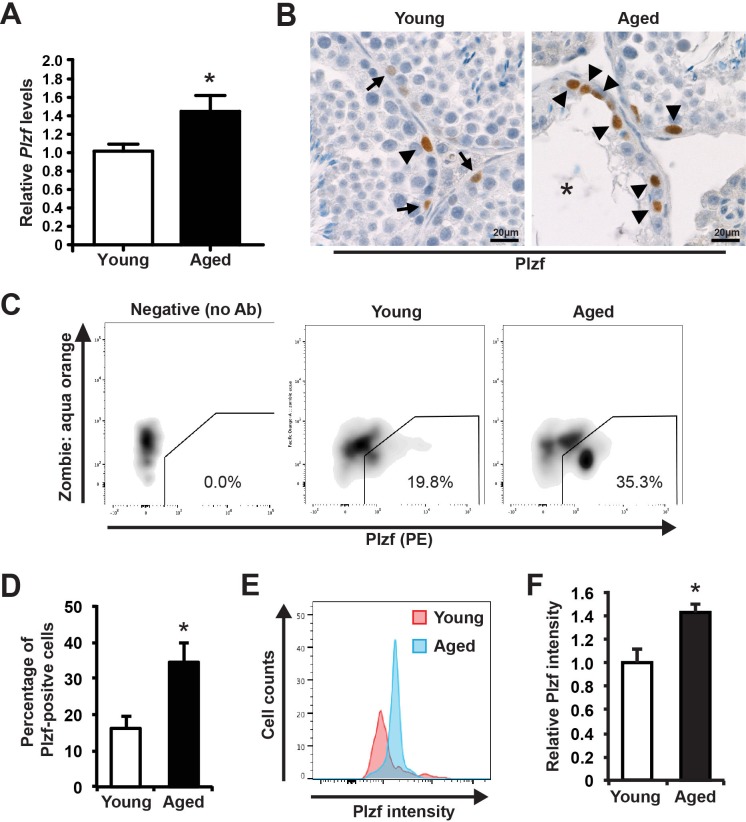
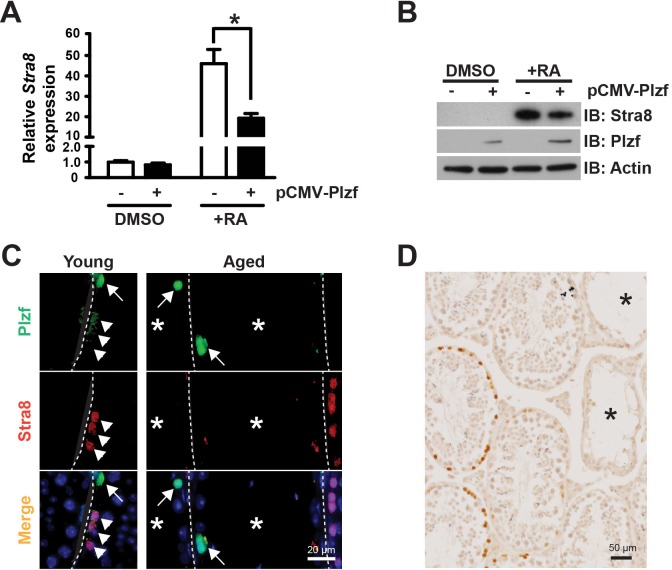
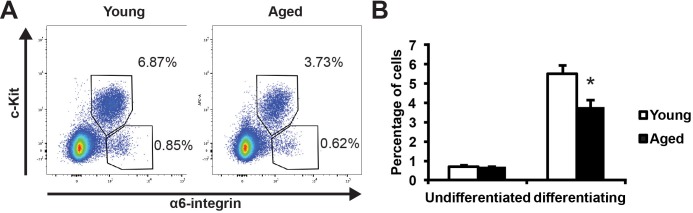
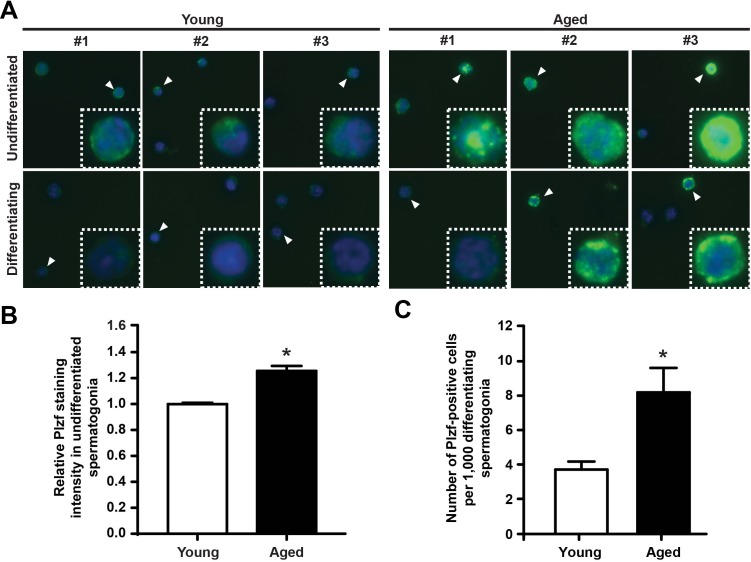
Like stem cells in other tissues, spermatogonia, including spermatogonial stem cells (SSCs) at the foundation of differentiation hierarchy, undergo age-related decline in function. The promyelocytic leukemia zinc finger (Plzf) protein plays an essential role in spermatogonia maintenance by preventing their differentiation. To evaluate whether there is an age-related change in Plzf expression, we found that aged mouse testes exhibited a robust "Plzf overexpression" phenotype, in that they showed not only a higher frequency of Plzf-expressing cells but also an increased level of Plzf expression in these cells. Moreover, some Plzf-expressing cells in aged testes even aberrantly appeared in the differentiating spermatogonia compartment, which is usually low or negative for Plzf expression. Importantly, ectopic Plzf expression in F9 cells suppressed retinoic acid (RA)-induced Stra8 activation, a gene required for meiosis initiation. These data, together with our observation of a lack of meiosis-initiating spermatocytes associated with high Plzf-expressing spermatogonia in the aged testes, particularly in the degenerative seminiferous tubules, suggest that age-related increase in Plzf expression represents a novel molecular signature of spermatogonia aging by functionally arresting their differentiation.
与其他组织中的干细胞一样,精原细胞,包括处于分化层级基础的精原干细胞(SSCs),其功能会随年龄增长而衰退。早幼粒细胞白血病锌指(Plzf)蛋白通过阻止精原细胞分化,在其维持过程中发挥着至关重要的作用。为评估Plzf表达是否存在与年龄相关的变化,我们发现老年小鼠睾丸呈现出强烈的“Plzf过表达”表型,即不仅表达Plzf的细胞频率更高,而且这些细胞中Plzf的表达水平也有所增加。此外,老年睾丸中一些表达Plzf的细胞甚至异常出现在分化中的精原细胞区域,而该区域通常Plzf表达较低或为阴性。重要的是,F9细胞中异位表达的Plzf抑制了视黄酸(RA)诱导的Stra8激活,Stra8是减数分裂起始所需的基因。这些数据,连同我们观察到老年睾丸中尤其是退化的生精小管中,与高表达Plzf的精原细胞相关的减数分裂起始精母细胞缺乏,表明Plzf表达随年龄增长的增加代表了精原细胞衰老的一种新的分子特征,其通过功能性阻止精原细胞分化来实现。