Loo Tip W, Clarke David M
From the Departments of Medicine and Biochemistry, University of Toronto, Toronto, Ontario M5S 1A8, Canada.
From the Departments of Medicine and Biochemistry, University of Toronto, Toronto, Ontario M5S 1A8, Canada
J Biol Chem. 2015 Jul 3;290(27):16954-63. doi: 10.1074/jbc.M115.652602. Epub 2015 May 18.
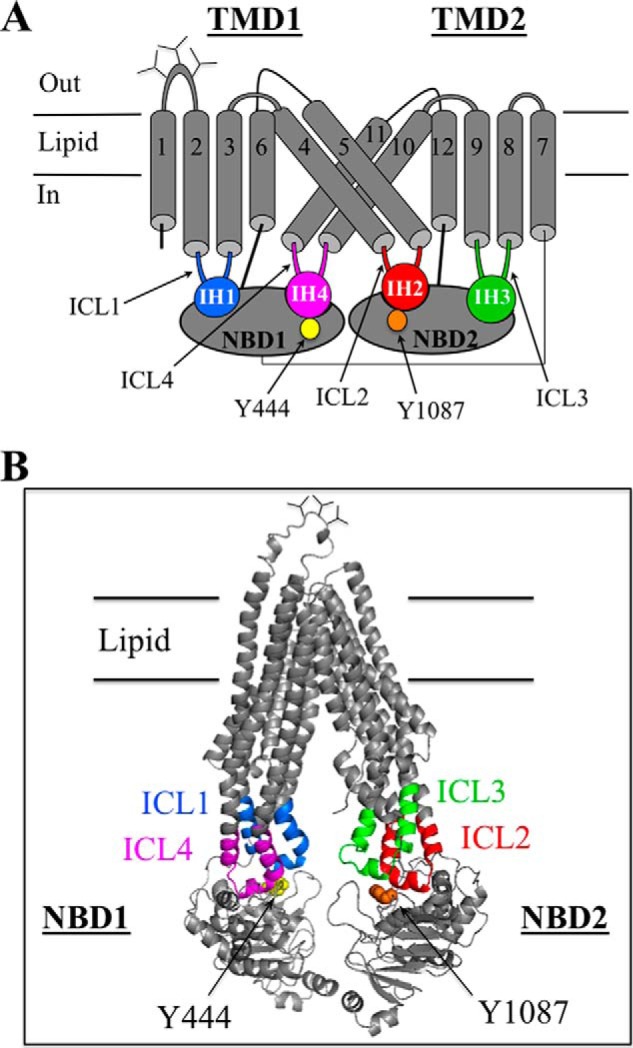
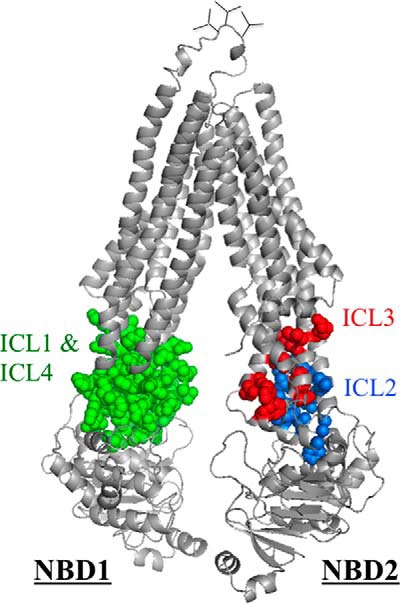
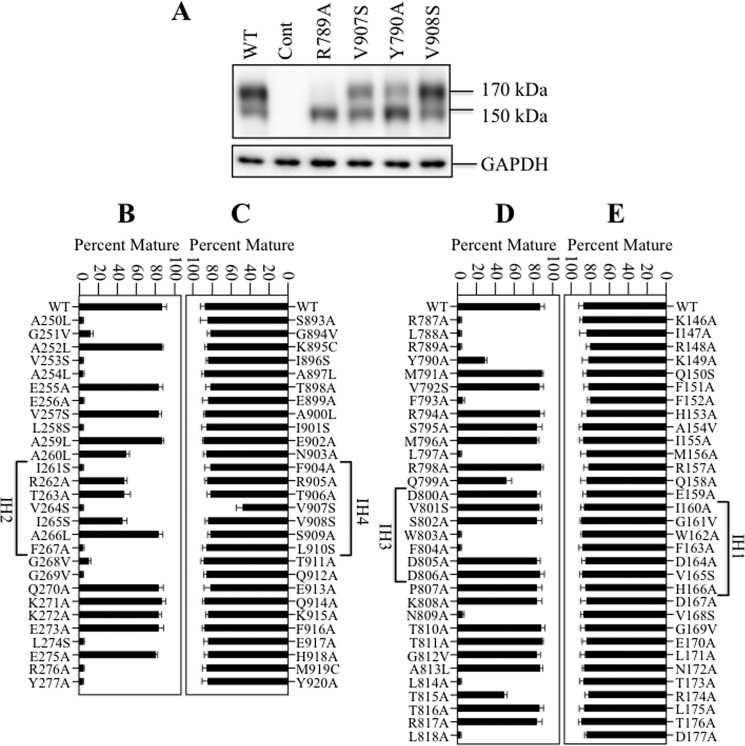
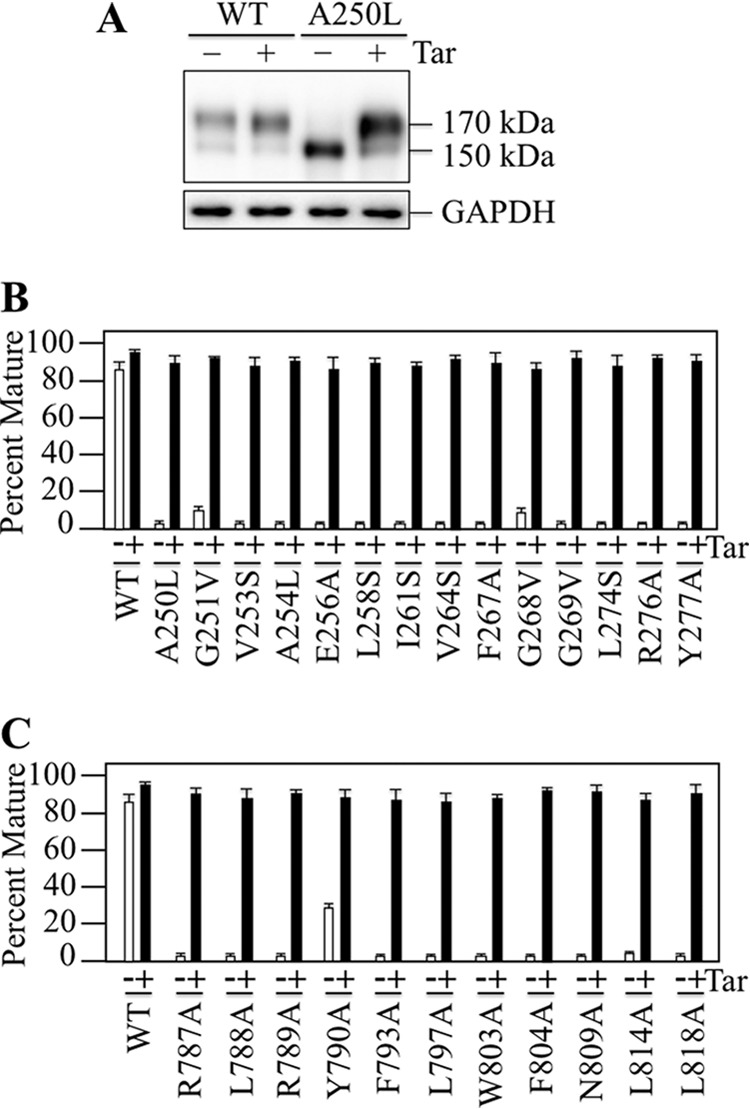
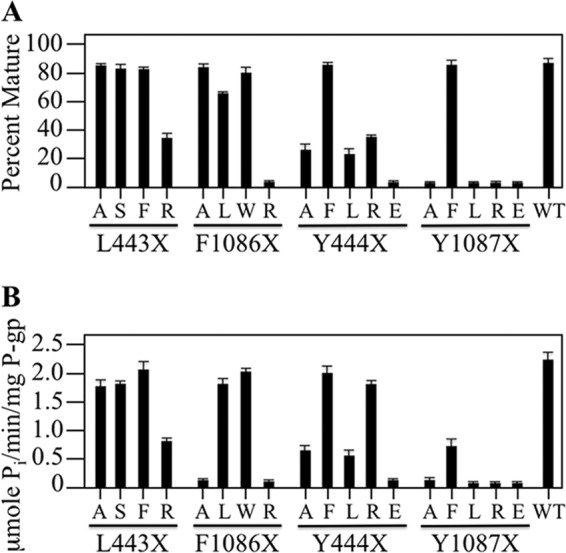
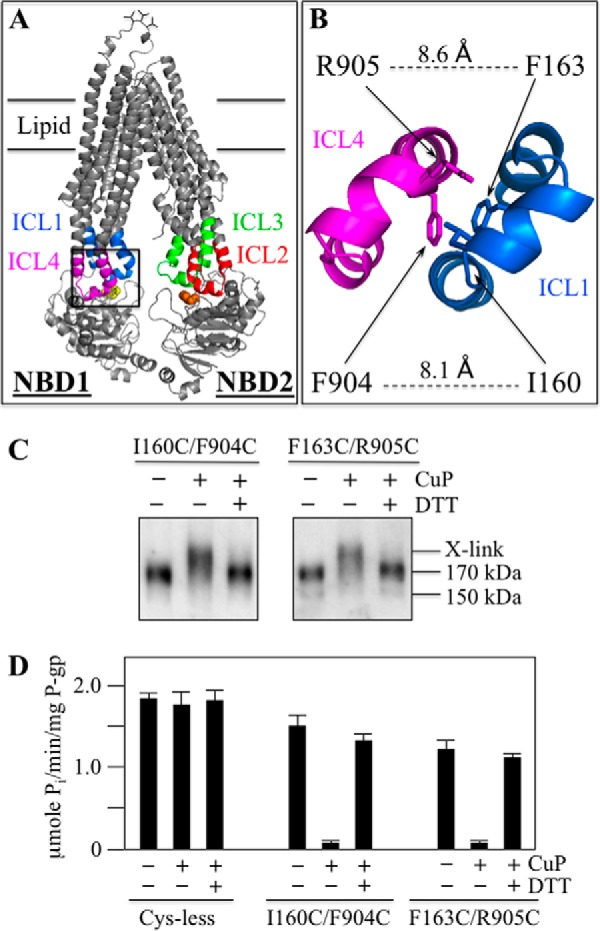
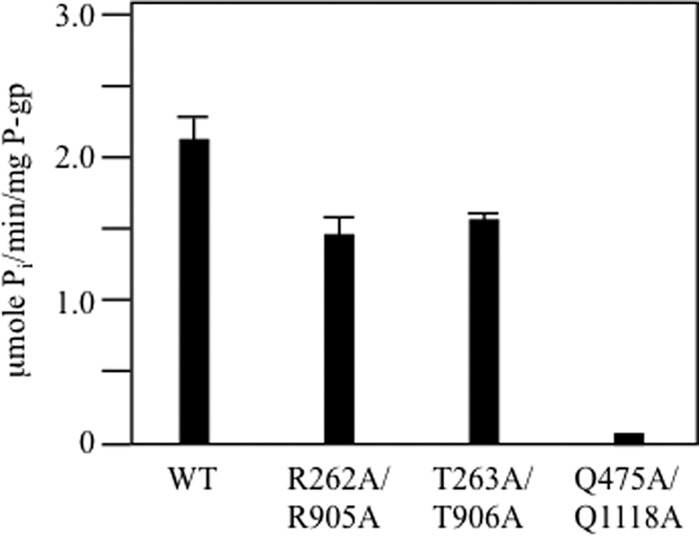
P-glycoprotein (P-gp; ABCB1) is an ABC drug pump that protects us from toxic compounds. It is clinically important because it confers multidrug resistance. The homologous halves of P-gp each contain a transmembrane (TM) domain (TMD) with 6 TM segments followed by a nucleotide-binding domain (NBD). The drug- and ATP-binding sites reside at the interface between the TMDs and NBDs, respectively. Each NBD is connected to the TMDs by a transmission interface involving a pair of intracellular loops (ICLs) that form ball-and-socket joints. P-gp is different from CFTR (ABCC7) in that deleting NBD2 causes misprocessing of only P-gp. Therefore, NBD2 might be critical for stabilizing ICLs 2 and 3 that form a tetrahelix bundle at the NBD2 interface. Here we report that the NBD1 and NBD2 transmission interfaces in P-gp are asymmetric. Point mutations to 25 of 60 ICL2/ICL3 residues at the NBD2 transmission interface severely reduced P-gp assembly while changes to the equivalent residues in ICL1/ICL4 at the NBD1 interface had little effect. The hydrophobic nature at the transmission interfaces was also different. Mutation of Phe-1086 or Tyr-1087 to arginine at the NBD2 socket blocked activity or assembly while the equivalent mutations at the NBD1 socket had only modest effects. The results suggest that the NBD transmission interfaces are asymmetric. In contrast to the ICL2/3-NBD2 interface, the ICL1/4-NBD1 transmission interface is more hydrophilic and insensitive to mutations. Therefore the ICL2/3-NBD2 transmission interface forms a precise hydrophobic connection that acts as a linchpin for assembly and trafficking of P-gp.
P-糖蛋白(P-gp;ABCB1)是一种ABC药物泵,可保护我们免受有毒化合物的侵害。它在临床上很重要,因为它赋予多药耐药性。P-gp的同源两半各自包含一个跨膜(TM)结构域(TMD),该结构域有6个TM片段,后面跟着一个核苷酸结合结构域(NBD)。药物结合位点和ATP结合位点分别位于TMD和NBD之间的界面处。每个NBD通过一个涉及一对形成球窝关节的细胞内环(ICL)的传输界面与TMD相连。P-gp与囊性纤维化跨膜传导调节因子(CFTR,ABCC7)的不同之处在于,删除NBD2仅会导致P-gp的错误加工。因此,NBD2对于稳定在NBD2界面形成四螺旋束的ICL2和ICL3可能至关重要。在此我们报告,P-gp中的NBD1和NBD2传输界面是不对称的。NBD2传输界面处60个ICL2/ICL3残基中的25个发生点突变会严重降低P-gp的组装,而NBD1界面处ICL1/ICL4中同等残基的变化影响很小。传输界面处的疏水性质也不同。NBD2球窝处的苯丙氨酸-1086或酪氨酸-1087突变为精氨酸会阻断活性或组装,而NBD1球窝处的同等突变只有适度影响。结果表明NBD传输界面是不对称的。与ICL2/3-NBD2界面相反,ICL1/4-NBD1传输界面更亲水且对突变不敏感。因此,ICL2/3-NBD2传输界面形成了一种精确的疏水连接,作为P-gp组装和运输的关键。