Wang Zhao-Hui, Zhao Zhi-Jun, Xu Kang, Sun Guo-Bing, Song Lin, Yin Hong-Xiang, Chen Xiao-Qi
Department of Neurology, Hanyang Hospital, Wuhan University of Science and Technology, Wuhan, Hubei 430050. P.R. China.
Department of Ultrasonic Diagnosis and Interventional Therapy, The First Hospital Affiliated to Henan University, Kaifeng, Henan 475001, P.R. China.
Mol Med Rep. 2015 Sep;12(3):3279-3284. doi: 10.3892/mmr.2015.3793. Epub 2015 May 18.
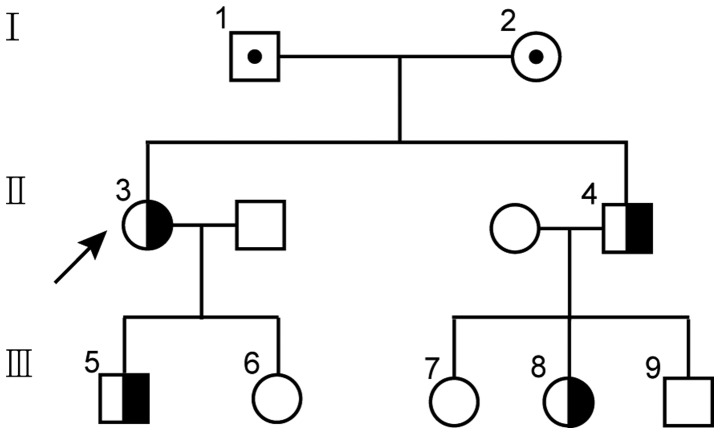
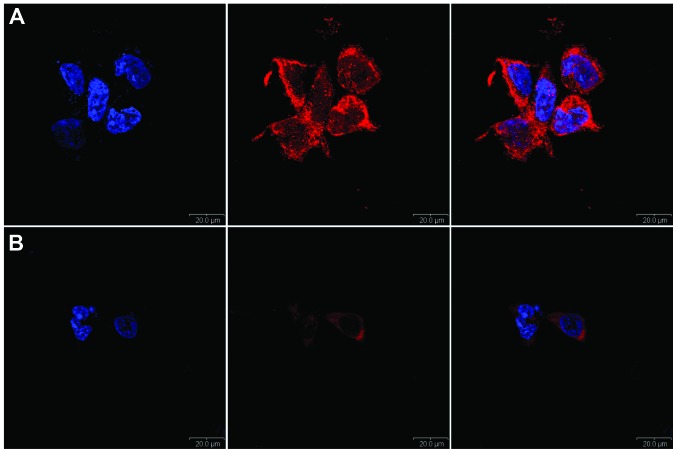
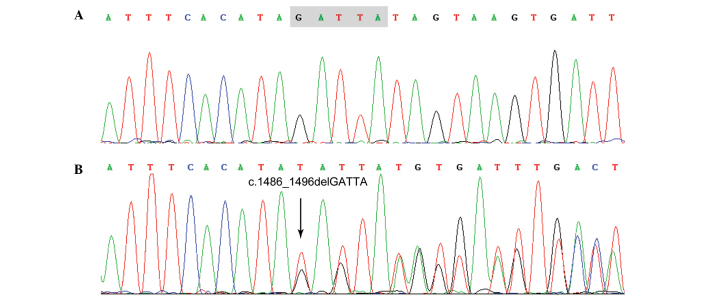
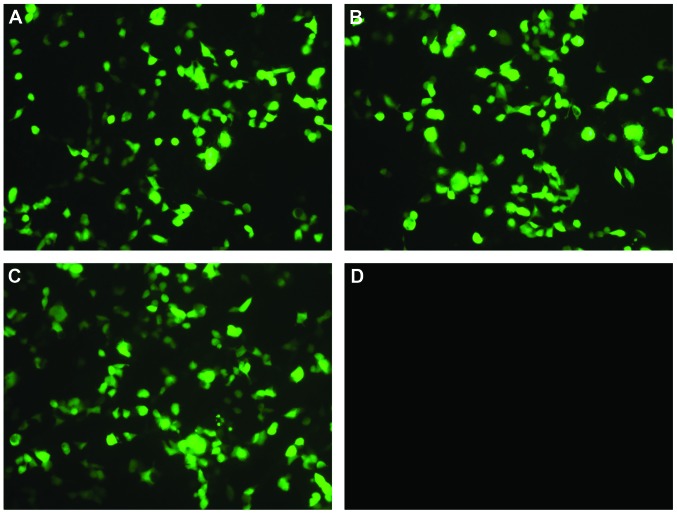
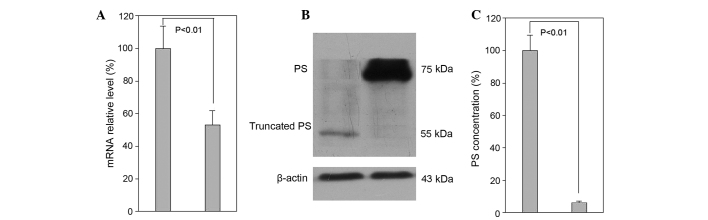
Hereditary protein S (PS) deficiency is an independent risk factor for venous thromboembolism. However, the correlation between PS and arterial thrombotic disease, such as cerebral thrombosis, is not clear. The present study focused on the molecular mechanisms underlying ischemic stroke caused by a PS gene mutation in one family. The activity of antithrombin, protein C and PS in the plasma of the proband was measured, and the genes encoding PS were amplified and sequenced. The cellular localization and expression of PS were analyzed in HEK‑293 cells. The proband was a 50‑year‑old male. Plasma PS activity of the proband was 38.9%, which was significantly decreased compared with normal levels. Sequencing analysis revealed a PROS1 c.1486_1490delGATTA mutation on exon 12. This frameshift mutation converts Asp496 in the precursor PS into the termination codon. In addition, the PROS1 mutation was correlated with low PS activity in the family. Functional tests revealed that the mutant protein aggregated in the cytoplasm and its secretion and expression decreased. In conclusion, protein S mutation appeared to be the primary cause of thrombosis in the family of the present study. However, the correlation between PS deficiency and ischemic stroke requires further investigation.
遗传性蛋白S(PS)缺乏是静脉血栓栓塞的独立危险因素。然而,PS与动脉血栓性疾病(如脑血栓形成)之间的相关性尚不清楚。本研究聚焦于一个家族中由PS基因突变引起的缺血性中风的分子机制。检测了先证者血浆中抗凝血酶、蛋白C和PS的活性,并对编码PS的基因进行扩增和测序。在HEK-293细胞中分析了PS的细胞定位和表达。先证者为一名50岁男性。先证者的血浆PS活性为38.9%,与正常水平相比显著降低。测序分析显示第12外显子存在PROS1 c.1486_1490delGATTA突变。这种移码突变将前体PS中的Asp496转换为终止密码子。此外,PROS1突变与该家族中PS活性降低相关。功能测试表明,突变蛋白在细胞质中聚集,其分泌和表达减少。总之,蛋白S突变似乎是本研究家族中血栓形成的主要原因。然而,PS缺乏与缺血性中风之间的相关性需要进一步研究。