Wang Peng, Menzies Neal W, Lombi Enzo, McKenna Brigid A, James Simon, Tang Caixian, Kopittke Peter M
The University of Queensland, School of Agriculture and Food Sciences, St. Lucia, Queensland, 4072, Australia
The University of Queensland, School of Agriculture and Food Sciences, St. Lucia, Queensland, 4072, Australia.
J Exp Bot. 2015 Aug;66(15):4795-806. doi: 10.1093/jxb/erv254. Epub 2015 May 26.
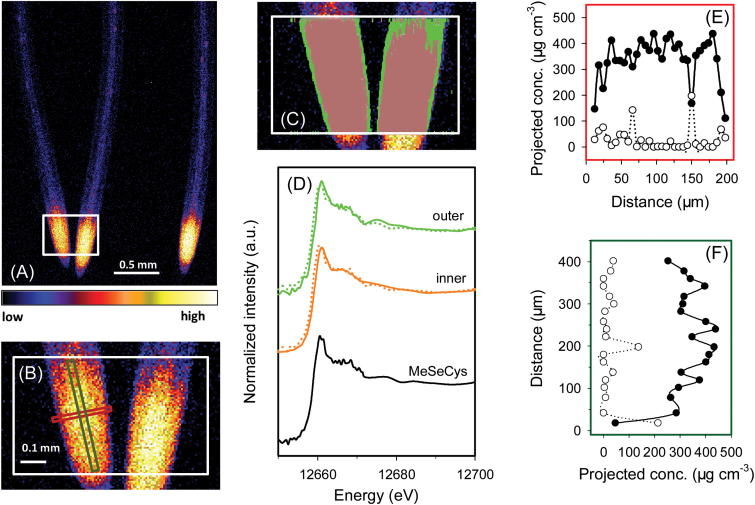
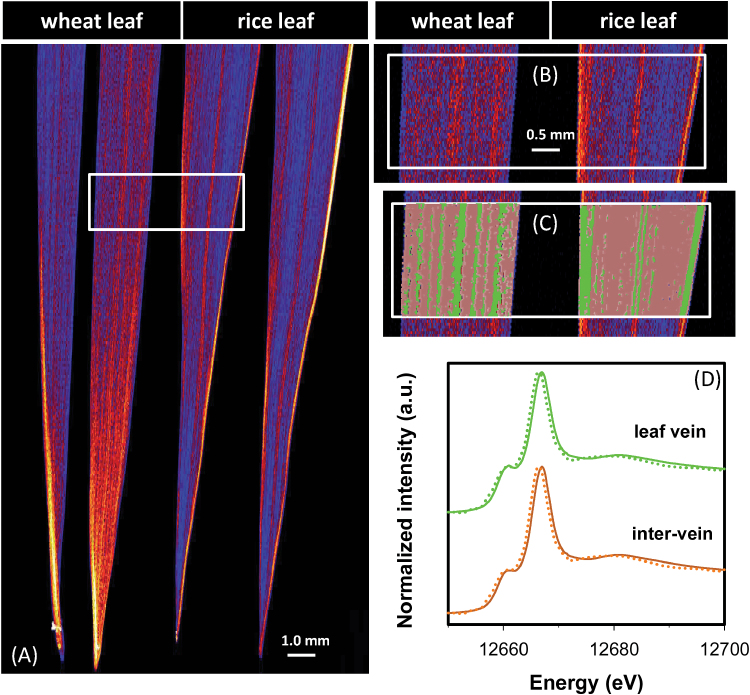
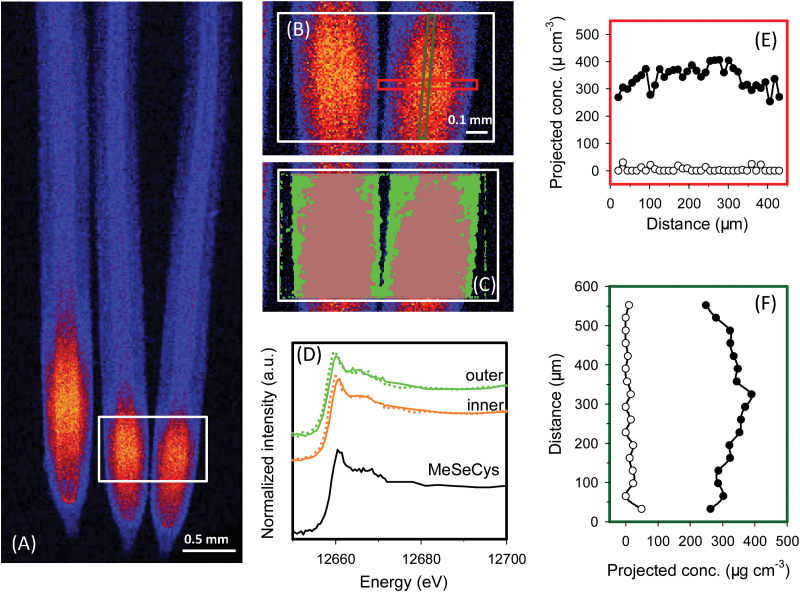
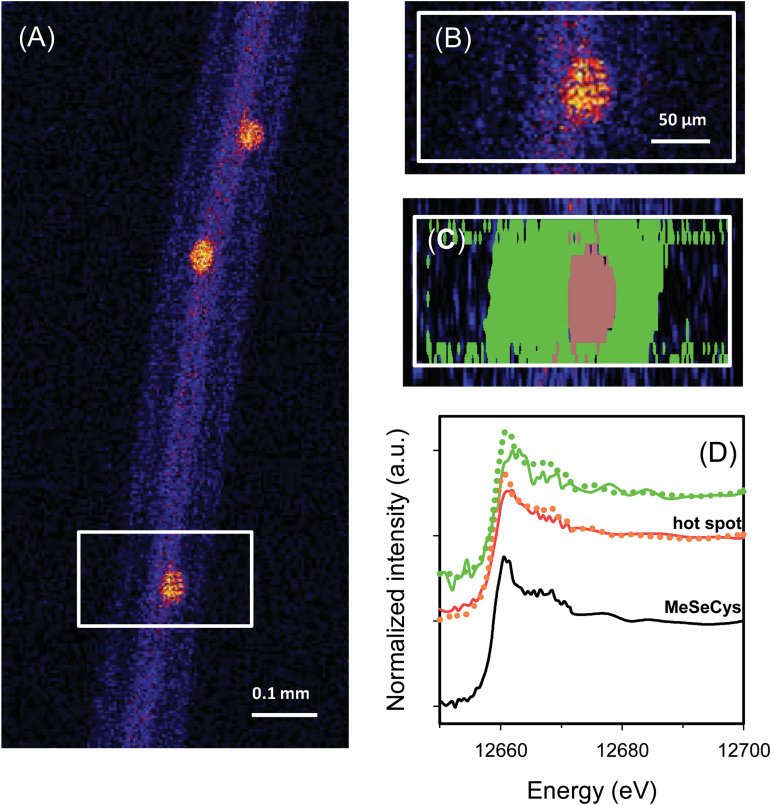
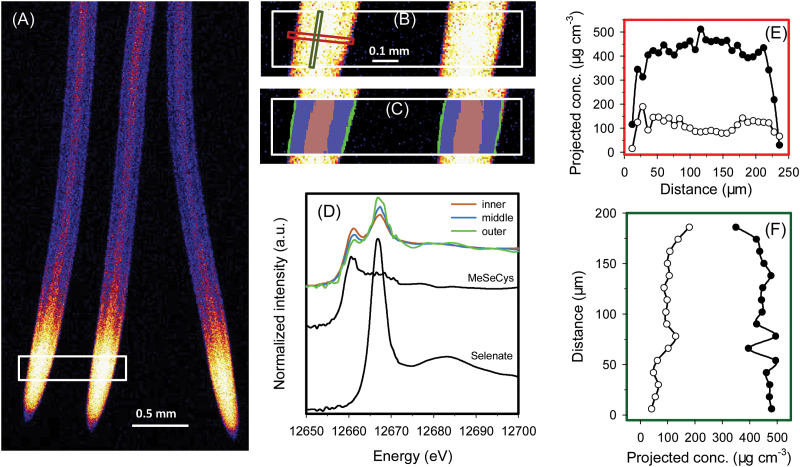
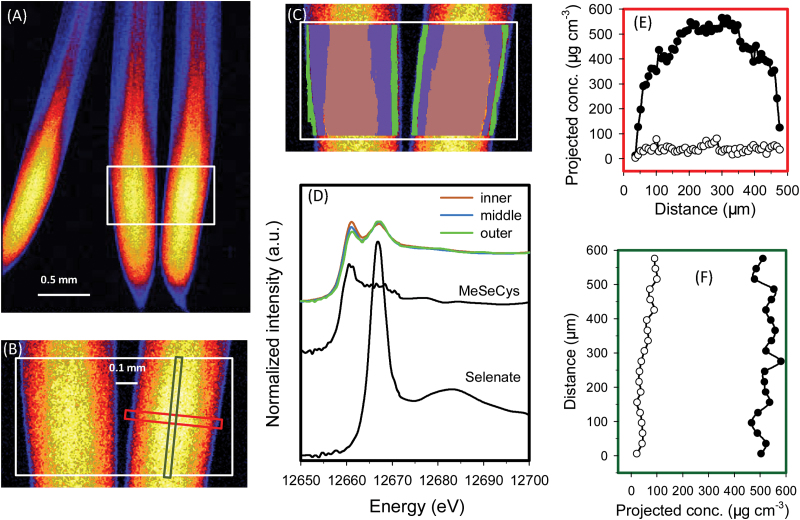
Knowledge of the distribution of selenium (Se) species within plant tissues will assist in understanding the mechanisms of Se uptake and translocation, but in situ analysis of fresh and highly hydrated plant tissues is challenging. Using synchrotron-based fluorescence X-ray absorption near-edge spectroscopy (XANES) imaging to provide laterally resolved data, the speciation of Se in fresh roots and leaves of wheat (Triticum aestivum L.) and rice (Oryza sativa L.) supplied with 1 μM of either selenate or selenite was investigated. For plant roots exposed to selenate, the majority of the Se was efficiently converted to C-Se-C compounds (i.e. methylselenocysteine or selenomethionine) as selenate was transported radially through the root cylinder. Indeed, even in the rhizodermis which is exposed directly to the bulk solution, only 12-31% of the Se was present as uncomplexed selenate. The C-Se-C compounds were probably sequestered within the roots, whilst much of the remaining uncomplexed Se was translocated to the leaves-selenate accounting for 52-56% of the total Se in the leaves. In a similar manner, for plants exposed to selenite, the Se was efficiently converted to C-Se-C compounds within the roots, with only a small proportion of uncomplexed selenite observed within the outer root tissues. This resulted in a substantial decrease in translocation of Se from the roots to leaves of selenite-exposed plants. This study provides important information for understanding the mechanisms responsible for the uptake and subsequent transformation of Se in plants.
了解植物组织中硒(Se)形态的分布有助于理解硒的吸收和转运机制,但对新鲜且高度水合的植物组织进行原位分析具有挑战性。利用基于同步加速器的荧光X射线吸收近边光谱(XANES)成像提供横向分辨数据,研究了供应1 μM硒酸盐或亚硒酸盐的小麦(Triticum aestivum L.)和水稻(Oryza sativa L.)新鲜根和叶中硒的形态。对于暴露于硒酸盐的植物根系,随着硒酸盐径向穿过根中柱运输,大部分硒有效地转化为C-Se-C化合物(即甲基硒代半胱氨酸或硒代蛋氨酸)。实际上,即使在直接暴露于本体溶液的根表皮中,也只有12 - 31%的硒以未络合的硒酸盐形式存在。C-Se-C化合物可能被隔离在根内,而其余大部分未络合的硒则转运到叶片中——硒酸盐占叶片中总硒的52 - 56%。以类似方式对于暴露于亚硒酸盐的植物,硒在根内有效地转化为C-Se-C化合物,在外根组织中仅观察到一小部分未络合的亚硒酸盐。这导致暴露于亚硒酸盐的植物中硒从根向叶的转运大幅减少。本研究为理解植物中硒的吸收及后续转化机制提供了重要信息。