Sovadinova Iva, Babica Pavel, Böke Hatice, Kumar Esha, Wilke Andrew, Park Joon-Suk, Trosko James E, Upham Brad L
Department of Pediatrics & Human Development; Center for Integrative Toxicology; and the Food Safety & Toxicology Center, Michigan State University, East Lansing, Michigan, 48824, United States of America; Research Centre for Toxic Compounds in the Environment-RECETOX, Masaryk University, Kamenice 5, CZ62500, Brno, Czech Republic.
Department of Pediatrics & Human Development; Center for Integrative Toxicology; and the Food Safety & Toxicology Center, Michigan State University, East Lansing, Michigan, 48824, United States of America; Department of Experimental Phycology and Ecotoxicology, Institute of Botany ASCR, Lidicka 25/27, CZ60200, Brno, Czech Republic.
PLoS One. 2015 May 29;10(5):e0124454. doi: 10.1371/journal.pone.0124454. eCollection 2015.
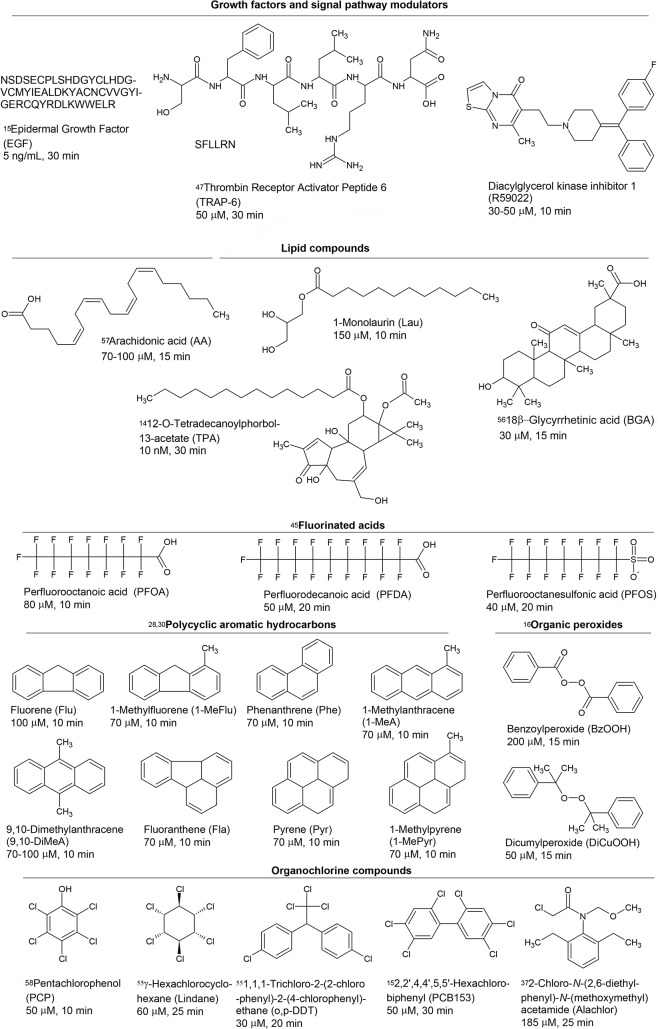
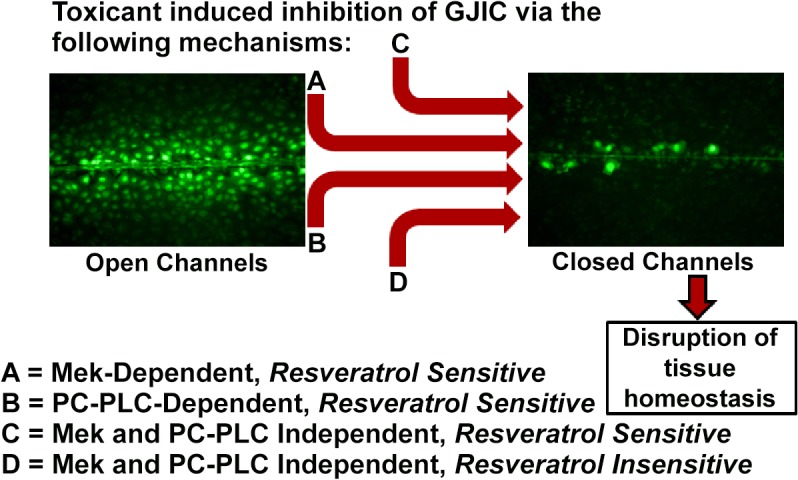
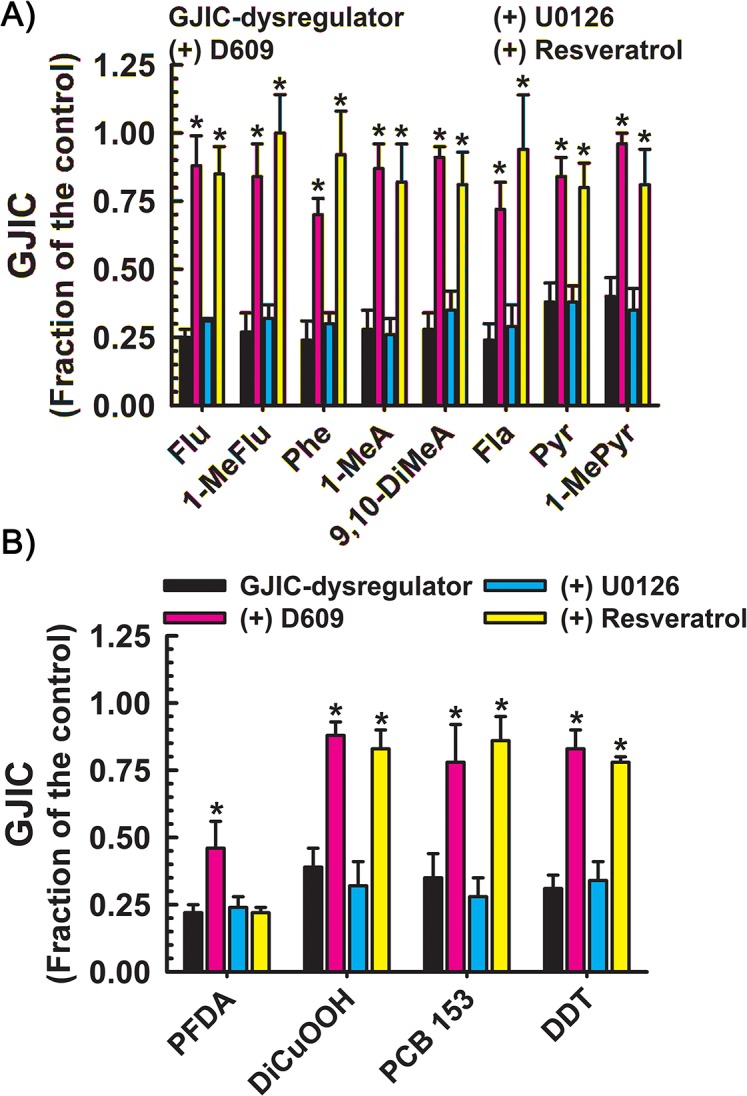
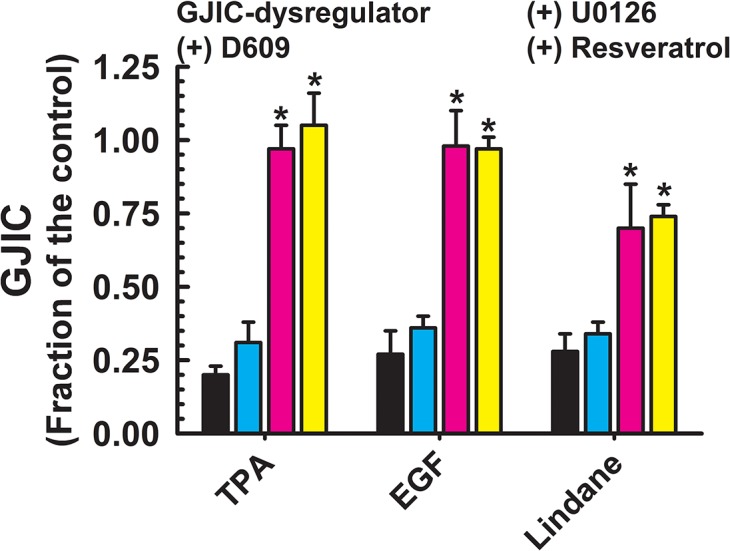
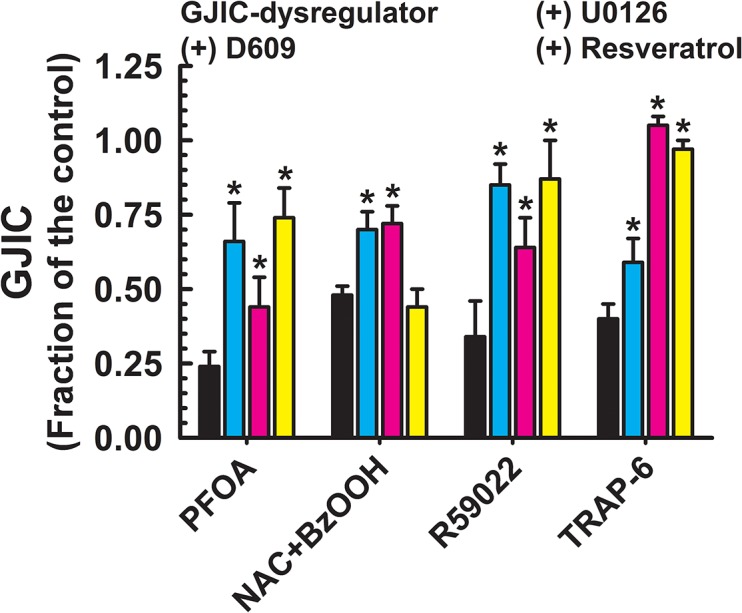
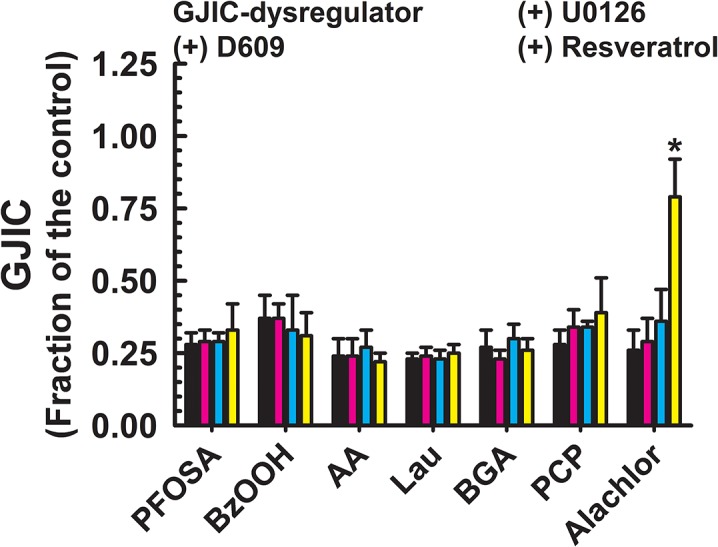
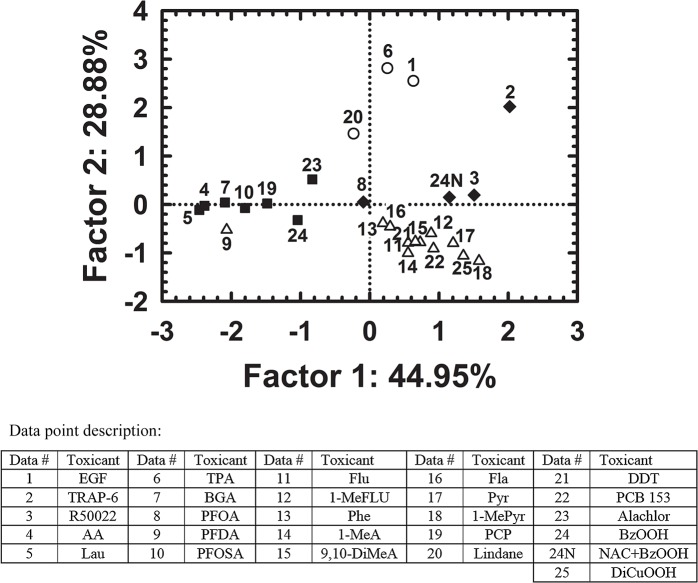
Dysregulation of gap junctional intercellular communication (GJIC) has been associated with different pathologies, including cancer; however, molecular mechanisms regulating GJIC are not fully understood. Mitogen Activated Protein Kinase (MAPK)-dependent mechanisms of GJIC-dysregulation have been well-established, however recent discoveries have implicated phosphatidylcholine-specific phospholipase C (PC-PLC) in the regulation of GJIC. What is not known is how prevalent these two signaling mechanisms are in toxicant/toxin-induced dysregulation of GJIC, and do toxicants/toxins work through either signaling mechanisms or both, or through alternative signaling mechanisms. Different chemical toxicants were used to assess whether they dysregulate GJIC via MEK or PC-PLC, or both Mek and PC-PLC, or through other signaling pathways, using a pluripotent rat liver epithelial oval-cell line, WB-F344. Epidermal growth factor, 12-O-tetradecanoylphorbol-13-acetate, thrombin receptor activating peptide-6 and lindane regulated GJIC through a MEK1/2-dependent mechanism that was independent of PC-PLC; whereas PAHs, DDT, PCB 153, dicumylperoxide and perfluorodecanoic acid inhibited GJIC through PC-PLC independent of Mek. Dysregulation of GJIC by perfluorooctanoic acid and R59022 required both MEK1/2 and PC-PLC; while benzoylperoxide, arachidonic acid, 18β-glycyrrhetinic acid, perfluorooctane sulfonic acid, 1-monolaurin, pentachlorophenol and alachlor required neither MEK1/2 nor PC-PLC. Resveratrol prevented dysregulation of GJIC by toxicants that acted either through MEK1/2 or PC-PLC. Except for alachlor, resveratrol did not prevent dysregulation of GJIC by toxicants that worked through PC-PLC-independent and MEK1/2-independent pathways, which indicated at least two other, yet unidentified, pathways that are involved in the regulation of GJIC.
the dysregulation of GJIC is a contributing factor to the cancer process; however the underlying mechanisms by which gap junction channels are closed by toxicants vary. Thus, accurate assessments of risk posed by toxic agents, and the role of dietary phytochemicals play in preventing or reversing the effects of these agents must take into account the specific mechanisms involved in the cancer process.
缝隙连接细胞间通讯(GJIC)失调与包括癌症在内的多种病理状况相关;然而,调节GJIC的分子机制尚未完全明确。丝裂原活化蛋白激酶(MAPK)依赖性的GJIC失调机制已得到充分证实,不过最近的研究发现磷脂酰胆碱特异性磷脂酶C(PC-PLC)也参与了GJIC的调节。目前尚不清楚这两种信号传导机制在毒物/毒素诱导的GJIC失调中普遍程度如何,以及毒物/毒素是通过其中一种信号传导机制、两种机制还是其他信号传导机制发挥作用。使用多能大鼠肝上皮卵圆细胞系WB-F344,采用不同的化学毒物来评估它们是否通过MEK或PC-PLC、或MEK和PC-PLC两者、或其他信号通路来使GJIC失调。表皮生长因子、12-O-十四烷酰佛波醇-13-乙酸酯、凝血酶受体激活肽-6和林丹通过一种不依赖于PC-PLC的MEK1/2依赖性机制调节GJIC;而多环芳烃、滴滴涕、多氯联苯153、过氧化二苯甲酰和全氟癸酸通过不依赖于Mek的PC-PLC抑制GJIC。全氟辛酸和R59022对GJIC的失调需要MEK1/2和PC-PLC两者;而过氧化苯甲酰、花生四烯酸、18β-甘草次酸、全氟辛烷磺酸、月桂酸甘油单酯、五氯苯酚和甲草胺既不需要MEK1/2也不需要PC-PLC。白藜芦醇可防止通过MEK1/2或PC-PLC起作用的毒物导致的GJIC失调。除甲草胺外,白藜芦醇不能防止通过不依赖于PC-PLC和不依赖于MEK1/2的途径起作用的毒物导致的GJIC失调,这表明至少还有另外两种尚未明确的途径参与了GJIC的调节。
GJIC失调是癌症发生过程中的一个促成因素;然而,毒物使缝隙连接通道关闭的潜在机制各不相同。因此,准确评估毒物所带来的风险以及膳食植物化学物质在预防或逆转这些毒物作用中所起的作用,必须考虑到癌症发生过程中涉及的具体机制。