Teles Rosane M B, Kelly-Scumpia Kindra M, Sarno Euzenir N, Rea Thomas H, Ochoa Maria T, Cheng Genhong, Modlin Robert L
Department of Medicine, University of California Los Angeles, Los Angeles, California, USA.
Leprosy Laboratory, Oswaldo Cruz Foundation, Rio de Janeiro, RJ, Brazil.
J Invest Dermatol. 2015 Oct;135(10):2410-2417. doi: 10.1038/jid.2015.195. Epub 2015 Jun 1.
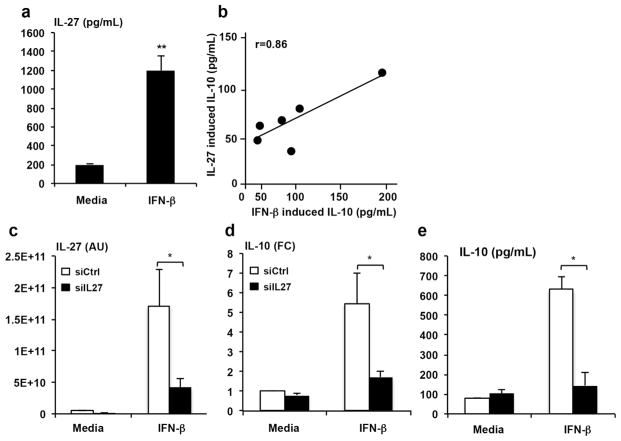
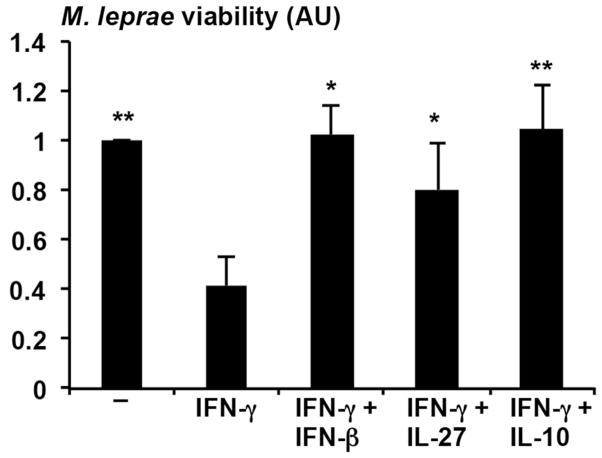
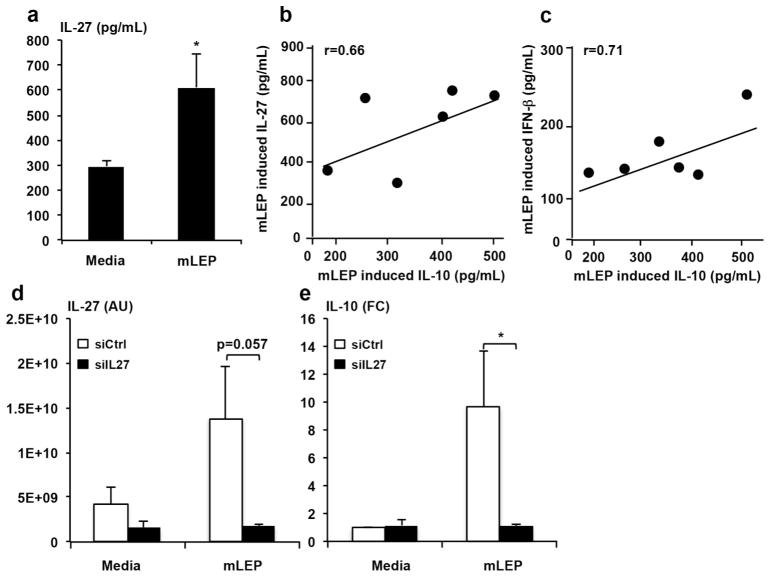
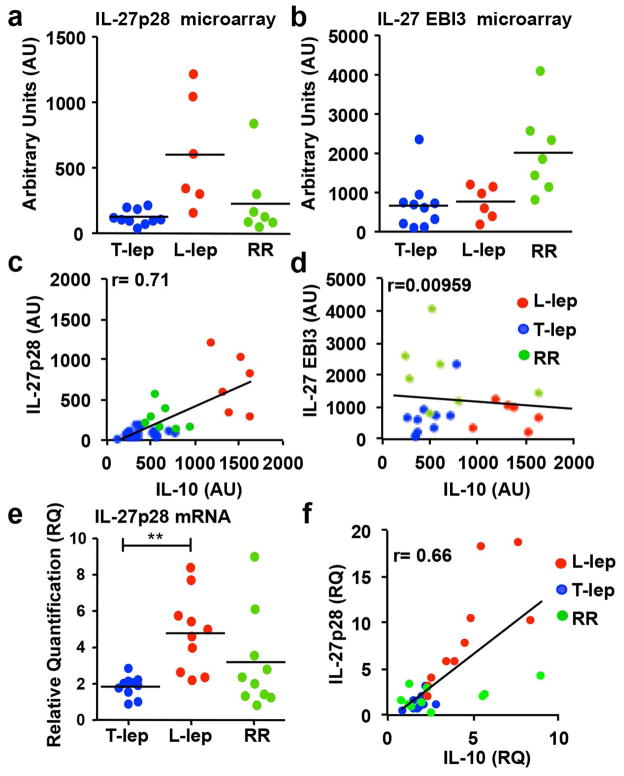
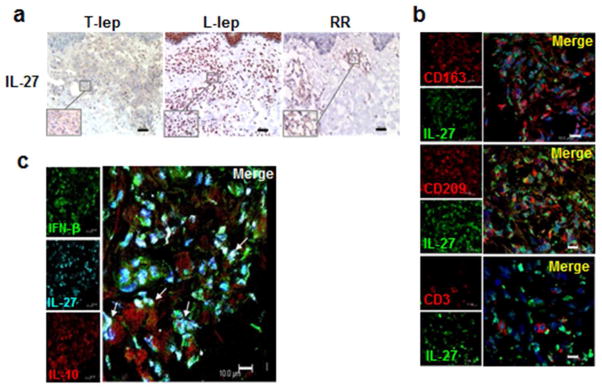
The mechanisms by which intracellular pathogens trigger immunosuppressive pathways are critical for understanding the pathogenesis of microbial infection. One pathway that inhibits host defense responses involves the induction of type I interferons and subsequently IL-10, yet the mechanism by which type I IFN induces IL-10 remains unclear. Our studies of gene expression profiles derived from leprosy skin lesions suggested a link between IL-27 and the IFN-β induced IL-10 pathway. Here, we demonstrate that the IL-27p28 subunit is upregulated following treatment of monocytes with IFN-β and Mycobacterium leprae, the intracellular bacterium that causes leprosy. The ability of IFN-β and M. leprae to induce IL-10 was diminished by IL-27 knockdown. Additionally, treatment of monocytes with recombinant IL-27 was sufficient to induce the production of IL-10. Functionally, IL-27 inhibited the ability of IFN-γ to trigger antimicrobial activity against M. leprae in infected monocytes. At the site of disease, IL-27 was more strongly expressed in skin lesions of patients with progressive lepromatous leprosy, correlating and colocalizing with IFN-β and IL-10 in macrophages. Together, these data provide evidence that in the human cutaneous immune responses to microbial infection, IL-27 contributes to the suppression of host antimicrobial responses.
细胞内病原体触发免疫抑制途径的机制对于理解微生物感染的发病机制至关重要。一条抑制宿主防御反应的途径涉及I型干扰素的诱导以及随后IL-10的诱导,然而I型干扰素诱导IL-10的机制仍不清楚。我们对来自麻风病皮肤病变的基因表达谱的研究表明IL-27与IFN-β诱导的IL-10途径之间存在联系。在此,我们证明在用IFN-β和麻风分枝杆菌(导致麻风病的细胞内细菌)处理单核细胞后,IL-27p28亚基上调。IL-27基因敲低减弱了IFN-β和麻风分枝杆菌诱导IL-10的能力。此外,用重组IL-27处理单核细胞足以诱导IL-10的产生。在功能上,IL-27抑制了IFN-γ在感染的单核细胞中触发针对麻风分枝杆菌的抗菌活性的能力。在疾病部位,进行性瘤型麻风患者的皮肤病变中IL-27表达更强,在巨噬细胞中与IFN-β和IL-10相关且共定位。总之,这些数据提供了证据,表明在人类对微生物感染的皮肤免疫反应中,IL-27有助于抑制宿主的抗菌反应。