Jia Chunming, Huan Yi, Liu Shuainan, Hou Shaocong, Sun Sujuan, Li Caina, Liu Quan, Jiang Qian, Wang Yue, Shen Zhufang
State Key Laboratory of Bioactive Substances and Functions of Natural Medicines, Institute of Materia Medica, Chinese Academy of Medical Sciences and Peking Union Medical College, Beijing 100050, China.
Int J Mol Sci. 2015 May 29;16(6):12213-29. doi: 10.3390/ijms160612213.
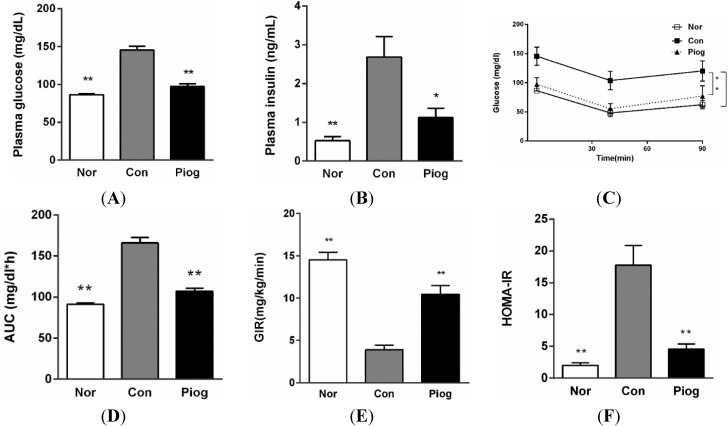
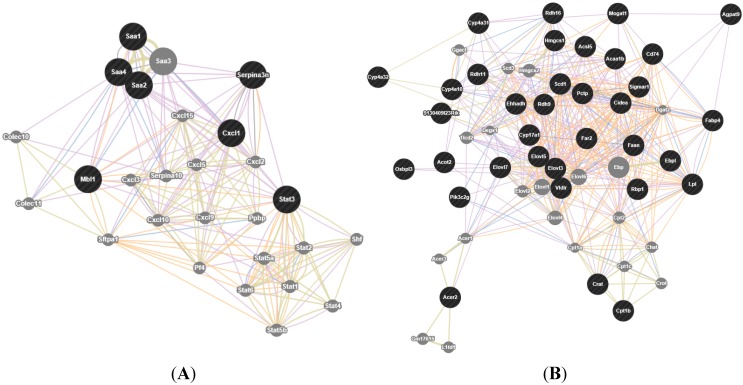
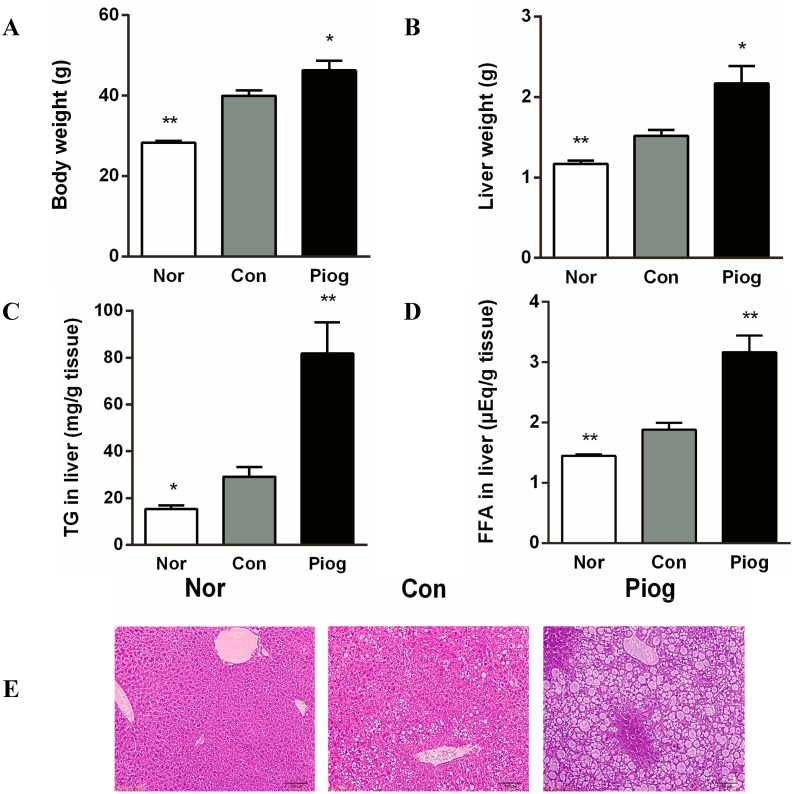
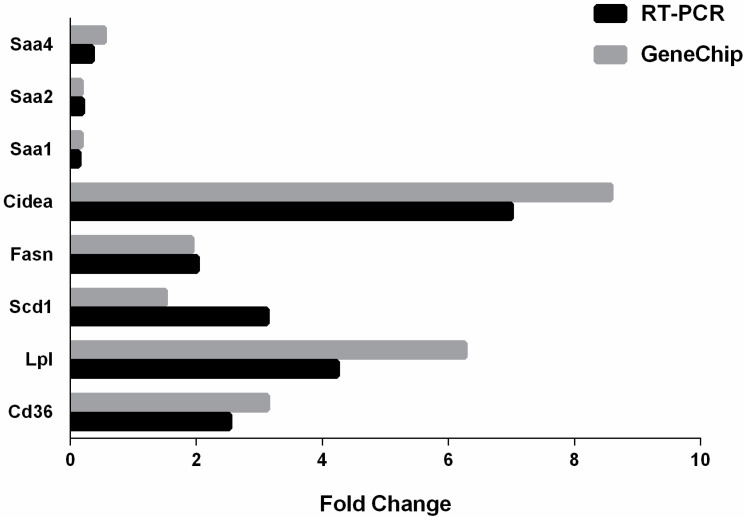
Pioglitazone, a selective ligand of peroxisome proliferator-activated receptor gamma (PPARγ), is an insulin sensitizer drug that is being used in a number of insulin-resistant conditions, including non-alcoholic fatty liver disease (NAFLD). However, there is a discrepancy between preclinical and clinical data in the literature and the benefits of pioglitazone treatment as well as the precise mechanism of action remain unclear. In the present study, we determined the effect of chronic pioglitazone treatment on hepatic gene expression profile in diet-induced obesity (DIO) C57BL/6J mice in order to understand the mechanisms of NAFLD induced by PPARγ agonists. DIO mice were treated with pioglitazone (25 mg/kg/day) for 38 days, the gene expression profile in liver was evaluated using Affymetrix Mouse GeneChip 1.0 ST array. Pioglitazone treatment resulted in exacerbated hepatic steatosis and increased hepatic triglyceride and free fatty acids concentrations, though significantly increased the glucose infusion rate in hyperinsulinemic-euglycemic clamp test. The differentially expressed genes in liver of pioglitazone treated vs. untreated mice include 260 upregulated and 86 downregulated genes. Gene Ontology based enrichment analysis suggests that inflammation response is transcriptionally downregulated, while lipid metabolism is transcriptionally upregulated. This may underlie the observed aggravating liver steatosis and ameliorated systemic insulin resistance in DIO mice.
吡格列酮是过氧化物酶体增殖物激活受体γ(PPARγ)的选择性配体,是一种胰岛素增敏药物,正在用于多种胰岛素抵抗性疾病,包括非酒精性脂肪性肝病(NAFLD)。然而,文献中的临床前和临床数据存在差异,吡格列酮治疗的益处以及确切作用机制仍不清楚。在本研究中,我们测定了慢性吡格列酮治疗对饮食诱导肥胖(DIO)的C57BL/6J小鼠肝脏基因表达谱的影响,以了解PPARγ激动剂诱导NAFLD的机制。DIO小鼠用吡格列酮(25mg/kg/天)治疗38天,使用Affymetrix Mouse GeneChip 1.0 ST阵列评估肝脏中的基因表达谱。吡格列酮治疗导致肝脂肪变性加重,肝甘油三酯和游离脂肪酸浓度增加,尽管在高胰岛素-正常血糖钳夹试验中显著提高了葡萄糖输注率。吡格列酮治疗组与未治疗组小鼠肝脏中差异表达的基因包括260个上调基因和86个下调基因。基于基因本体论的富集分析表明,炎症反应在转录水平上被下调,而脂质代谢在转录水平上被上调。这可能是DIO小鼠中观察到的肝脂肪变性加重和全身胰岛素抵抗改善的基础。