García-Cano Jesús, Ambroise Gorbatchev, Pascual-Serra Raquel, Carrión Maria Carmen, Serrano-Oviedo Leticia, Ortega-Muelas Marta, Cimas Francisco J, Sabater Sebastià, Ruiz-Hidalgo María José, Sanchez Perez Isabel, Mas Antonio, Jalón Félix A, Vazquez Aimé, Sánchez-Prieto Ricardo
Unidad de Medicina Molecular, Centro Regional de Investigaciones Biomédicas. Universidad de Castilla-La Mancha, Albacete, Spain.
INSERM U.1197/Université Paris-Sud/Equipe Labellisée Ligue Nationale Contre le Cancer, Hôpital Paul Brousse, Villejuif, France.
Oncotarget. 2015 Jun 20;6(17):15551-65. doi: 10.18632/oncotarget.3902.
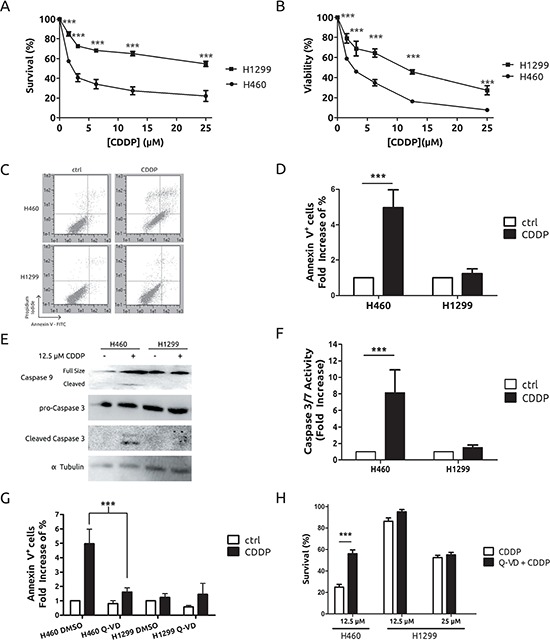
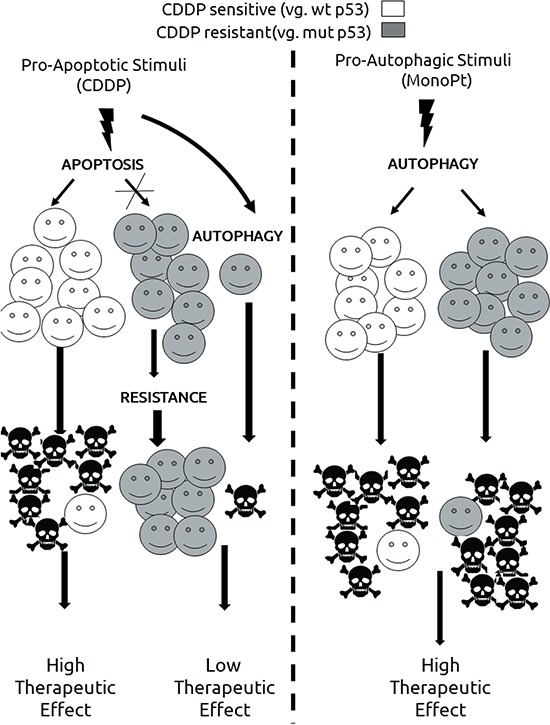
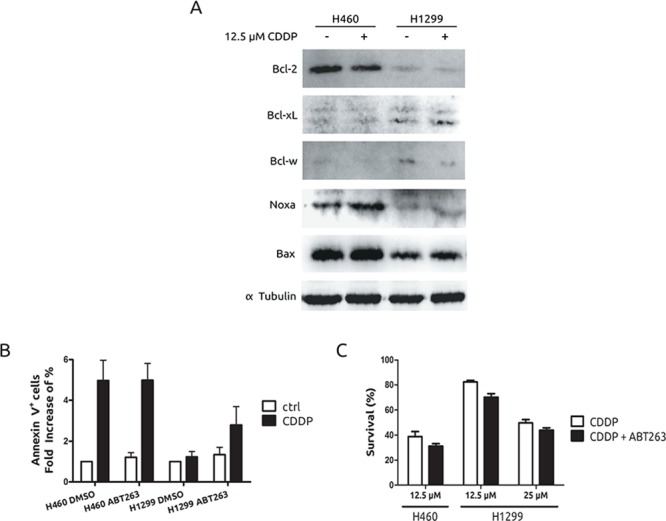
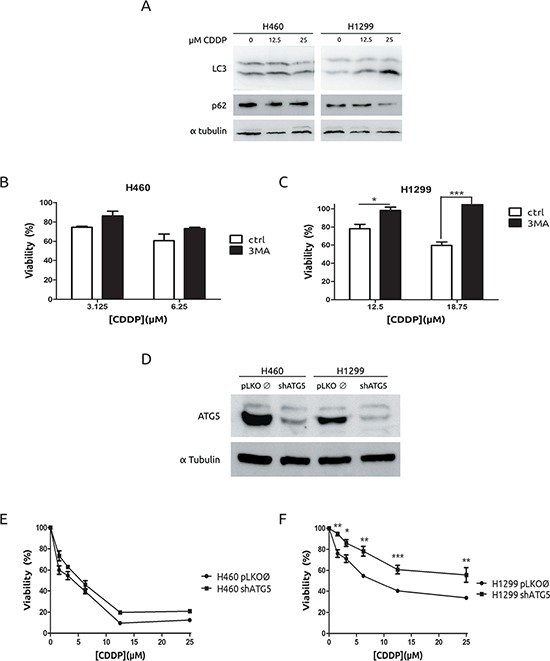
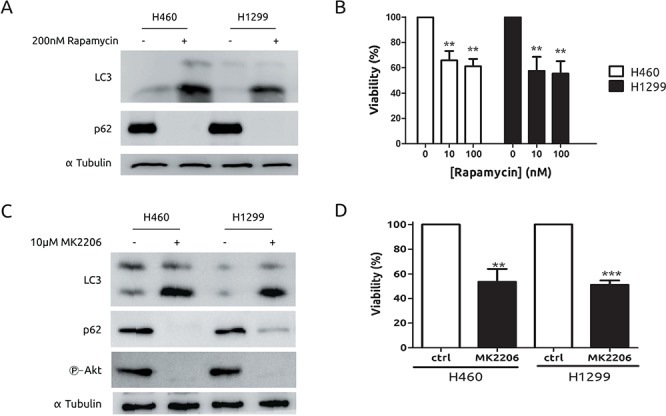
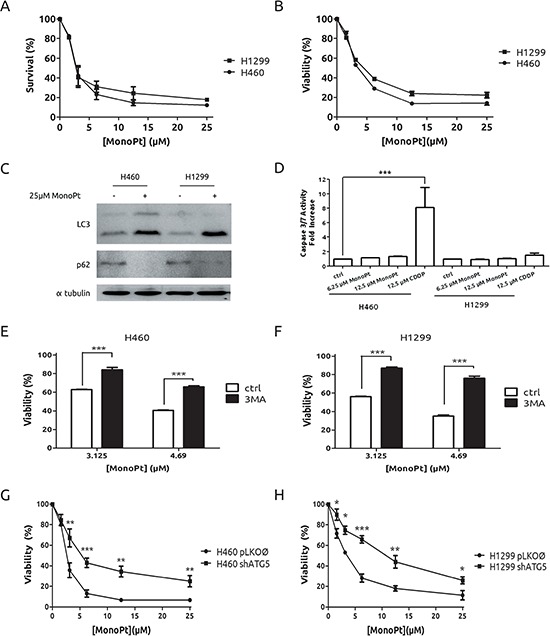
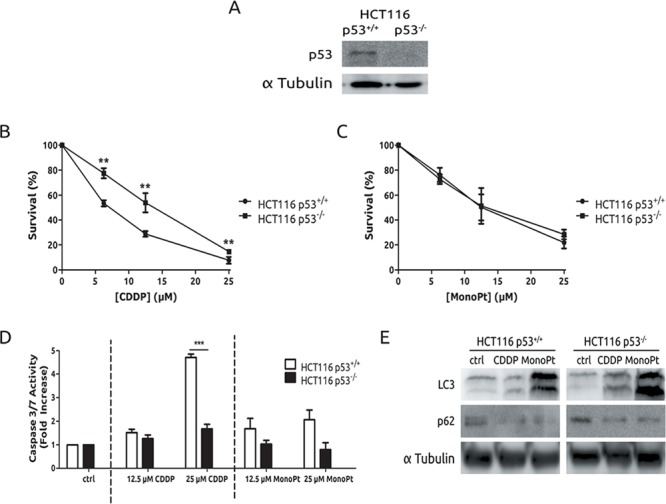
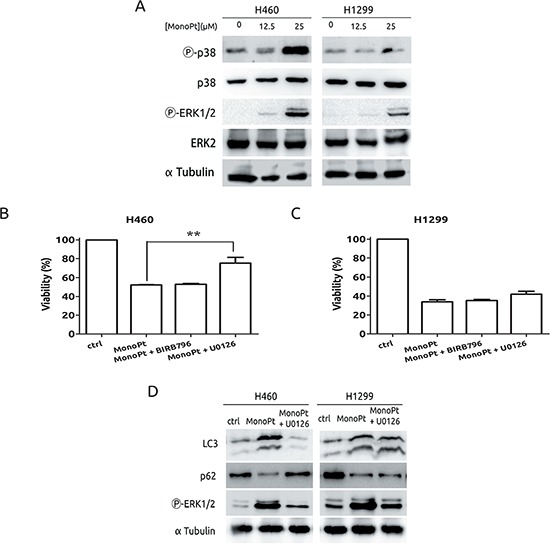
Resistance to cisplatin is a major challenge in the current cancer therapy. In order to explore new therapeutic strategies to cisplatin resistance, we evaluated, in a model of lung cancer (H1299 and H460 cell lines), the nature of the pathways leading to cell death. We observed that H1299 displayed a natural resistance to cisplatin due to an inability to trigger an apoptotic response that correlates with the induction of autophagy. However, pharmacological and genetic approaches showed how autophagy was a mechanism associated to cell death rather than to resistance. Indeed, pro-autophagic stimuli such as mTOR or Akt inhibition mediate cell death in both cell lines to a similar extent. We next evaluated the response to a novel platinum compound, monoplatin, able to promote cell death in an exclusive autophagy-dependent manner. In this case, no differences were observed between both cell lines. Furthermore, in response to monoplatin, two molecular hallmarks of cisplatin response (p53 and MAPKs) were not implicated, indicating the ability of this pro-autophagic compound to overcome cisplatin resistance. In summary, our data highlight how induction of autophagy could be used in cisplatin resistant tumours and an alternative treatment for p53 mutated patient in a synthetic lethally approach.
顺铂耐药是当前癌症治疗中的一个主要挑战。为了探索针对顺铂耐药的新治疗策略,我们在肺癌模型(H1299和H460细胞系)中评估了导致细胞死亡的信号通路的性质。我们观察到,H1299对顺铂表现出天然耐药性,这是由于其无法触发与自噬诱导相关的凋亡反应。然而,药理学和遗传学方法表明,自噬是一种与细胞死亡相关而非与耐药相关的机制。事实上,诸如mTOR或Akt抑制等促自噬刺激在两种细胞系中均以相似程度介导细胞死亡。接下来,我们评估了对一种新型铂化合物单铂的反应,该化合物能够以自噬依赖性方式促进细胞死亡。在这种情况下,两种细胞系之间未观察到差异。此外,对单铂的反应中,未涉及顺铂反应的两个分子特征(p53和丝裂原活化蛋白激酶),这表明这种促自噬化合物能够克服顺铂耐药性。总之,我们的数据突出了自噬诱导可用于顺铂耐药肿瘤,以及以合成致死方法为p53突变患者提供替代治疗。