Chandra Ganguli Somesh, Singh Harkirat, Saraswat Garima, Ganguly Rini, Bagwe Vivas, Shirage Parasharam, Thamizhavel Arumugam, Raychaudhuri Pratap
Tata Institute of Fundamental Research, Homi Bhabha Road, Colaba, Mumbai 400005, India.
Indian Institute of Technology Indore, IET-DAVV Campus, Khandwa Road, Indore 452017, India.
Sci Rep. 2015 Jun 3;5:10613. doi: 10.1038/srep10613.
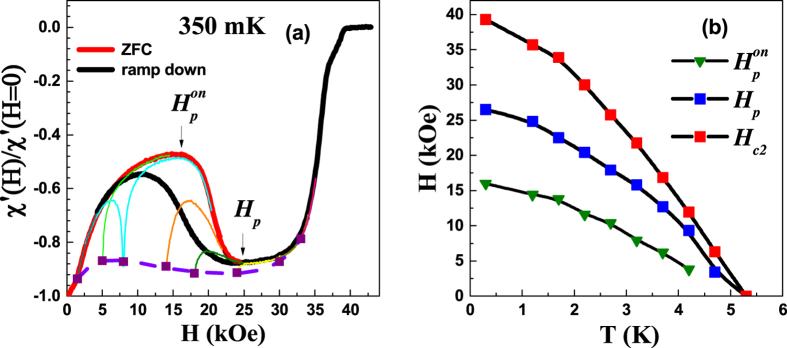
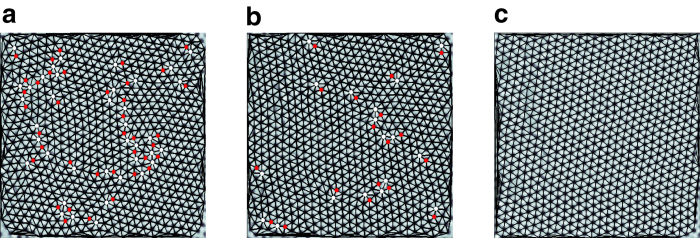
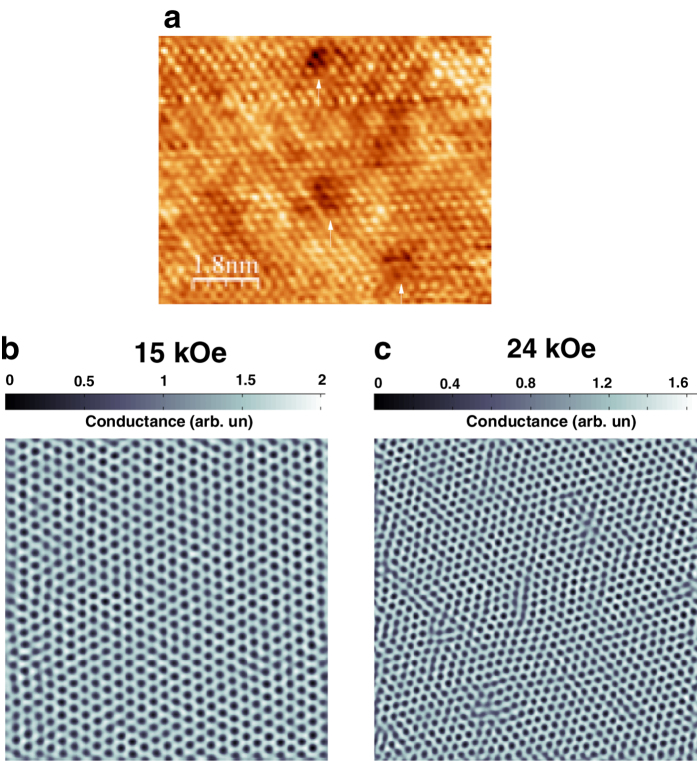
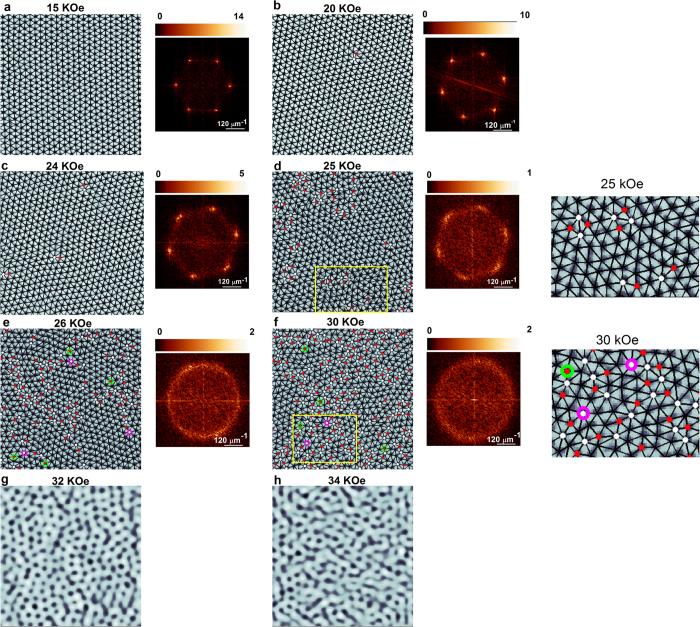
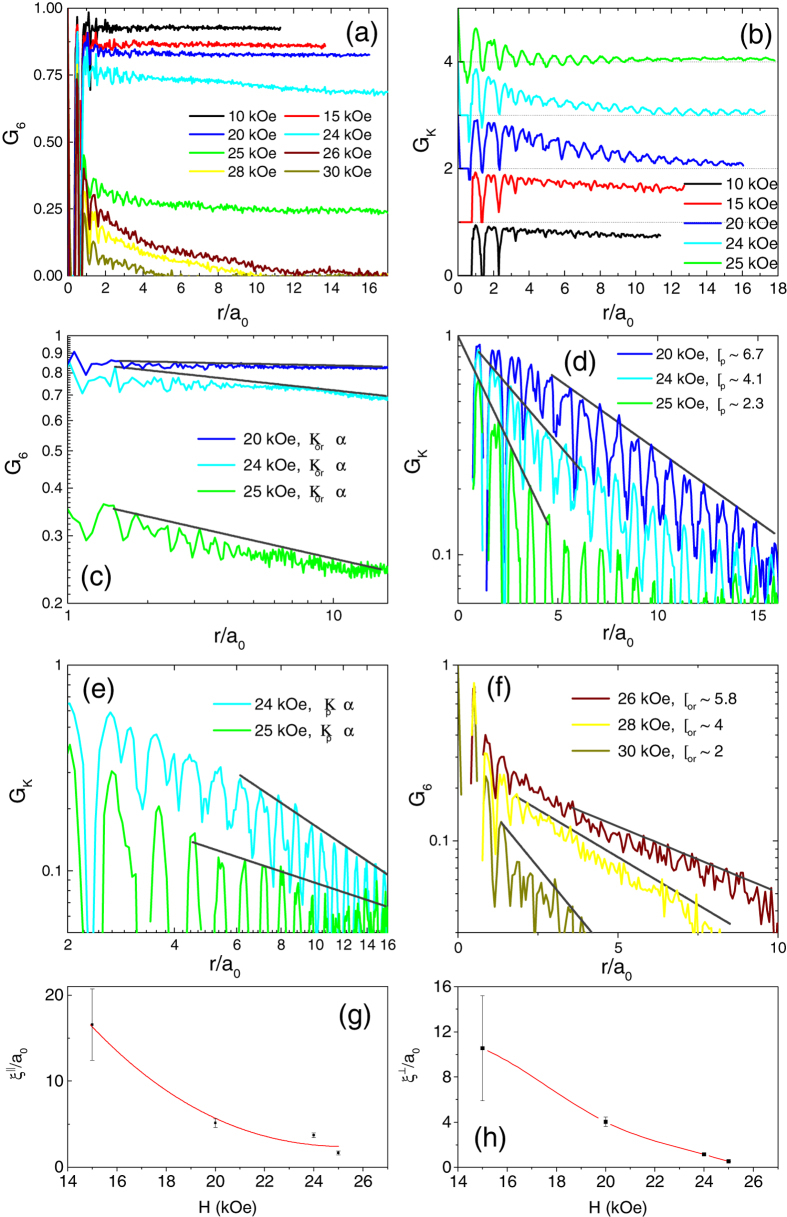
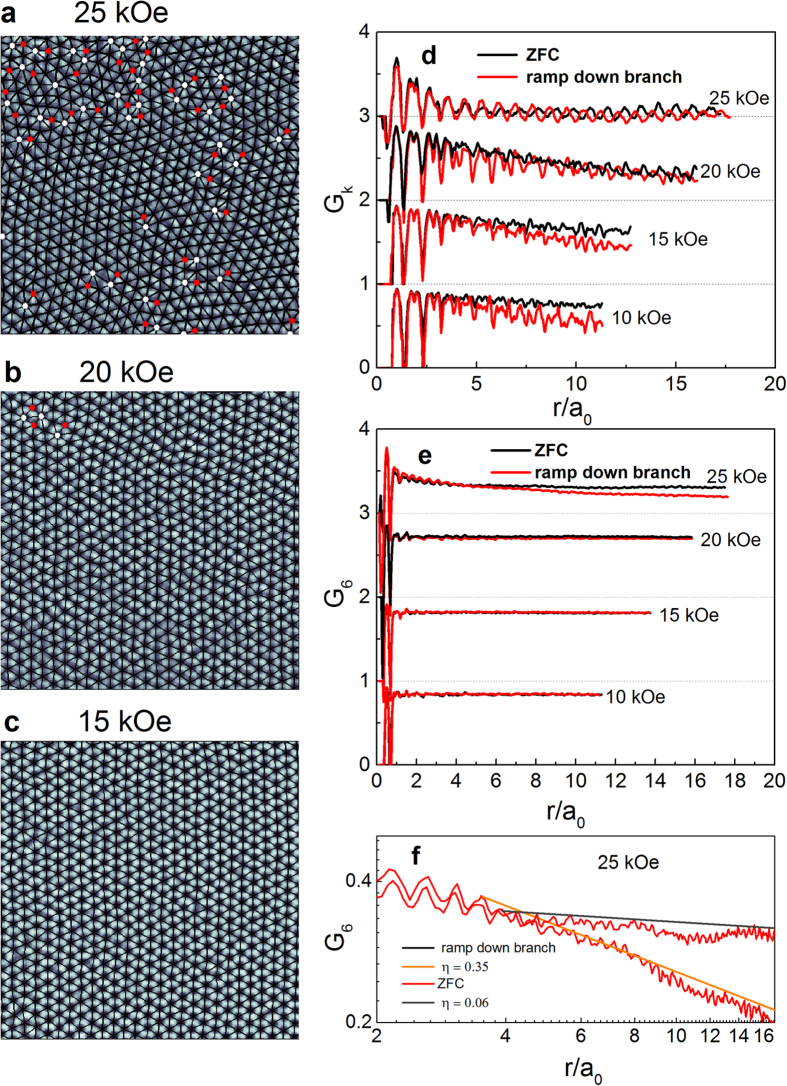
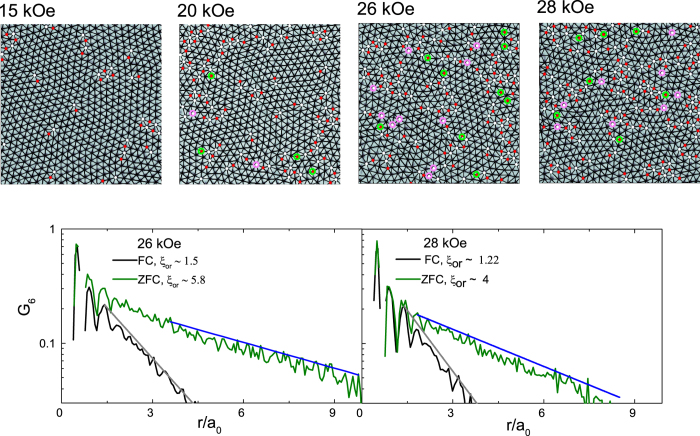
The vortex lattice in a Type II superconductor provides a versatile model system to investigate the order-disorder transition in a periodic medium in the presence of random pinning. Here, using scanning tunnelling spectroscopy in a weakly pinned Co(0.0075)NbSe(2) single crystal, we show that the vortex lattice in a 3-dimensional superconductor disorders through successive destruction of positional and orientational order, as the magnetic field is increased across the peak effect. At the onset of the peak effect, the equilibrium quasi-long range ordered state transforms into an orientational glass through the proliferation of dislocations. At a higher field, the dislocations dissociate into isolated disclination giving rise to an amorphous vortex glass. We also show the existence of a variety of additional non-equilibrium metastable states, which can be accessed through different thermomagnetic cycling.
II型超导体中的涡旋晶格提供了一个通用的模型系统,用于研究存在随机钉扎时周期性介质中的有序-无序转变。在此,我们利用扫描隧道光谱技术对弱钉扎的Co(0.0075)NbSe(2)单晶进行研究,结果表明,随着磁场在峰值效应期间增加,三维超导体中的涡旋晶格通过位置和取向有序的连续破坏而无序化。在峰值效应开始时,平衡准长程有序态通过位错的增殖转变为取向玻璃态。在更高的磁场下,位错解离为孤立的向错,从而产生非晶态涡旋玻璃。我们还展示了各种额外的非平衡亚稳态的存在,这些亚稳态可以通过不同的热磁循环来实现。