Xu Tian-Ying, Zhang Sai-Long, Dong Guo-Qiang, Liu Xin-Zhu, Wang Xia, Lv Xiao-Qun, Qian Qi-Jun, Zhang Ruo-Yu, Sheng Chun-Quan, Miao Chao-Yu
Department of Pharmacology.
Department of Medicinal Chemistry.
Sci Rep. 2015 Jun 4;5:10043. doi: 10.1038/srep10043.
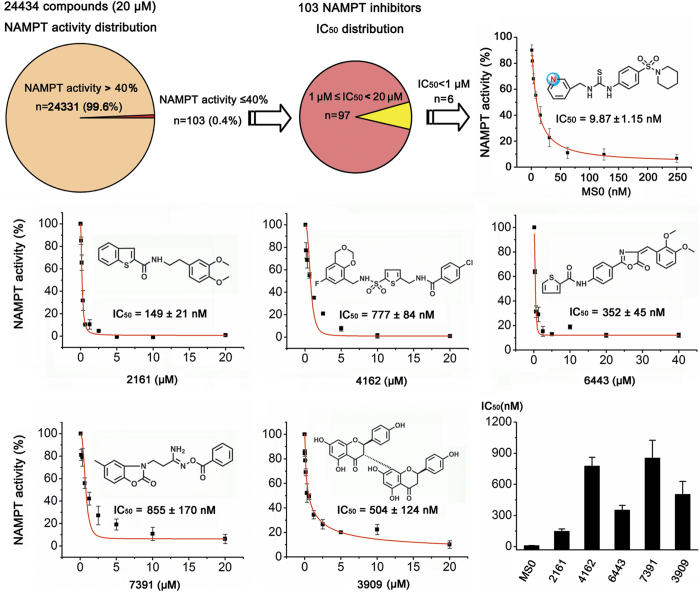
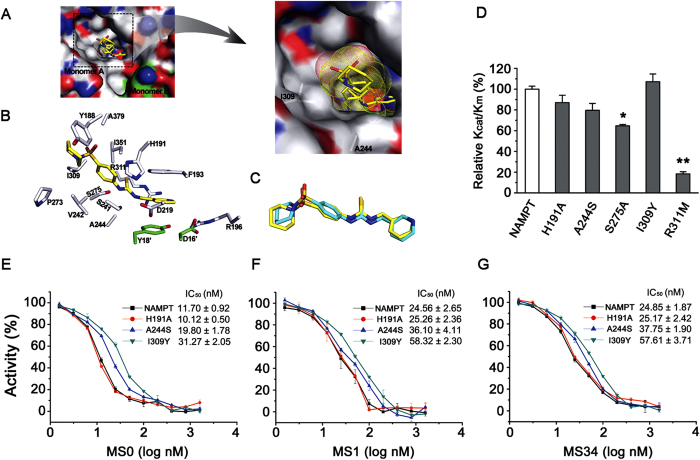
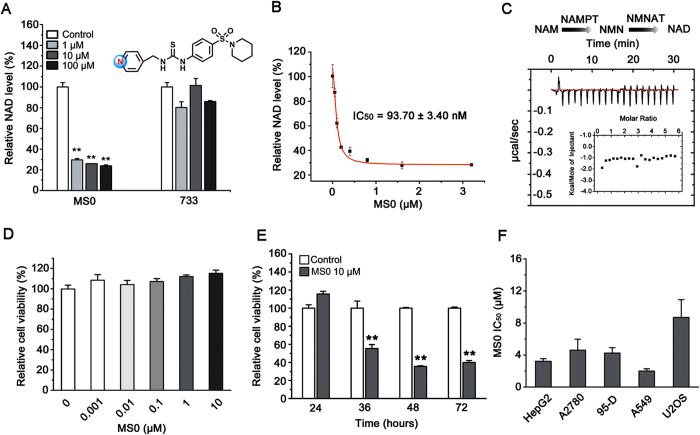
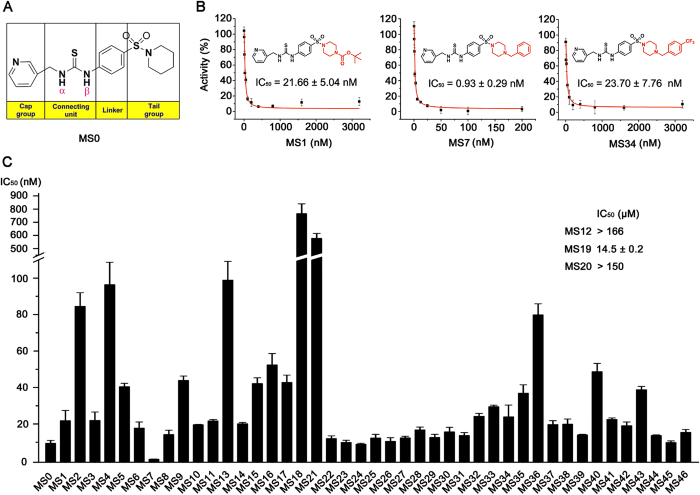
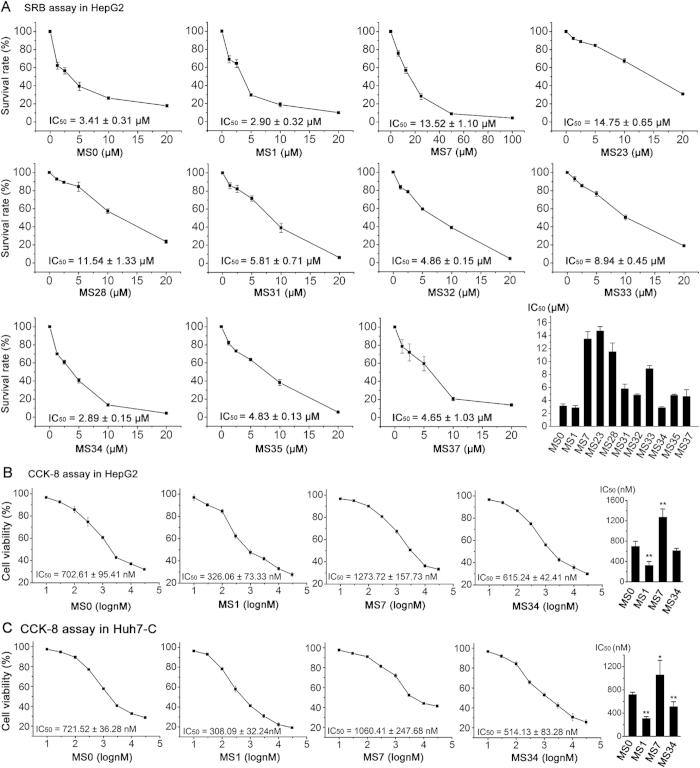
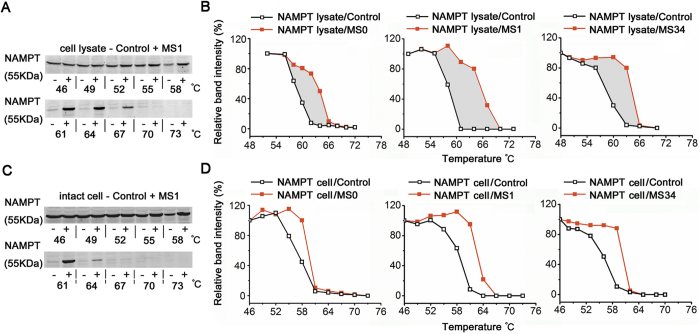
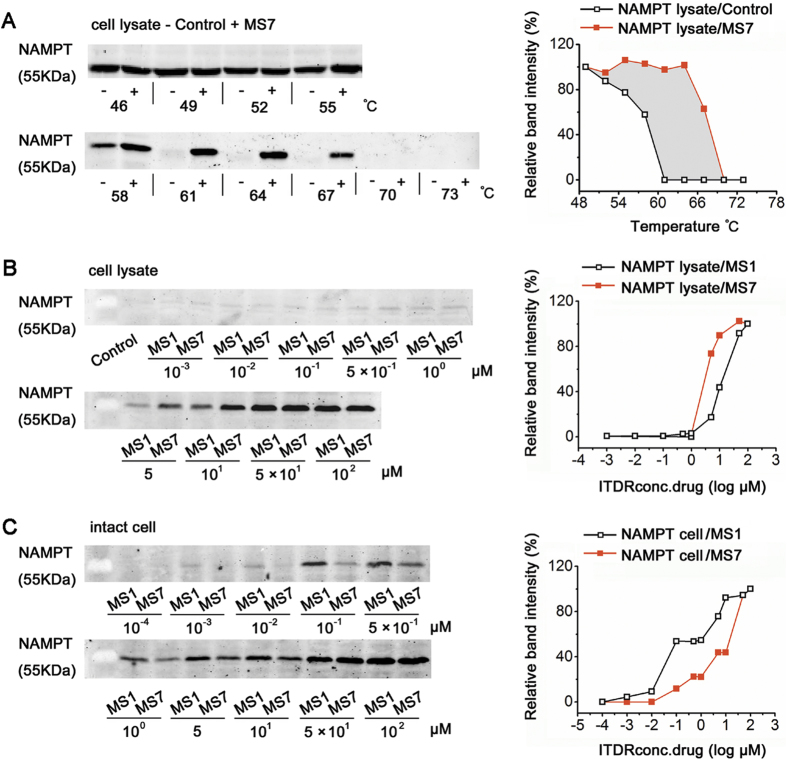
Nicotinamide phosphoribosyltransferase (NAMPT) is a promising anticancer target. Using high throughput screening system targeting NAMPT, we obtained a potent NAMPT inhibitor MS0 (China Patent ZL201110447488.9) with excellent in vitro activity (IC50 = 9.87 ± 1.15 nM) and anti-proliferative activity against multiple human cancer cell lines including stem-like cancer cells. Structure-activity relationship studies yielded several highly effective analogues. These inhibitors specifically bound NAMPT, rather than downstream NMNAT. We provided the first chemical case using cellular thermal shift assay to explain the difference between in vitro and cellular activity; MS7 showed best in vitro activity (IC50 = 0.93 ± 0.29 nM) but worst cellular activity due to poor target engagement in living cells. Site-directed mutagenesis studies identified important residues for NAMPT catalytic activity and inhibitor binding. The present findings contribute to deep understanding the action mode of NAMPT inhibitors and future development of NAMPT inhibitors as anticancer agents.
烟酰胺磷酸核糖转移酶(NAMPT)是一个很有前景的抗癌靶点。利用靶向NAMPT的高通量筛选系统,我们获得了一种强效的NAMPT抑制剂MS0(中国专利ZL201110447488.9),其具有出色的体外活性(IC50 = 9.87 ± 1.15 nM),并且对包括癌干细胞样细胞在内的多种人类癌细胞系具有抗增殖活性。构效关系研究产生了几种高效类似物。这些抑制剂特异性结合NAMPT,而非下游的NMNAT。我们首次使用细胞热迁移分析从化学角度解释了体外活性与细胞活性之间的差异;MS7在体外表现出最佳活性(IC50 = 0.93 ± 0.29 nM),但由于在活细胞中与靶点的结合不佳,其细胞活性最差。定点诱变研究确定了NAMPT催化活性和抑制剂结合的重要残基。本研究结果有助于深入了解NAMPT抑制剂的作用模式以及NAMPT抑制剂作为抗癌药物的未来开发。