Go Gwang-woong
Department of Food and Nutrition, Kookmin University, Seoul 136-702, Korea.
Nutrients. 2015 Jun 3;7(6):4453-64. doi: 10.3390/nu7064453.
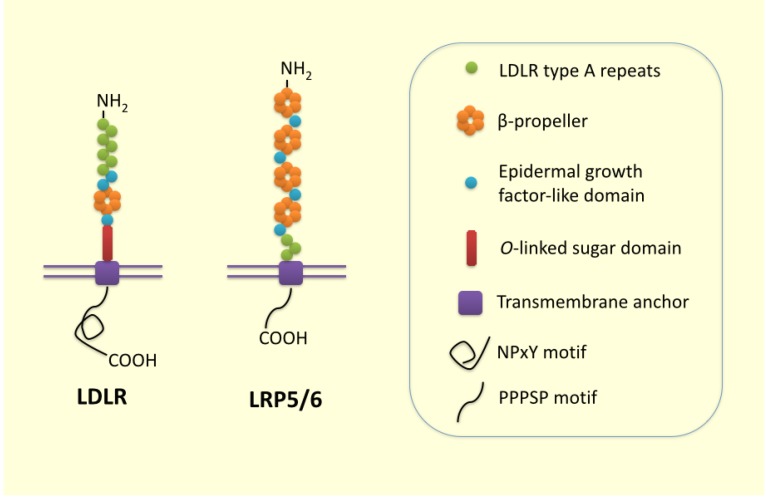
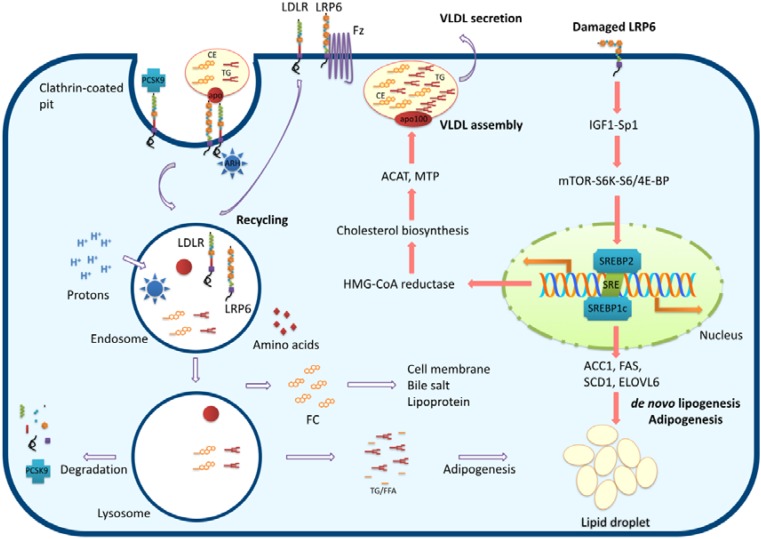
Low-density lipoprotein receptor-related protein 6 (LRP6) is a member of the low-density lipoprotein receptor family and has a unique structure, which facilitates its multiple functions as a co-receptor for Wnt/β-catenin signaling and as a ligand receptor for endocytosis. The role LRP6 plays in metabolic regulation, specifically in the nutrient-sensing pathway, has recently garnered considerable interest. Patients carrying an LRP6 mutation exhibit elevated levels of LDL cholesterol, triglycerides, and fasting glucose, which cooperatively constitute the risk factors of metabolic syndrome and atherosclerosis. Since the discovery of this mutation, the general role of LRP6 in lipid homeostasis, glucose metabolism, and atherosclerosis has been thoroughly researched. These studies have demonstrated that LRP6 plays a role in LDL receptor-mediated LDL uptake. In addition, when the LRP6 mutant impaired Wnt-LRP6 signaling, hyperlipidemia, non-alcoholic fatty liver disease, and atherosclerosis developed. LRP6 regulates lipid homeostasis and body fat mass via the nutrient-sensing mechanistic target of the rapamycin (mTOR) pathway. Furthermore, the mutant LRP6 triggers atherosclerosis by activating platelet-derived growth factor (PDGF)-dependent vascular smooth muscle cell differentiation. This review highlights the exceptional opportunities to study the pathophysiologic contributions of LRP6 to metabolic syndrome and cardiovascular diseases, which implicate LRP6 as a latent regulator of lipid metabolism and a novel therapeutic target for nutritional intervention.
低密度脂蛋白受体相关蛋白6(LRP6)是低密度脂蛋白受体家族的成员,具有独特的结构,这使其能够作为Wnt/β-连环蛋白信号通路的共受体以及内吞作用的配体受体发挥多种功能。LRP6在代谢调节中所起的作用,特别是在营养感应途径中的作用,最近引起了相当大的关注。携带LRP6突变的患者表现出低密度脂蛋白胆固醇、甘油三酯和空腹血糖水平升高,这些共同构成了代谢综合征和动脉粥样硬化的危险因素。自发现这种突变以来,LRP6在脂质稳态、葡萄糖代谢和动脉粥样硬化中的总体作用已得到充分研究。这些研究表明,LRP6在低密度脂蛋白受体介导的低密度脂蛋白摄取中发挥作用。此外,当LRP6突变体损害Wnt-LRP6信号通路时,会出现高脂血症、非酒精性脂肪性肝病和动脉粥样硬化。LRP6通过雷帕霉素机制性靶标(mTOR)营养感应途径调节脂质稳态和体脂量。此外,突变型LRP6通过激活血小板衍生生长因子(PDGF)依赖性血管平滑肌细胞分化引发动脉粥样硬化。本综述强调了研究LRP6对代谢综合征和心血管疾病病理生理贡献的特殊机会,这表明LRP6是脂质代谢的潜在调节因子和营养干预的新治疗靶点。