Sanderson T H, Raghunayakula S, Kumar R
Department of Emergency Medicine, Wayne State University School of Medicine, 540 E. Canfield, Detroit, MI, USA; Cardiovascular Research Institute, Wayne State University School of Medicine, 421E. Canfield, Detroit, MI, USA.
Department of Emergency Medicine, Wayne State University School of Medicine, 540 E. Canfield, Detroit, MI, USA.
Neuroscience. 2015 Aug 20;301:71-8. doi: 10.1016/j.neuroscience.2015.05.078. Epub 2015 Jun 3.
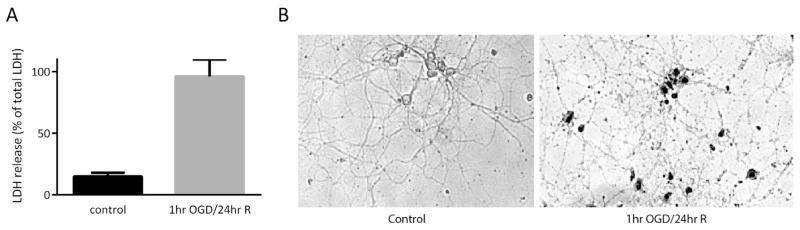
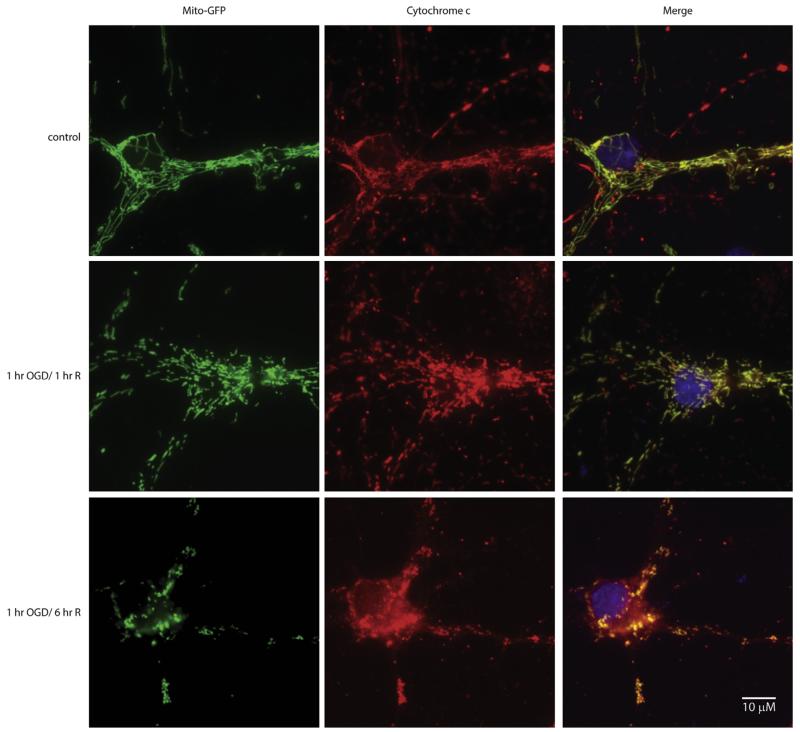
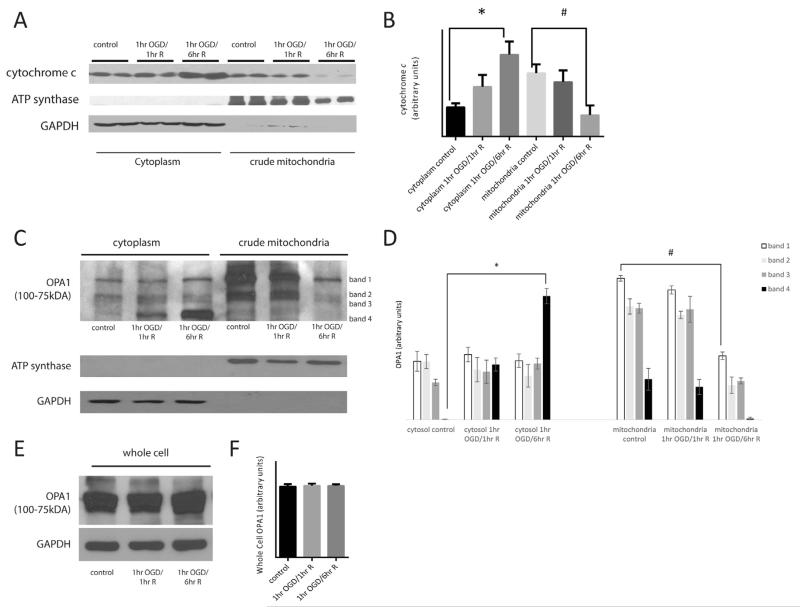
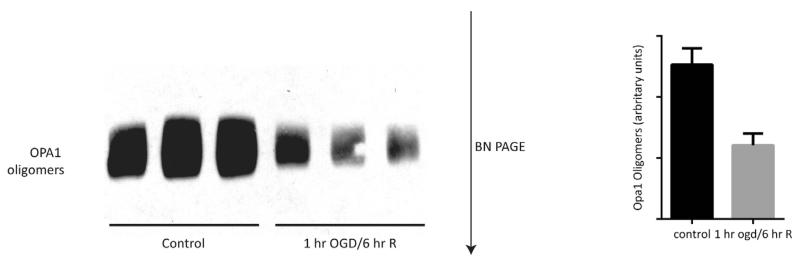
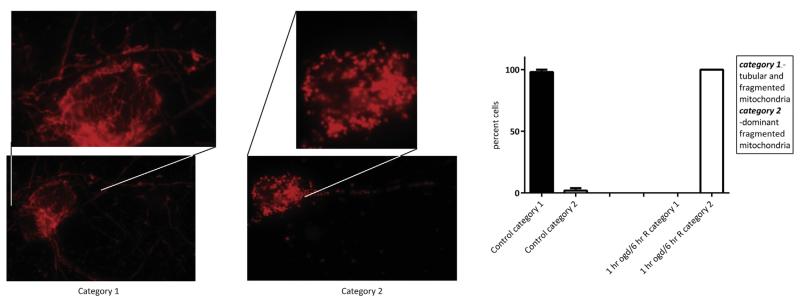
Brain ischemia/reperfusion injury results in death of vulnerable neurons and extensive brain damage. It is well known that mitochondrial release of cytochrome c (cyto c) is a hallmark of neuronal death, however the molecular events underlying this release are largely unknown. We tested the hypothesis that cyto c release is regulated by breakdown of the cristae architecture maintenance protein, optic atrophy 1 (OPA1), located in the inner mitochondrial membrane. We simulated ischemia/reperfusion in isolated primary rat neurons and interrogated OPA1 release from the mitochondria, OPA1 oligomeric breakdown, and concomitant dysfunction of mitochondrial dynamic state. We found that ischemia/reperfusion induces cyto c release and cell death that corresponds to multiple changes in OPA1, including: (i) translocation of the mitochondrial fusion protein OPA1 from the mitochondria to the cytosol, (ii) increase in the short isoform of OPA1, suggestive of proteolytic processing, (iii) breakdown of OPA1 oligomers in the mitochondria, and (iv) increased mitochondrial fission. Thus, we present novel evidence of a connection between release of cyto c from mitochondria and disruption of the mitochondrial fusion.
脑缺血/再灌注损伤会导致易损神经元死亡和广泛的脑损伤。众所周知,细胞色素c(cyto c)从线粒体释放是神经元死亡的一个标志,然而,这种释放背后的分子事件在很大程度上尚不清楚。我们检验了这样一个假设,即cyto c的释放受位于线粒体内膜的嵴结构维持蛋白视神经萎缩蛋白1(OPA1)的分解调控。我们在分离的原代大鼠神经元中模拟缺血/再灌注,并研究OPA1从线粒体的释放、OPA1寡聚体的分解以及伴随的线粒体动态状态功能障碍。我们发现,缺血/再灌注诱导cyto c释放和细胞死亡,这与OPA1的多种变化相对应,包括:(i)线粒体融合蛋白OPA1从线粒体转运至胞质溶胶;(ii)OPA1短异构体增加,提示存在蛋白水解过程;(iii)线粒体中OPA1寡聚体的分解;以及(iv)线粒体裂变增加。因此,我们提供了线粒体中cyto c释放与线粒体融合破坏之间存在联系的新证据。