Han Junfeng, Zhang Ming, Froese Sean, Dai Feihan F, Robitaille Mélanie, Bhattacharjee Alpana, Huang Xinyi, Jia Weiping, Angers Stéphane, Wheeler Michael B, Wei Li
Department of Physiology and Medicine, University of Toronto, Toronto, Ontario, Canada; Department of Endocrinology and Metabolism, Shanghai Jiao Tong University Affiliated Sixth People's Hospital, Shanghai, China.
Department of Physiology and Medicine, University of Toronto, Toronto, Ontario, Canada.
PLoS One. 2015 Jun 15;10(6):e0129226. doi: 10.1371/journal.pone.0129226. eCollection 2015.
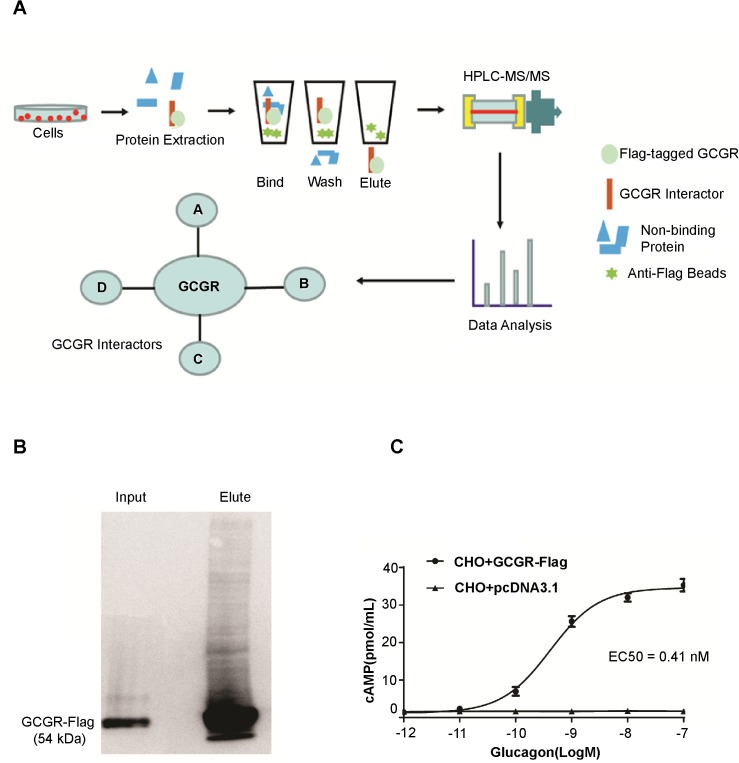
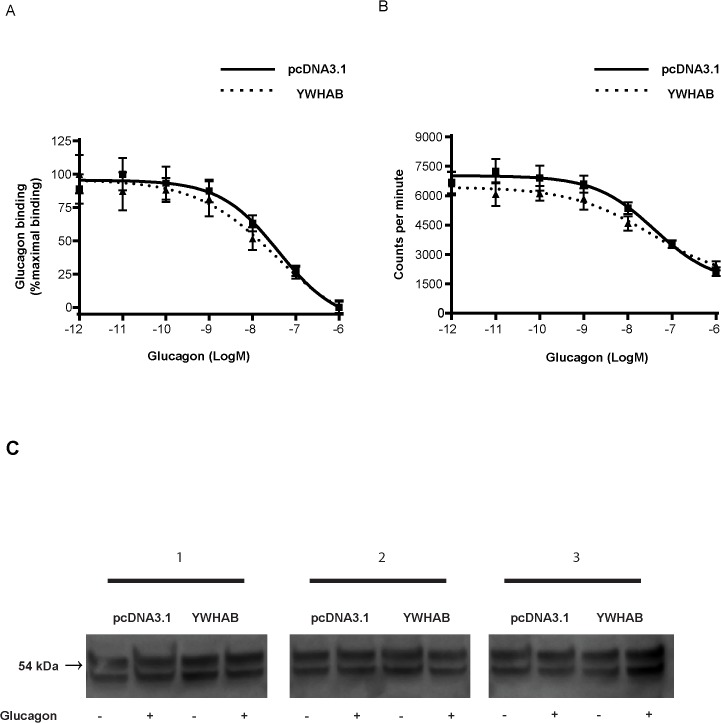
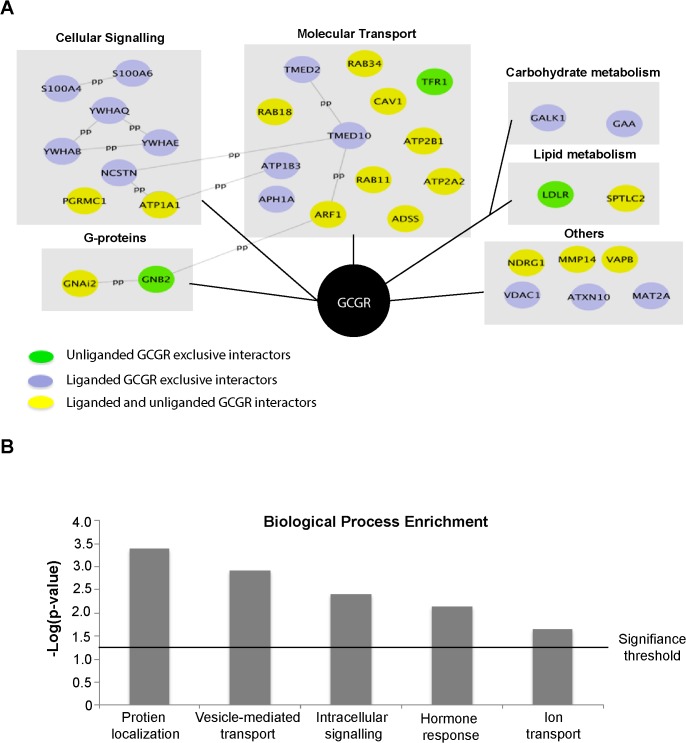
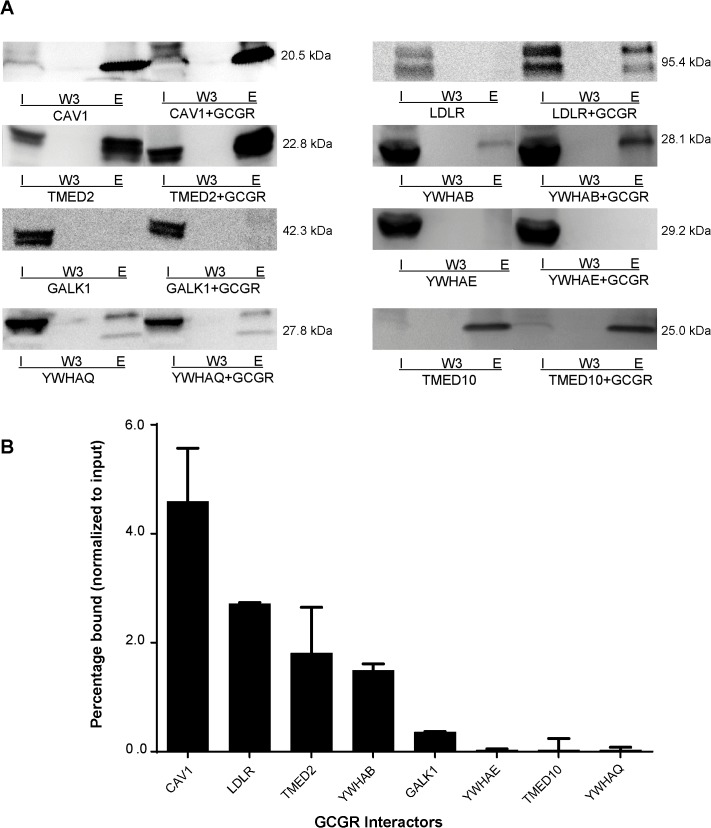
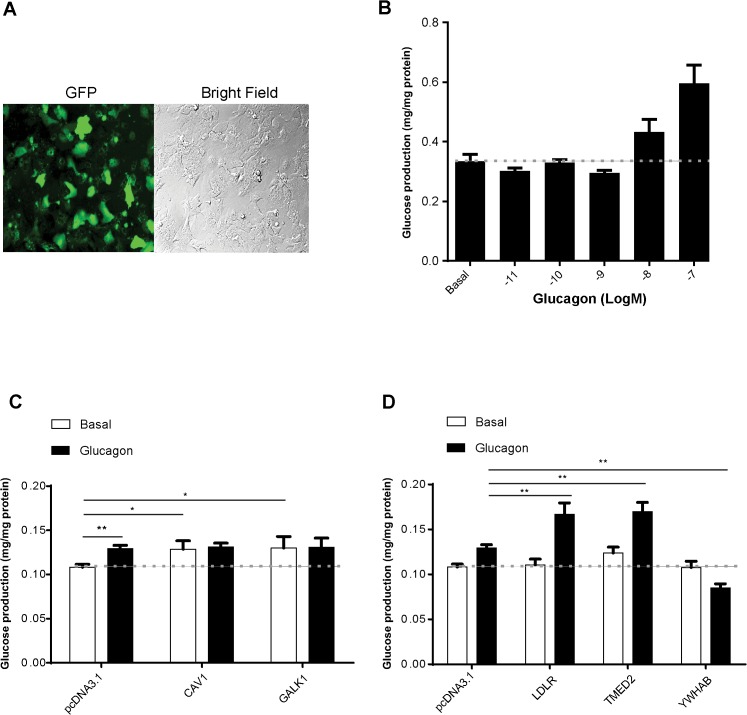
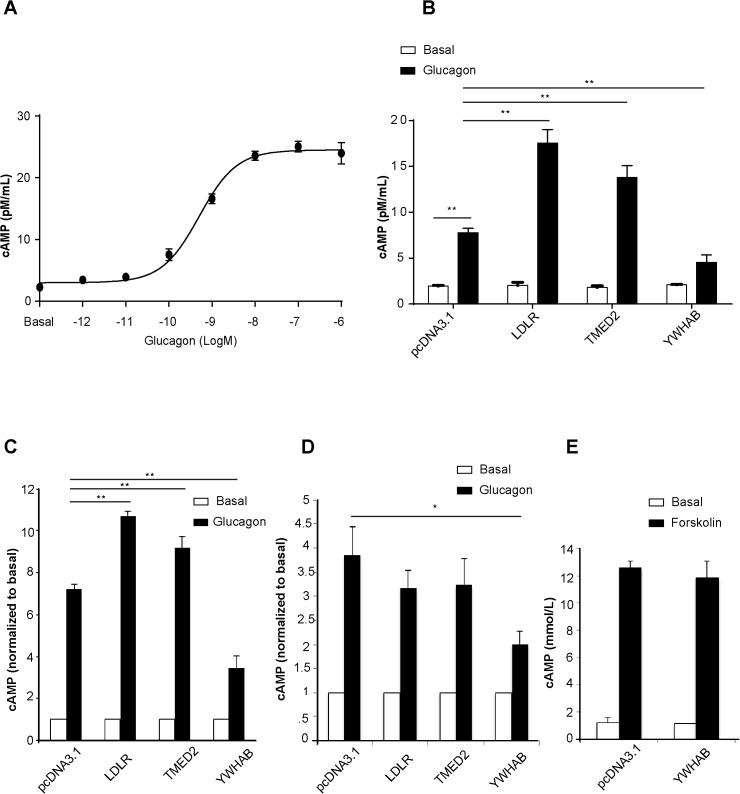
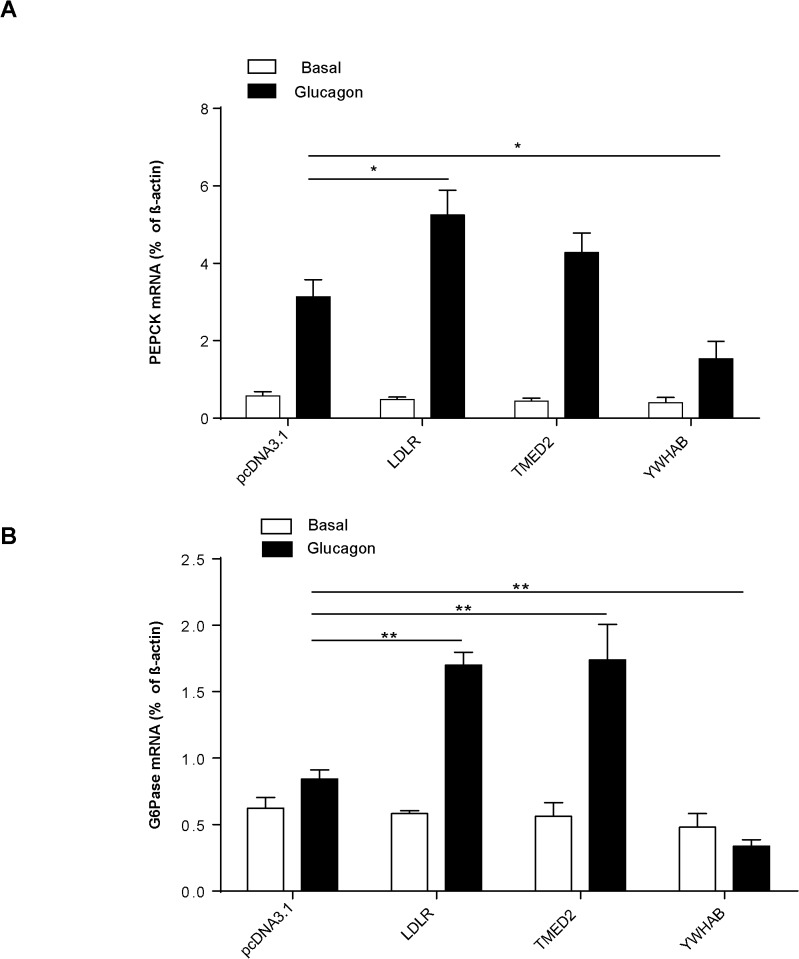
Glucagon regulates glucose homeostasis by controlling glycogenolysis and gluconeogenesis in the liver. Exaggerated and dysregulated glucagon secretion can exacerbate hyperglycemia contributing to type 2 diabetes (T2D). Thus, it is important to understand how glucagon receptor (GCGR) activity and signaling is controlled in hepatocytes. To better understand this, we sought to identify proteins that interact with the GCGR to affect ligand-dependent receptor activation. A Flag-tagged human GCGR was recombinantly expressed in Chinese hamster ovary (CHO) cells, and GCGR complexes were isolated by affinity purification (AP). Complexes were then analyzed by mass spectrometry (MS), and protein-GCGR interactions were validated by co-immunoprecipitation (Co-IP) and Western blot. This was followed by studies in primary hepatocytes to assess the effects of each interactor on glucagon-dependent glucose production and intracellular cAMP accumulation, and then in immortalized CHO and liver cell lines to further examine cell signaling. Thirty-three unique interactors were identified from the AP-MS screening of GCGR expressing CHO cells in both glucagon liganded and unliganded states. These studies revealed a particularly robust interaction between GCGR and 5 proteins, further validated by Co-IP, Western blot and qPCR. Overexpression of selected interactors in mouse hepatocytes indicated that two interactors, LDLR and TMED2, significantly enhanced glucagon-stimulated glucose production, while YWHAB inhibited glucose production. This was mirrored with glucagon-stimulated cAMP production, with LDLR and TMED2 enhancing and YWHAB inhibiting cAMP accumulation. To further link these interactors to glucose production, key gluconeogenic genes were assessed. Both LDLR and TMED2 stimulated while YWHAB inhibited PEPCK and G6Pase gene expression. In the present study, we have probed the GCGR interactome and found three novel GCGR interactors that control glucagon-stimulated glucose production by modulating cAMP accumulation and genes that control gluconeogenesis. These interactors may be useful targets to control glucose homeostasis in T2D.
胰高血糖素通过控制肝脏中的糖原分解和糖异生来调节葡萄糖稳态。胰高血糖素分泌过度和失调会加剧高血糖,导致2型糖尿病(T2D)。因此,了解肝细胞中胰高血糖素受体(GCGR)的活性和信号传导是如何被控制的很重要。为了更好地理解这一点,我们试图鉴定与GCGR相互作用以影响配体依赖性受体激活的蛋白质。一个带有Flag标签的人GCGR在中国仓鼠卵巢(CHO)细胞中重组表达,GCGR复合物通过亲和纯化(AP)分离。然后通过质谱(MS)分析复合物,并通过免疫共沉淀(Co-IP)和蛋白质印迹法验证蛋白质与GCGR的相互作用。接下来在原代肝细胞中进行研究,以评估每个相互作用分子对胰高血糖素依赖性葡萄糖生成和细胞内cAMP积累的影响,然后在永生化的CHO和肝细胞系中进一步研究细胞信号传导。通过对处于胰高血糖素结合和未结合状态的表达GCGR的CHO细胞进行AP-MS筛选,鉴定出了33个独特的相互作用分子。这些研究揭示了GCGR与5种蛋白质之间特别强烈的相互作用,通过Co-IP、蛋白质印迹法和qPCR进一步验证。在小鼠肝细胞中过表达选定的相互作用分子表明,两种相互作用分子LDLR和TMED2显著增强了胰高血糖素刺激的葡萄糖生成,而YWHAB则抑制了葡萄糖生成。这与胰高血糖素刺激的cAMP生成情况相似,LDLR和TMED2增强而YWHAB抑制cAMP积累。为了进一步将这些相互作用分子与葡萄糖生成联系起来,评估了关键的糖异生基因。LDLR和TMED2均刺激而YWHAB抑制磷酸烯醇式丙酮酸羧激酶(PEPCK)和葡萄糖-6-磷酸酶(G6Pase)基因表达。在本研究中,我们探究了GCGR相互作用组,发现了三种新的GCGR相互作用分子,它们通过调节cAMP积累以及控制糖异生的基因来控制胰高血糖素刺激的葡萄糖生成。这些相互作用分子可能是控制T2D中葡萄糖稳态的有用靶点。