Friedman Eitan A, Ogletree Martin L, Haddad Elias V, Boutaud Olivier
Department of Medicine, Vanderbilt University, Nashville, TN 37232.
PO Box 559, Bala Cynwyd, PA 19004; Department of Pharmacology, Vanderbilt University, Nashville, TN 37232.
Thromb Res. 2015 Sep;136(3):493-503. doi: 10.1016/j.thromres.2015.05.027. Epub 2015 May 28.
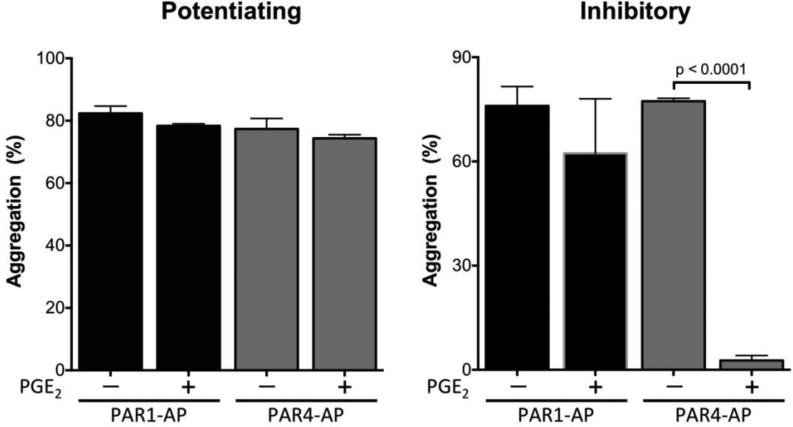
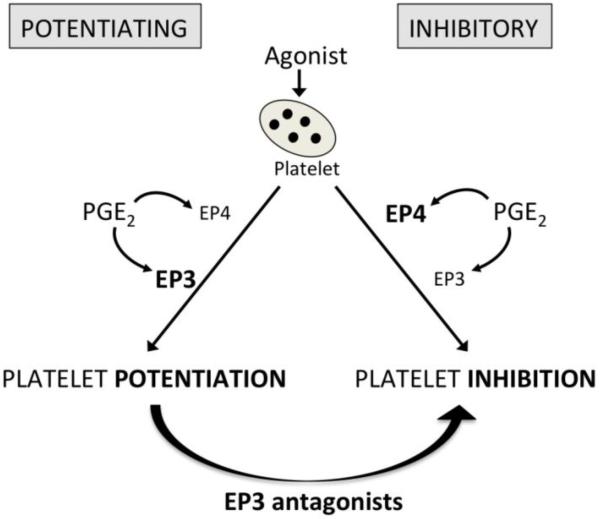
The platelet thrombus is the major pathologic entity in acute coronary syndromes, and antiplatelet agents are a mainstay of therapy. However, individual patient responsiveness to current antiplatelet drugs is variable, and all drugs carry a risk of bleeding. An understanding of the complex role of Prostaglandin E2 (PGE2) in regulating thrombosis offers opportunities for the development of novel individualized antiplatelet treatment. However, deciphering the platelet regulatory function of PGE2 has long been confounded by non-standardized experimental conditions, extrapolation of murine data to humans, and phenotypic differences in PGE2 response. This review synthesizes past and current knowledge about PGE2 effects on platelet biology, presents a rationale for standardization of experimental protocols, and provides insight into a molecular mechanism by which PGE2-activated pathways could be targeted for new personalized antiplatelet therapy to inhibit pathologic thrombosis without affecting hemostasis.
血小板血栓是急性冠脉综合征的主要病理实体,抗血小板药物是治疗的主要手段。然而,个体患者对当前抗血小板药物的反应存在差异,且所有药物都有出血风险。了解前列腺素E2(PGE2)在调节血栓形成中的复杂作用为开发新型个体化抗血小板治疗提供了机会。然而,长期以来,由于实验条件不规范、将小鼠数据外推至人类以及PGE2反应的表型差异,PGE2的血小板调节功能一直难以解读。本综述综合了过去和当前关于PGE2对血小板生物学影响的知识,提出了实验方案标准化的理论依据,并深入探讨了一种分子机制,通过该机制,PGE2激活的途径可成为新的个性化抗血小板治疗的靶点,以抑制病理性血栓形成而不影响止血。