Wang Ying, Zhang Jie, Wu Yang, Ding Zhen-Yu, Luo Xin-Mei, Liu Jie, Zhong Wu-Ning, Deng Guo-Hua, Xia Xiang-Yu, Deng Yao-Tiao, Wei Yu-Quan, Jiang Yu
1] Department of Medical Oncology, Cancer Center, State Key Laboratory of Biotherapy, West China Hospital, Sichuan University, Chengdu 610041, People's Republic of China [2] Department of East Ward Oncology, Sichuan Academy of Medical Sciences &Sichuan Provincial People's Hospital, Chengdu 610072, People's Republic of China.
Department of Medical Oncology, Cancer Center, State Key Laboratory of Biotherapy, West China Hospital, Sichuan University, Chengdu 610041, People's Republic of China.
Sci Rep. 2015 Jun 18;5:11275. doi: 10.1038/srep11275.
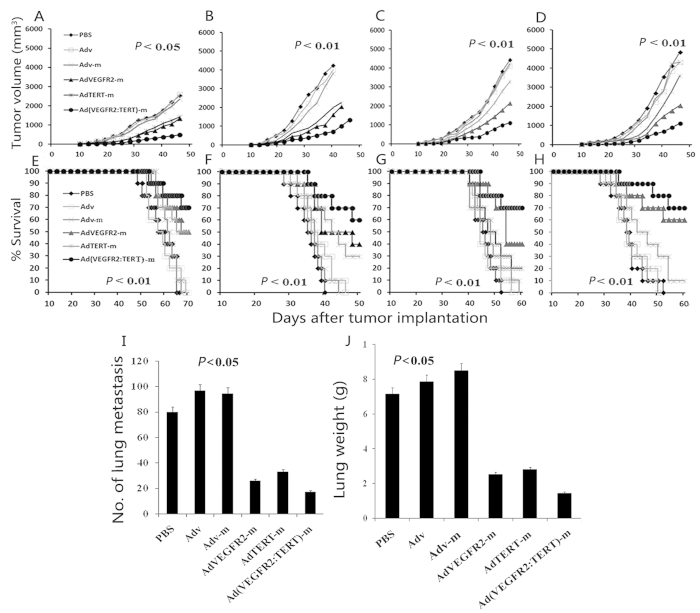
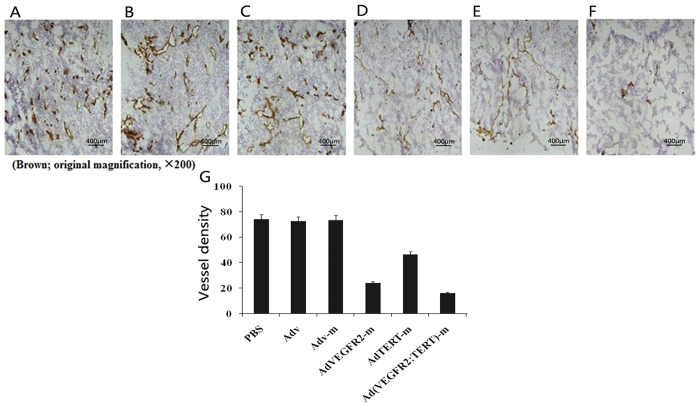
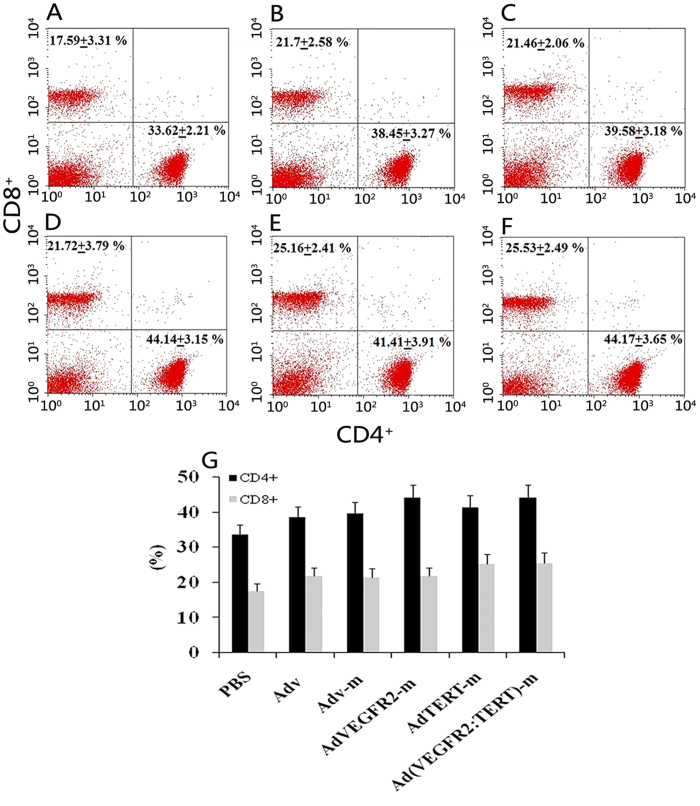
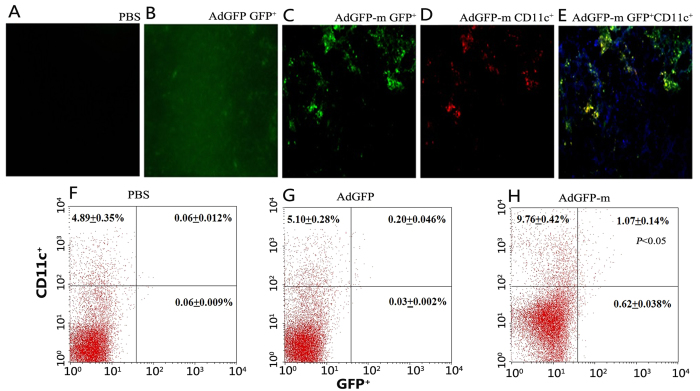
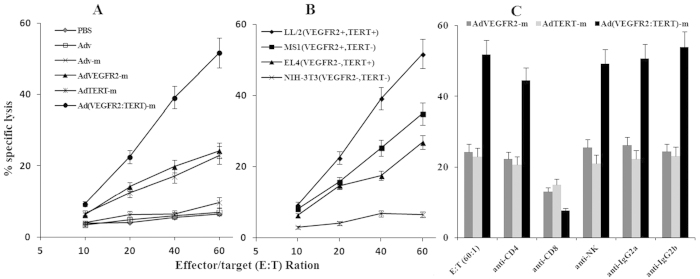
Antigen-presenting cells including dendritic cells (DCs) express mannan receptors (MR) on their surface, which can be exploited in cancer therapy by designing immune-stimulatory viruses coated with mannan-modified capsids that then bind to DCs and initiate a potent immune response. Although the combination of anti-angiogenesis and cancer immunotherapy agents has a synergistic antitumor effect, more effective strategies for delivering such combinations are still required. Here we report the design and application of mannan-modified adenovirus that expresses both telomerase reverse transcriptase (TERT) and vascular endothelial growth factor receptor-2 (VEGFR-2). Cytotoxic T lymphocytes that are reactive to TERT and VEGFR-2 are capable of mounting an anti-tumour response in murine breast and colon tumour models and in a lung metastatic model. Compared with mannan-modified TERT adenovirus vaccine or mannan-modified VEGFR-2 adenovirus vaccine alone, the combined vaccine showed remarkably synergistic anti-tumour immunity in these models. Both TERT- and VEGFR-2-specific cytotoxic T lymphocytes (CTL) were identified in an in vitro cytotoxicity assay, and the CTL activity against tumour cells was significantly elevated in the combined vaccine group. Furthermore, CTL-mediated toxicity was blocked by anti-CD8 monoclonal antibodies. Thus, the combined mannan-modified TERT and VEGFR-2 adenovirus confers potent anti-tumour immunity by targeting both tumour cells and intratumoural angiogenesis.
包括树突状细胞(DC)在内的抗原呈递细胞在其表面表达甘露聚糖受体(MR),通过设计包被有甘露聚糖修饰衣壳的免疫刺激病毒,使其与DC结合并引发强效免疫反应,这一特性可用于癌症治疗。尽管抗血管生成和癌症免疫治疗药物联合使用具有协同抗肿瘤作用,但仍需要更有效的策略来递送这种联合药物。在此,我们报告了甘露聚糖修饰腺病毒的设计与应用,该腺病毒同时表达端粒酶逆转录酶(TERT)和血管内皮生长因子受体2(VEGFR-2)。对TERT和VEGFR-2有反应的细胞毒性T淋巴细胞能够在小鼠乳腺癌和结肠癌模型以及肺转移模型中引发抗肿瘤反应。与单独的甘露聚糖修饰TERT腺病毒疫苗或甘露聚糖修饰VEGFR-2腺病毒疫苗相比,联合疫苗在这些模型中显示出显著的协同抗肿瘤免疫作用。在体外细胞毒性试验中鉴定出了TERT特异性和VEGFR-2特异性细胞毒性T淋巴细胞(CTL),联合疫苗组中针对肿瘤细胞的CTL活性显著升高。此外,CTL介导的毒性被抗CD8单克隆抗体阻断。因此,联合的甘露聚糖修饰TERT和VEGFR-2腺病毒通过靶向肿瘤细胞和肿瘤内血管生成赋予了强效抗肿瘤免疫力。