Kilbaugh Todd J, Lvova Maria, Karlsson Michael, Zhang Zhe, Leipzig Jeremy, Wallace Douglas C, Margulies Susan S
Department of Anesthesiology and Critical Care Medicine, Children's Hospital of Philadelphia, Perelman School of Medicine at the University of Pennsylvania, Philadelphia, Pennsylvania, United States of America.
Center for Mitochondrial and Epigenomic Medicine, Department of Pathology and Laboratory Medicine, Children's Hospital of Philadelphia, Perelman School of Medicine at the University of Pennsylvania, Philadelphia, Pennsylvania, United States of America.
PLoS One. 2015 Jun 22;10(6):e0130927. doi: 10.1371/journal.pone.0130927. eCollection 2015.
Traumatic brain injury (TBI) has been shown to activate the peripheral innate immune system and systemic inflammatory response, possibly through the central release of damage associated molecular patterns (DAMPs). Our main purpose was to gain an initial understanding of the peripheral mitochondrial response following TBI, and how this response could be utilized to determine cerebral mitochondrial bioenergetics. We hypothesized that TBI would increase peripheral whole blood relative mtDNA copy number, and that these alterations would be associated with cerebral mitochondrial bioenergetics triggered by TBI.
Blood samples were obtained before, 6 h after, and 25 h after focal (controlled cortical impact injury: CCI) and diffuse (rapid non-impact rotational injury: RNR) TBI. PCR primers, unique to mtDNA, were identified by aligning segments of nuclear DNA (nDNA) to mtDNA, normalizing values to nuclear 16S rRNA, for a relative mtDNA copy number. Three unique mtDNA regions were selected, and PCR primers were designed within those regions, limited to 25-30 base pairs to further ensure sequence specificity, and measured utilizing qRT-PCR.
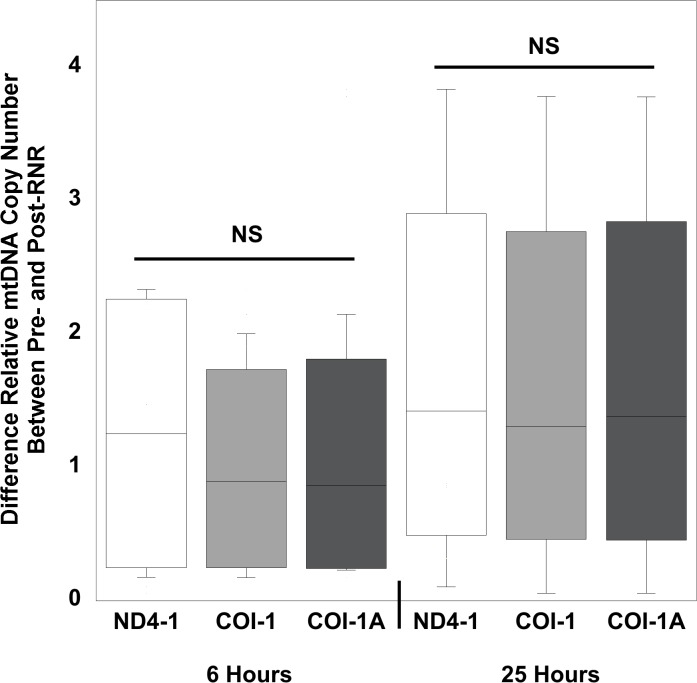
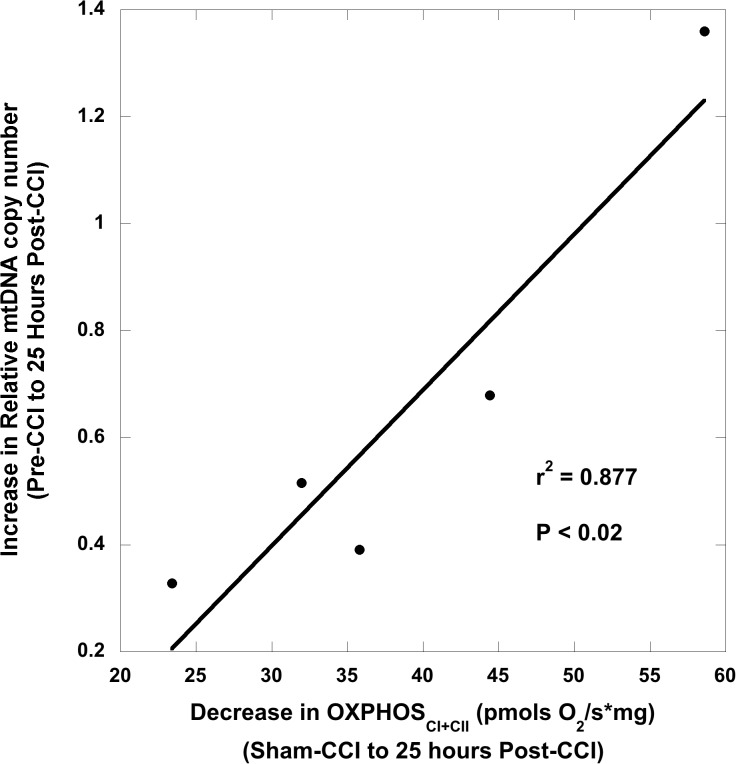
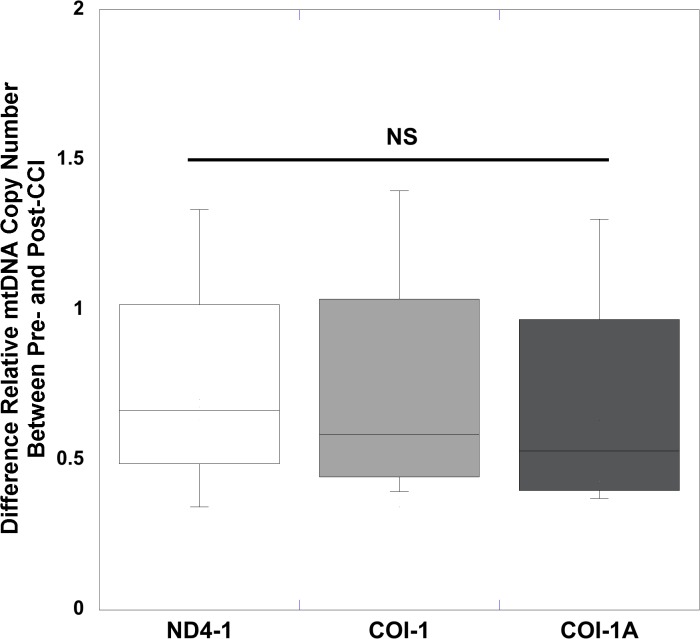
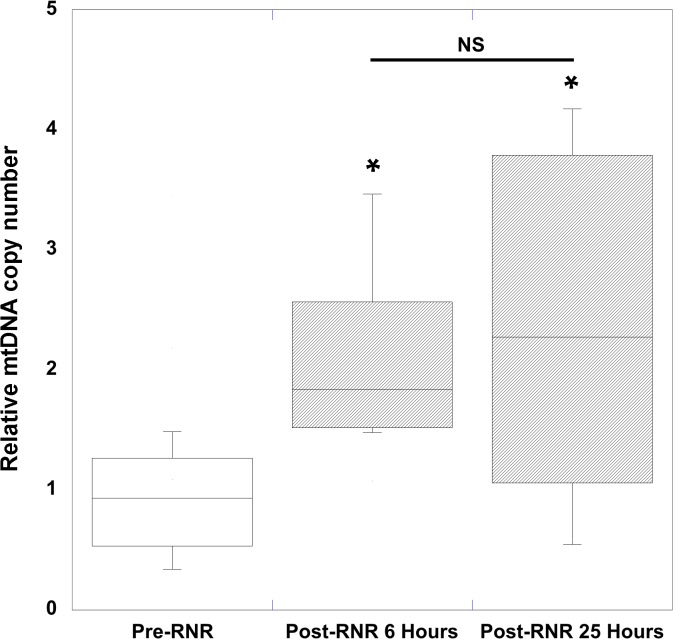
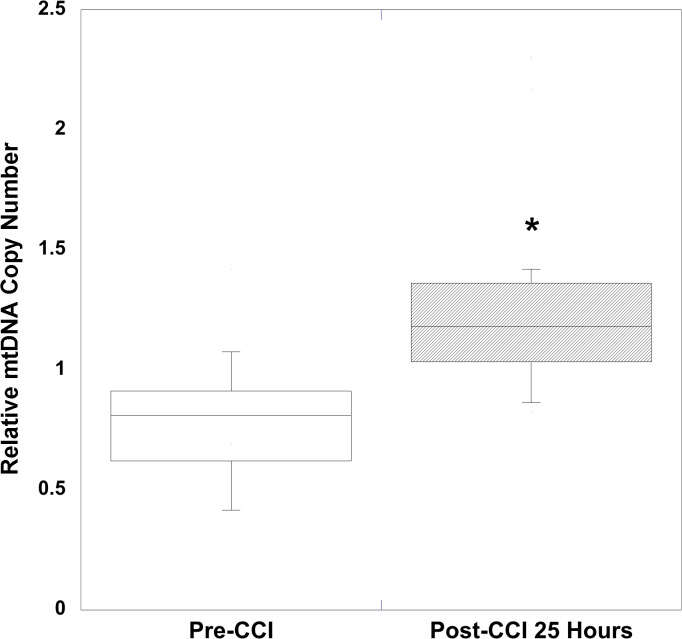
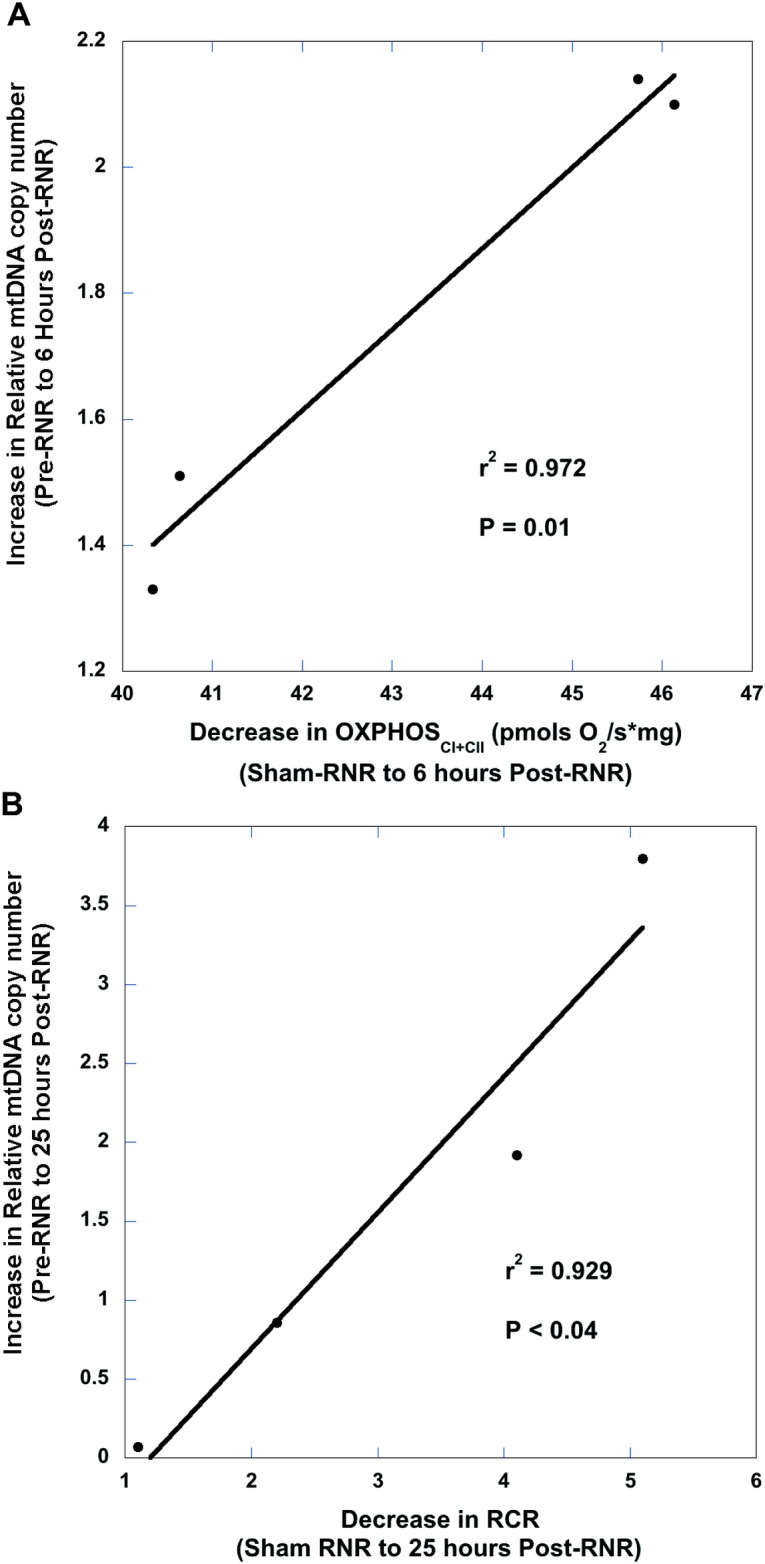
Mean relative mtDNA copy numbers increased significantly at 6 and 25 hrs after following both focal and diffuse traumatic brain injury. Specifically, the mean relative mtDNA copy number from three mitochondrial-specific regions pre-injury was 0.84 ± 0.05. At 6 and 25 h after diffuse non-impact TBI, mean mtDNA copy number was significantly higher: 2.07 ± 0.19 (P < 0.0001) and 2.37 ± 0.42 (P < 0.001), respectively. Following focal impact TBI, relative mtDNA copy number was also significantly higher, 1.35 ± 0.12 (P < 0.0001) at 25 hours. Alterations in mitochondrial respiration in the hippocampus and cortex post-TBI correlated with changes in the relative mtDNA copy number measured in peripheral blood.
Alterations in peripheral blood relative mtDNA copy numbers may be a novel biosignature of cerebral mitochondrial bioenergetics with exciting translational potential for non-invasive diagnostic and interventional studies.
创伤性脑损伤(TBI)已被证明会激活外周先天性免疫系统和全身炎症反应,可能是通过损伤相关分子模式(DAMPs)的中枢释放。我们的主要目的是初步了解TBI后外周线粒体反应,以及如何利用这种反应来确定脑线粒体生物能量学。我们假设TBI会增加外周全血相对线粒体DNA(mtDNA)拷贝数,并且这些改变将与TBI引发的脑线粒体生物能量学相关。
在局灶性(控制性皮质撞击伤:CCI)和弥漫性(快速非撞击旋转伤:RNR)TBI之前、之后6小时和25小时采集血样。通过将核DNA(nDNA)片段与mtDNA比对,将值标准化为核16S rRNA,以确定mtDNA特有的PCR引物,用于相对mtDNA拷贝数的测定。选择了三个独特的mtDNA区域,并在这些区域内设计了PCR引物,限于25 - 30个碱基对以进一步确保序列特异性,并使用定量逆转录PCR(qRT-PCR)进行测量。
在局灶性和弥漫性创伤性脑损伤后的6小时和25小时,平均相对mtDNA拷贝数显著增加。具体而言,损伤前来自三个线粒体特异性区域的平均相对mtDNA拷贝数为0.84±0.05。在弥漫性非撞击性TBI后的6小时和25小时,平均mtDNA拷贝数显著更高,分别为2.07±0.19(P < 0.0001)和2.37±0.42(P < 0.001)。在局灶性撞击性TBI后,25小时时相对mtDNA拷贝数也显著更高,为1.35±0.12(P < 0.0001)。TBI后海马体和皮质中线粒体呼吸的改变与外周血中测量的相对mtDNA拷贝数的变化相关。
外周血相对mtDNA拷贝数的改变可能是脑线粒体生物能量学的一种新型生物标志物,在非侵入性诊断和干预研究方面具有令人兴奋的转化潜力。