Cheng Mary Hongying, Block Ethan, Hu Feizhuo, Cobanoglu Murat Can, Sorkin Alexander, Bahar Ivet
Department of Computational and Systems Biology, School of Medicine, University of Pittsburgh , Pittsburgh, PA , USA.
Department of Cell Biology, School of Medicine, University of Pittsburgh , Pittsburgh, PA , USA.
Front Neurol. 2015 Jun 9;6:134. doi: 10.3389/fneur.2015.00134. eCollection 2015.
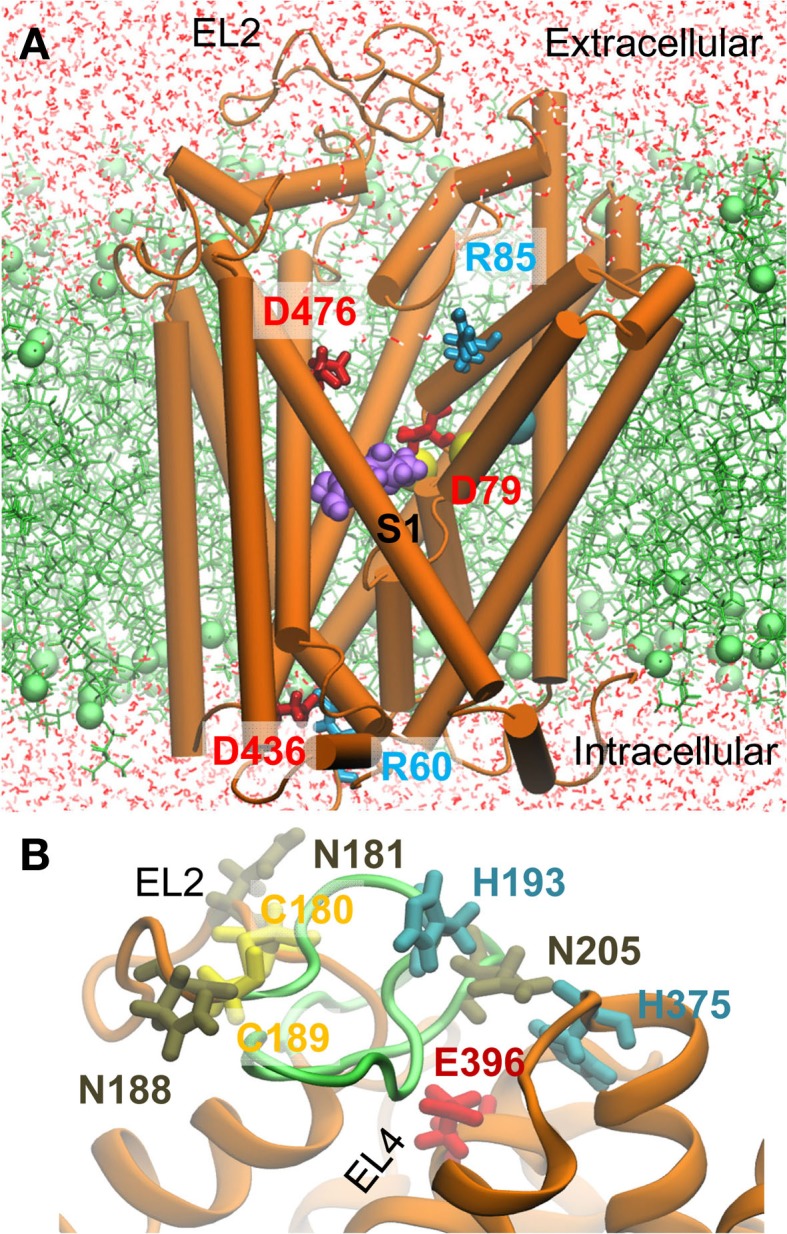
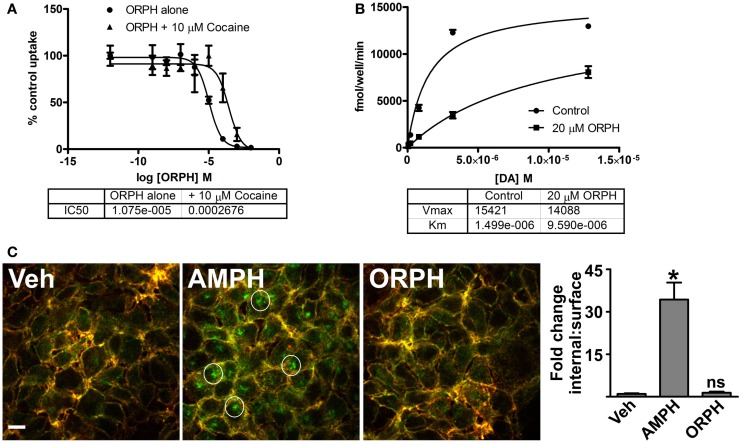
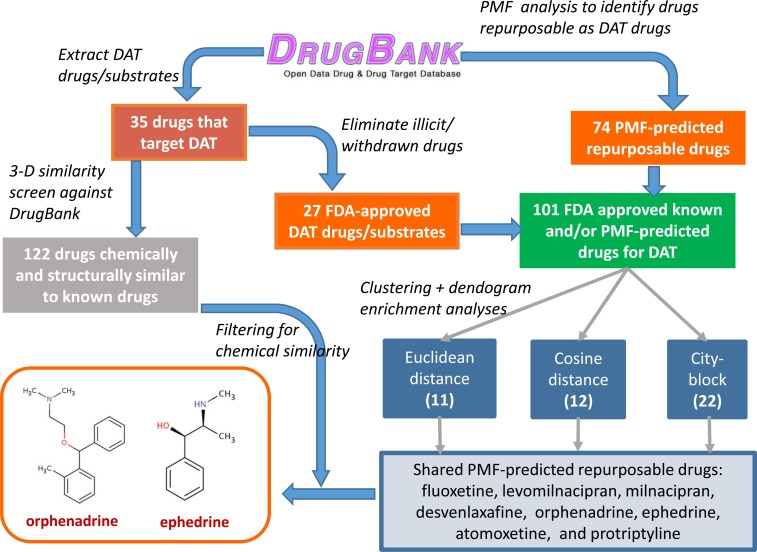
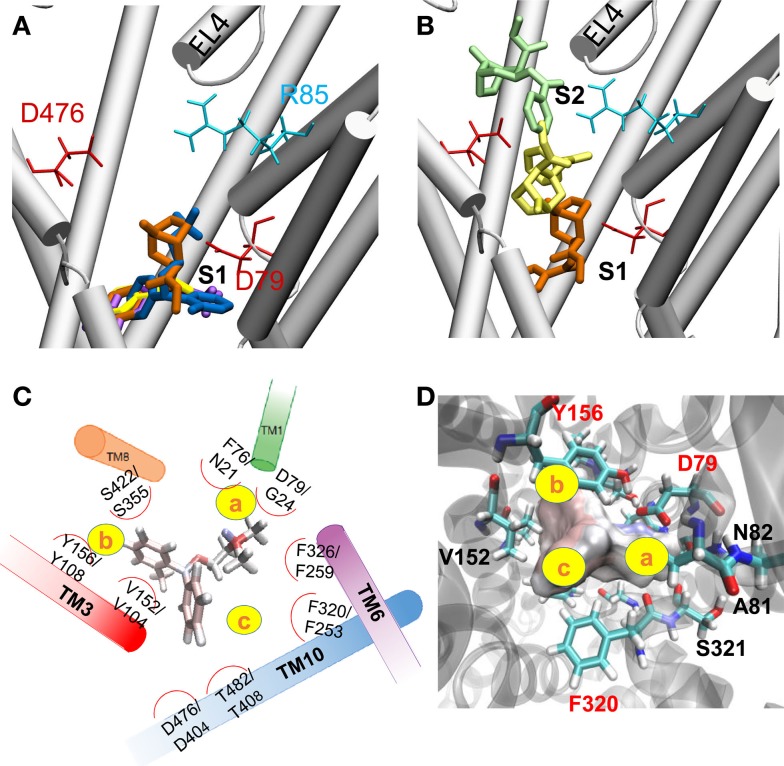
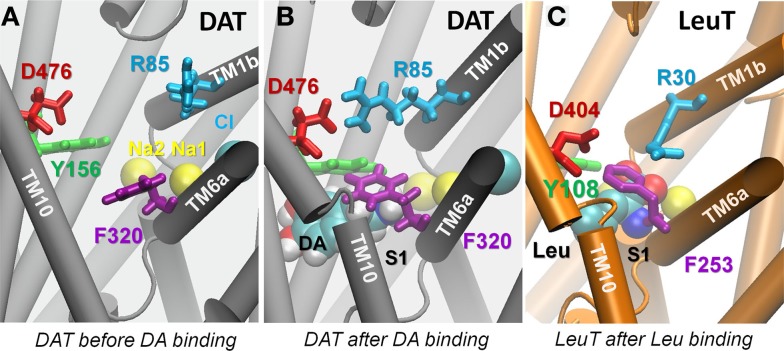
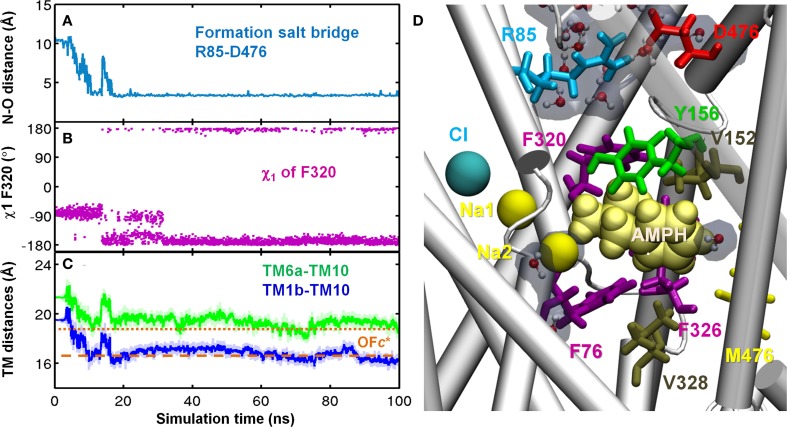
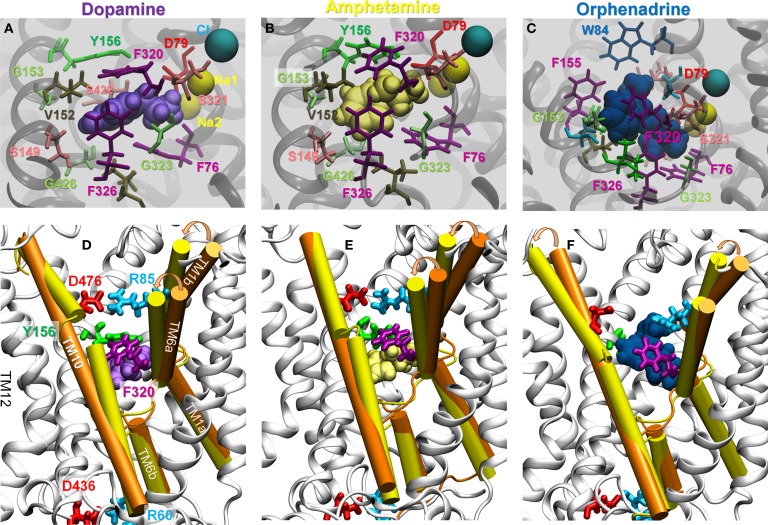
Human dopamine (DA) transporter (hDAT) regulates dopaminergic signaling in the central nervous system by maintaining the synaptic concentration of DA at physiological levels, upon reuptake of DA into presynaptic terminals. DA translocation involves the co-transport of two sodium ions and the channeling of a chloride ion, and it is achieved via alternating access between outward-facing (OF) and inward-facing states of DAT. hDAT is a target for addictive drugs, such as cocaine, amphetamine (AMPH), and therapeutic antidepressants. Our recent quantitative systems pharmacology study suggested that orphenadrine (ORPH), an anticholinergic agent and anti-Parkinson drug, might be repurposable as a DAT drug. Previous studies have shown that DAT-substrates like AMPH or -blockers like cocaine modulate the function of DAT in different ways. However, the molecular mechanisms of modulation remained elusive due to the lack of structural data on DAT. The newly resolved DAT structure from Drosophila melanogaster opens the way to a deeper understanding of the mechanism and time evolution of DAT-drug/ligand interactions. Using a combination of homology modeling, docking analysis, molecular dynamics simulations, and molecular biology experiments, we performed a comparative study of the binding properties of DA, AMPH, ORPH, and cocaine and their modulation of hDAT function. Simulations demonstrate that binding DA or AMPH drives a structural transition toward a functional form predisposed to translocate the ligand. In contrast, ORPH appears to inhibit DAT function by arresting it in the OF open conformation. The analysis shows that cocaine and ORPH competitively bind DAT, with the binding pose and affinity dependent on the conformational state of DAT. Further assays show that the effect of ORPH on DAT uptake and endocytosis is comparable to that of cocaine.
人类多巴胺(DA)转运体(hDAT)通过将DA重新摄取到突触前终末,将突触中DA的浓度维持在生理水平,从而调节中枢神经系统中的多巴胺能信号传导。DA转运涉及两个钠离子的协同转运和一个氯离子的通道作用,它是通过DAT向外朝向(OF)和向内朝向状态之间的交替访问来实现的。hDAT是成瘾性药物的靶点,如可卡因、苯丙胺(AMPH)和治疗性抗抑郁药。我们最近的定量系统药理学研究表明,抗胆碱能药物和抗帕金森病药物奥芬那君(ORPH)可能具有作为DAT药物的新用途。先前的研究表明,像AMPH这样的DAT底物或像可卡因这样的阻滞剂以不同方式调节DAT的功能。然而,由于缺乏DAT的结构数据,调节的分子机制仍然难以捉摸。新解析的黑腹果蝇DAT结构为更深入了解DAT-药物/配体相互作用的机制和时间演变开辟了道路。我们结合同源建模、对接分析、分子动力学模拟和分子生物学实验,对DA、AMPH、ORPH和可卡因的结合特性及其对hDAT功能的调节进行了比较研究。模拟表明,结合DA或AMPH会驱动结构向易于转运配体的功能形式转变。相比之下,ORPH似乎通过将DAT阻滞在OF开放构象中来抑制其功能。分析表明,可卡因和ORPH竞争性结合DAT,结合姿势和亲和力取决于DAT的构象状态。进一步的实验表明,ORPH对DAT摄取和内吞作用的影响与可卡因相当。