Emami Hamid, Hematti Simin, Saeidian Seyed Masoud, Feizi Awat, Taheri Shahin, Adeli Pourya, Mahmoudi Golshan
Department of Radiotherapy and Oncology, School of Medicine, Isfahan University of Medical Sciences, Isfahan, Iran.
Department of Biostatistics and Epidemiology, School of Health, Isfahan University of Medical Sciences, Isfahan, Iran.
J Res Med Sci. 2015 Apr;20(4):329-33.
Depending on the site of irradiation, about 40-80% of patients undergoing radiotherapy (RT) will experience nausea and/or vomiting. The current study aimed to investigate the efficacy of ondansetronas as a single agent and with a combination to aprepitant on preventing RT-induced nausea and vomiting (RINV).
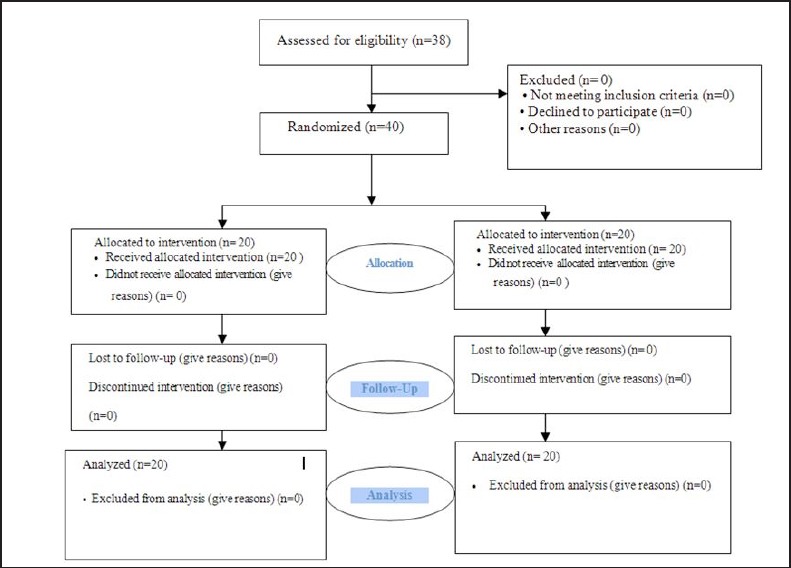
In a clinical randomized controlled trial (from September 2010 to September 2011), conducted in Radiation Oncology Department of Seyed-al-Shohada Hospital, Isfahan University of Medical Sciences, 40 abdominopelvic malignancies cancer patients were allocated into two aliquots using block randomization of size. Patients in the first group (group I) received ondansetron alone while those patients in the remaining group (group II) received ondansetron and aprepitant. Then, developing of RINV and its severity and benefit of adding aprepitant to ondansetron, in comparison with ondansetron as a single drug therapy were evaluated.
The average age of the patients in group I was 61.15 ± 12.27 years while in group II it was 50.1 ± 13.27 years. No statistically significant gender differences were found between the two groups. In patients treated with ondansetron single drug therapy (group I), frequency and grade of RINV were significantly more than the group treated simultaneously by aprepitant and ondansetron (group II) (odds ratio [OR] = 21.2; P < 0.01). Compared with RT alone, the patients whom underwent RT along with chemotherapy showed lower probability of experiencing RINV (OR = 0.13; P < 0.05).
The present study indicated a significant superiority of combination of ondansetron and aprepitant in management of RINV, in patients undergoing RT, compared to ondansetron as a single agent therapy. More accurate follow-up studies are needed for the evaluation of the efficacy of ondansetron with combination to aprepitant on preventing the RINV.
根据放疗部位的不同,约40%-80%接受放射治疗(RT)的患者会出现恶心和/或呕吐。本研究旨在探讨昂丹司琼单药治疗以及与阿瑞匹坦联合使用对预防放疗引起的恶心和呕吐(RINV)的疗效。
在伊斯法罕医科大学赛义德-阿尔-肖哈达医院放射肿瘤科进行的一项临床随机对照试验(2010年9月至2011年9月)中,40例腹盆腔恶性肿瘤患者采用大小区组随机化方法分为两组。第一组(I组)患者仅接受昂丹司琼治疗,其余组(II组)患者接受昂丹司琼和阿瑞匹坦治疗。然后,评估RINV的发生情况及其严重程度,以及与昂丹司琼单药治疗相比,阿瑞匹坦与昂丹司琼联合使用的益处。
I组患者的平均年龄为61.15±12.27岁,II组为50.1±13.27岁。两组之间未发现统计学上显著的性别差异。在接受昂丹司琼单药治疗的患者(I组)中,RINV的发生率和严重程度显著高于同时接受阿瑞匹坦和昂丹司琼治疗的组(II组)(优势比[OR]=21.2;P<0.01)。与单纯放疗相比,接受放疗联合化疗的患者发生RINV的概率较低(OR=0.13;P<0.05)。
本研究表明,与昂丹司琼单药治疗相比,昂丹司琼与阿瑞匹坦联合使用在放疗患者RINV的管理方面具有显著优势。需要进行更准确的随访研究来评估昂丹司琼与阿瑞匹坦联合使用预防RINV的疗效。