Sekiguchi Tomohiro, Umemura Takeji, Fujimori Naoyuki, Shibata Soichiro, Ichikawa Yuki, Kimura Takefumi, Joshita Satoru, Komatsu Michiharu, Matsumoto Akihiro, Tanaka Eiji, Ota Masao
Department of Medicine, Division of Hepatology and Gastroenterology, Shinshu University School of Medicine, Matsumoto, Japan.
Department of Legal Medicine, Shinshu University Hospital, Matsumoto, Japan.
PLoS One. 2015 Jun 25;10(6):e0131658. doi: 10.1371/journal.pone.0131658. eCollection 2015.
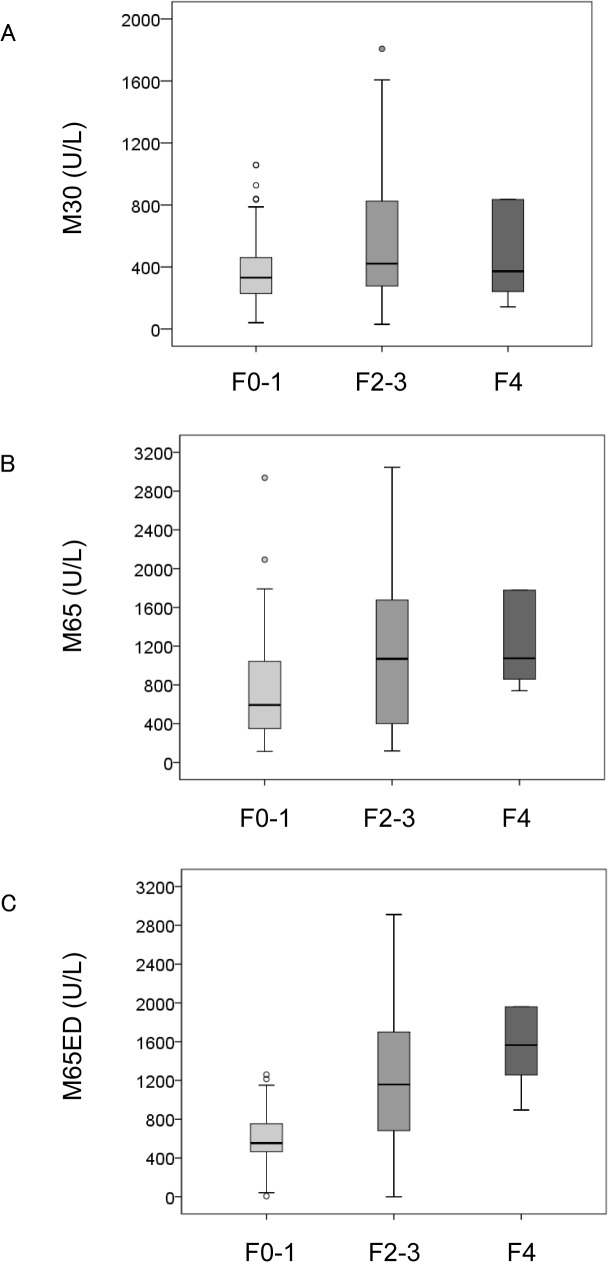
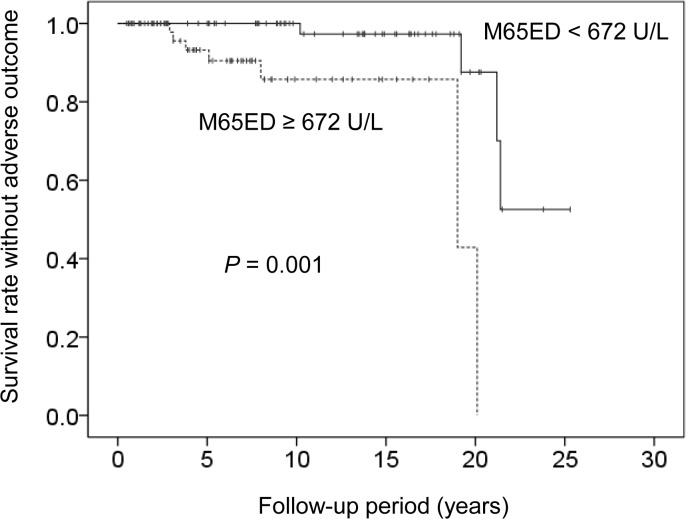
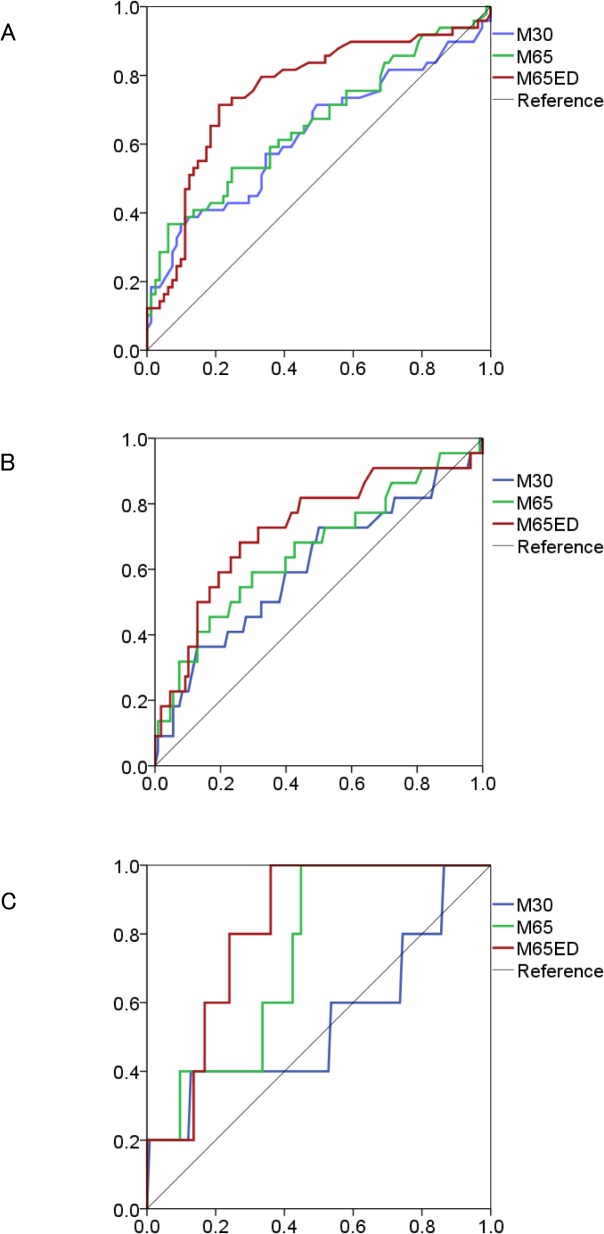
The development of simple, noninvasive markers of liver fibrosis is urgently needed for primary biliary cirrhosis (PBC). This study examined the ability of several serum biomarkers of cell death to estimate fibrosis and prognosis in PBC. A cohort of 130 patients with biopsy-proven PBC and 90 healthy subjects were enrolled. We assessed the utility of the M30 ELISA, which detects caspase-cleaved cytokeratin-18 (CK-18) fragments and is representative of apoptotic cell death, as well as the M65 and newly developed M65 Epideath (M65ED) ELISAs, which detect total CK-18 as indicators of overall cell death, in predicting clinically relevant fibrosis stage. All 3 cell death biomarkers were significantly higher in patients with PBC than in healthy controls and were significantly correlated with fibrosis stage. The areas under the receiver operating characteristic curve for the M65 and M65ED assays for differentiation among significant fibrosis, severe fibrosis, and cirrhosis were 0.66 and 0.76, 0.66 and 0.73, and 0.74 and 0.82, respectively. In multivariate analysis, high M65ED (hazard ratio 6.13; 95% confidence interval 1.18-31.69; P = 0.031) and severe fibrosis (hazard ratio 7.45; 95% confidence interval 1.82-30.51; P = 0.005) were independently associated with liver-related death, transplantation, or decompensation. High serum M65ED was also significantly associated with poor outcome in PBC (log-rank test; P = 0.001). Noninvasive cell death biomarkers appear to be clinically useful in predicting fibrosis in PBC. Moreover, the M65ED assay may represent a new surrogate marker of adverse disease outcome.
原发性胆汁性肝硬化(PBC)迫切需要开发简单、无创的肝纤维化标志物。本研究检测了几种细胞死亡血清生物标志物评估PBC纤维化和预后的能力。纳入了130例经活检证实为PBC的患者和90名健康受试者。我们评估了M30 ELISA的效用,其检测半胱天冬酶切割的细胞角蛋白-18(CK-18)片段,代表凋亡性细胞死亡,以及M65和新开发的M65 Epideath(M65ED)ELISA,其检测总CK-18作为整体细胞死亡的指标,用于预测临床相关的纤维化阶段。所有3种细胞死亡生物标志物在PBC患者中均显著高于健康对照,且与纤维化阶段显著相关。M65和M65ED检测在区分显著纤维化、严重纤维化和肝硬化方面的受试者操作特征曲线下面积分别为0.66和0.76、0.66和0.73、0.74和0.82。在多变量分析中,高M65ED(风险比6.13;95%置信区间1.18 - 31.69;P = 0.031)和严重纤维化(风险比7.45;95%置信区间1.82 - 30.51;P = 0.005)与肝相关死亡、移植或失代偿独立相关。高血清M65ED也与PBC的不良结局显著相关(对数秩检验;P = 0.001)。无创细胞死亡生物标志物似乎在预测PBC纤维化方面具有临床实用性。此外,M65ED检测可能代表疾病不良结局的一种新替代标志物。