
沉默调节蛋白在心血管疾病中的保护作用:从实验室到临床
Protective effects of sirtuins in cardiovascular diseases: from bench to bedside.
作者信息
Winnik Stephan, Auwerx Johan, Sinclair David A, Matter Christian M
机构信息
Department of Cardiology, University Heart Center, University Hospital Zurich, Zurich, Switzerland Center for Molecular Cardiology, University of Zurich, Zurich, Switzerland.
Laboratory of Integrative and Systems Physiology, Ecole Polytechnique Fédérale de Lausanne (EPFL), Lausanne, Switzerland.
出版信息
Eur Heart J. 2015 Dec 21;36(48):3404-12. doi: 10.1093/eurheartj/ehv290. Epub 2015 Jun 25.
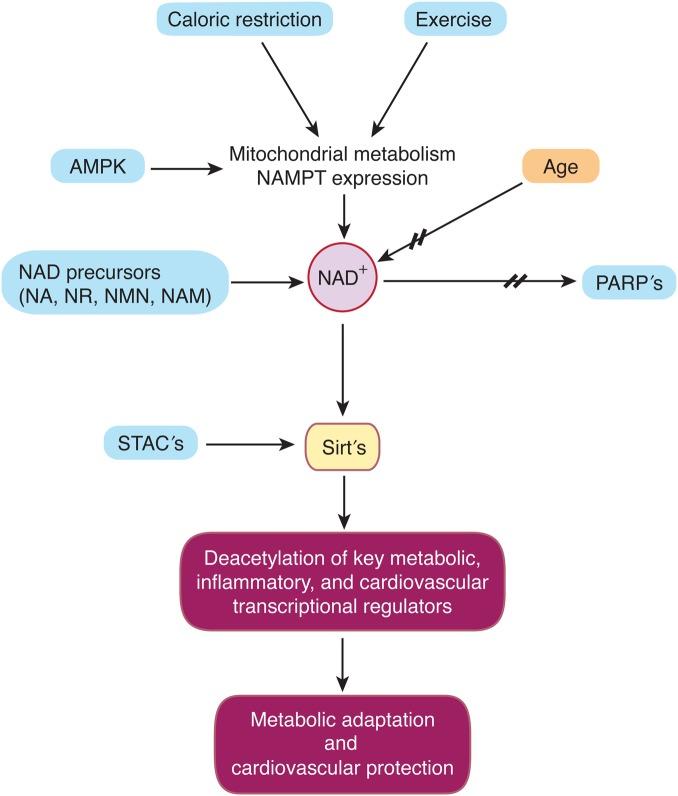
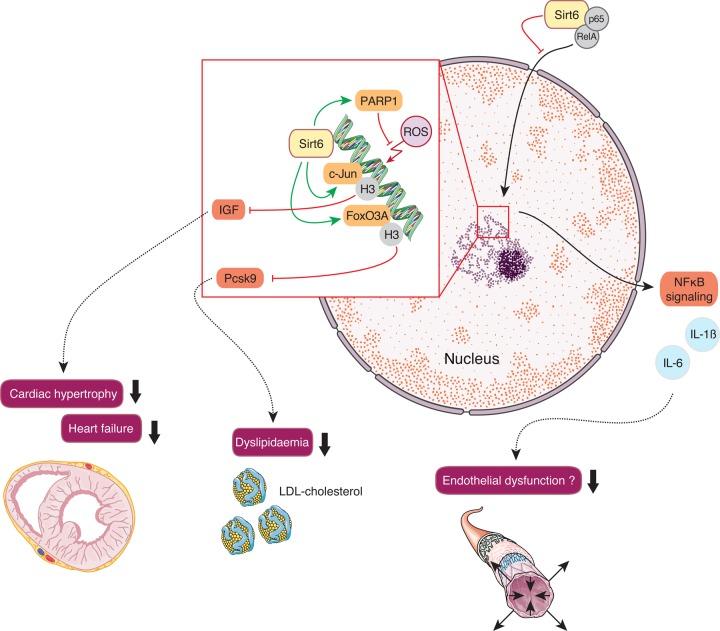
Sirtuins (Sirt1-Sirt7) comprise a family of nicotinamide adenine dinucleotide (NAD(+))-dependent enzymes. While deacetylation reflects their main task, some of them have deacylase, adenosine diphosphate-ribosylase, demalonylase, glutarylase, and desuccinylase properties. Activated upon caloric restriction and exercise, they control critical cellular processes in the nucleus, cytoplasm, and mitochondria to maintain metabolic homeostasis, reduce cellular damage and dampen inflammation-all of which serve to protect against a variety of age-related diseases, including cardiovascular pathologies. This review focuses on the cardiovascular effects of Sirt1, Sirt3, Sirt6, and Sirt7. Most is known about Sirt1. This deacetylase protects from endothelial dysfunction, atherothrombosis, diet-induced obesity, type 2 diabetes, liver steatosis, and myocardial infarction. Sirt3 provides beneficial effects in the context of left ventricular hypertrophy, cardiomyopathy, oxidative stress, metabolic homeostasis, and dyslipidaemia. Sirt6 is implicated in ameliorating dyslipidaemia, cellular senescence, and left ventricular hypertrophy. Sirt7 plays a role in lipid metabolism and cardiomyopathies. Most of these data were derived from experimental findings in genetically modified mice, where NFκB, Pcsk9, low-density lipoprotein-receptor, PPARγ, superoxide dismutase 2, poly[adenosine diphosphate-ribose] polymerase 1, and endothelial nitric oxide synthase were identified among others as crucial molecular targets and/or partners of sirtuins. Of note, there is translational evidence for a role of sirtuins in patients with endothelial dysfunction, type 1 or type 2 diabetes and longevity. Given the availability of specific Sirt1 activators or pan-sirtuin activators that boost levels of the sirtuin cofactor NAD⁺, we anticipate that this field will move quickly from bench to bedside.
沉默调节蛋白(Sirt1-Sirt7)构成了一类烟酰胺腺嘌呤二核苷酸(NAD(+))依赖性酶家族。虽然去乙酰化反映了它们的主要功能,但其中一些还具有脱酰基酶、二磷酸腺苷核糖基转移酶、脱丙二酰酶、戊二酰酶和脱琥珀酰酶的特性。在热量限制和运动时被激活,它们控制细胞核、细胞质和线粒体中的关键细胞过程,以维持代谢稳态、减少细胞损伤并减轻炎症——所有这些都有助于预防包括心血管疾病在内的各种与年龄相关的疾病。本综述重点关注Sirt1、Sirt3、Sirt6和Sirt7对心血管的影响。人们对Sirt1了解最多。这种脱乙酰酶可预防内皮功能障碍、动脉粥样血栓形成、饮食诱导的肥胖、2型糖尿病、肝脂肪变性和心肌梗死。Sirt3在左心室肥厚、心肌病、氧化应激、代谢稳态和血脂异常方面具有有益作用。Sirt6与改善血脂异常、细胞衰老和左心室肥厚有关。Sirt7在脂质代谢和心肌病中发挥作用。这些数据大多来自基因改造小鼠的实验结果,其中核因子κB、前蛋白转化酶枯草溶菌素9、低密度脂蛋白受体、过氧化物酶体增殖物激活受体γ、超氧化物歧化酶2、聚[二磷酸腺苷核糖]聚合酶1和内皮型一氧化氮合酶等被确定为沉默调节蛋白的关键分子靶点和/或伙伴。值得注意的是,有转化证据表明沉默调节蛋白在患有内皮功能障碍、1型或2型糖尿病的患者以及长寿方面发挥作用。鉴于有特异性Sirt1激活剂或泛沉默调节蛋白激活剂可提高沉默调节蛋白辅因子NAD⁺的水平,我们预计该领域将迅速从实验室走向临床。



 Zotero 插件