Ghaderian Mehdi, Merajie Mahmood, Mortezaeian Hodjjat, Aarabi Moghadam, Mohammad Yoosef, Shah Mohammadi Akbar
Department of Pediatric Cardiology, Child Growth and Development Research Center, Isfahan University of Medical Sciences, Isfahan, IR Iran.
Pediatric Cardiology Department, Shaheed Rajaiee Cardiovascular Research Center, Iran University of Medical Sciences, Tehran, IR Iran.
Iran J Pediatr. 2015 Apr;25(2):e386. doi: 10.5812/ijp.386. Epub 2015 Apr 18.
Perimembranous Ventricular Septal Defect (PMVSD) is the most common subtype of ventricular septal defects. Transcatheter closure of PMVSD is a challenging procedure in management of moderate or large defects.
The purpose of this study was to show that transcatheter closure of perimembranous ventricular septal defect with Amplatzer Ductal Occluder (ADO) is an effective and safe method.
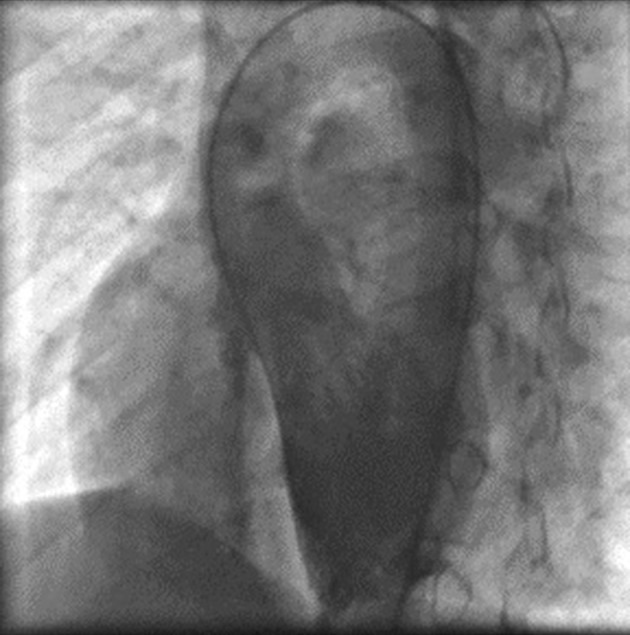
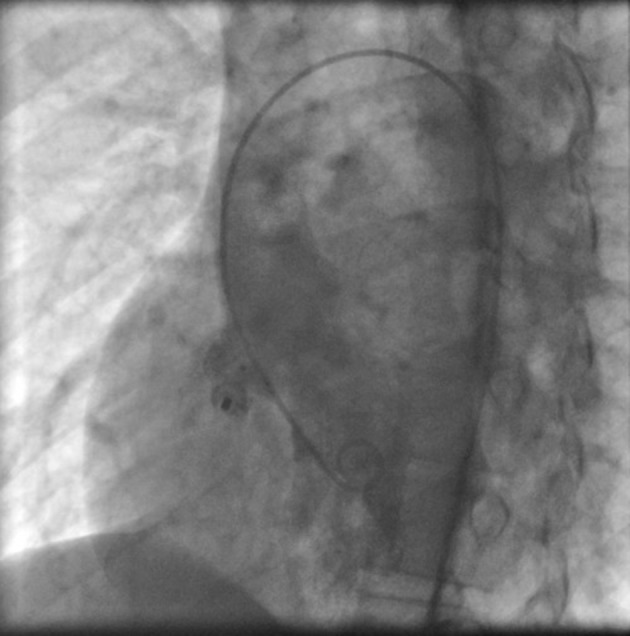
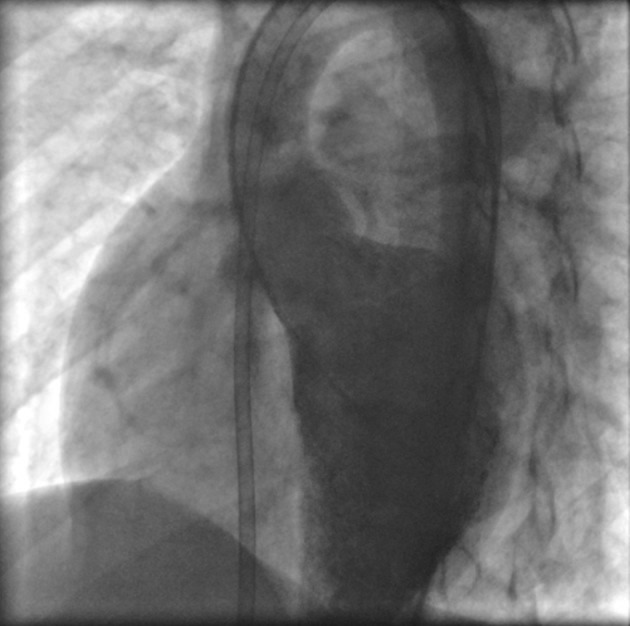
Between April 2012 and April 2013, 28 patients underwent percutaneous closure of PMVSD using ADO. After obtaining the size of VSD from the ventriculogram a device at least 2 mm larger than the narrowest diameter of VSD at right ventricular side was chosen. The device deployed after confirmation of its good position by echocardiography and left ventriculography. Follow up evaluations were done 1 month, 6 months, 12 months and yearly after discharge with transthoracic echocardiography and 12 lead electrocardiography.
The mean age of patients at procedure was 4.7 ± 6.3 (range 2 to 14) years, mean weight 14.7 ± 10.5 (range 10 to 40) kg. The mean defect size of the right ventricular side was 4.5 ± 1.6 mm. The average device size used was 7.3 ± 3.2mm (range 4 to 12 mm). The ADOs were successfully implanted in all patients. The VSD occlusion rate was 65.7% at completion of the procedure, rising up to 79.5% at discharge and 96.4% during follow-up. Small residual shunts were seen at completion of the procedure, but they disappeared during follow-up in all but one patient. The mean follow-up period was 8.3 ± 3.6 months (range 1 to 18 months). Complete atrioventricular block (CAVB), major complication or death was not observed in our study.
Transcatheter closure of PMVSD with ADO in children is a safe and effective treatment associated with excellent success and closure rates, but long-term follow-up in a large number of patients would be warranted.
膜周部室间隔缺损(PMVSD)是室间隔缺损最常见的亚型。经导管封堵中度或大型PMVSD是一项具有挑战性的操作。
本研究旨在表明使用Amplatzer动脉导管封堵器(ADO)经导管封堵膜周部室间隔缺损是一种有效且安全的方法。
2012年4月至2013年4月期间,28例患者使用ADO行经皮封堵PMVSD。从心室造影获得室间隔缺损大小后,选择一个比右心室侧室间隔缺损最窄直径至少大2mm的装置。经超声心动图和左心室造影确认装置位置良好后进行释放。出院后1个月、6个月、12个月及每年进行随访,采用经胸超声心动图和12导联心电图检查。
手术时患者的平均年龄为4.7±6.3(范围2至14)岁,平均体重14.7±10.5(范围10至40)kg。右心室侧平均缺损大小为4.5±1.6mm。使用的平均装置大小为7.3±3.2mm(范围4至12mm)。所有患者的ADO均成功植入。手术完成时室间隔缺损封堵率为65.7%,出院时升至79.5%,随访期间升至96.4%。手术完成时可见小的残余分流,但除1例患者外,所有患者在随访期间残余分流均消失。平均随访时间为8.3±3.6(范围1至18)个月。本研究未观察到完全性房室传导阻滞(CAVB)、主要并发症或死亡。
儿童使用ADO经导管封堵PMVSD是一种安全有效的治疗方法,成功率和封堵率高,但需要对大量患者进行长期随访。