Li Ben-Wen, Rush Amy C, Weil Gary J
Infectious Diseases Division, Department of Internal Medicine, Washington University School of Medicine, St. Louis, MO, USA.
Int J Parasitol Drugs Drug Resist. 2015 Jun 23;5(3):100-9. doi: 10.1016/j.ijpddr.2015.04.003. eCollection 2015 Dec.
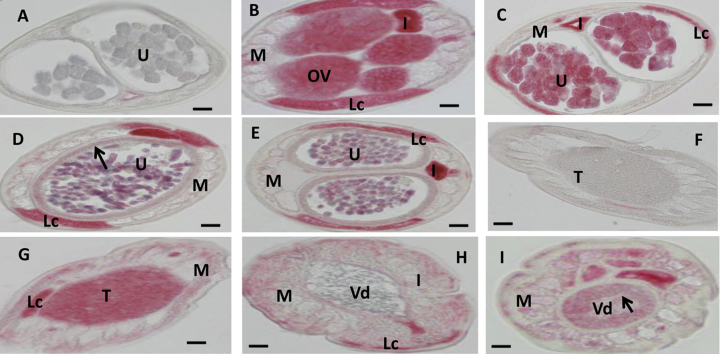
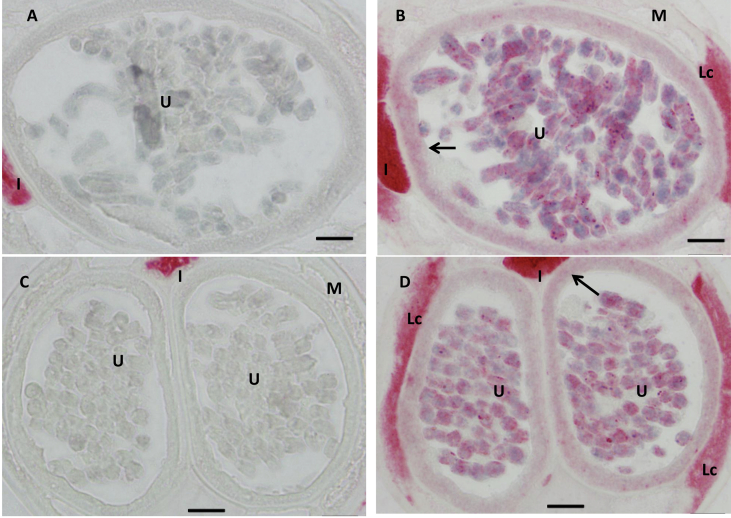
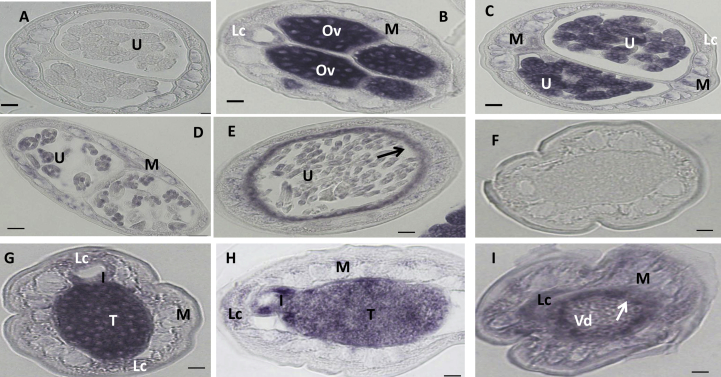
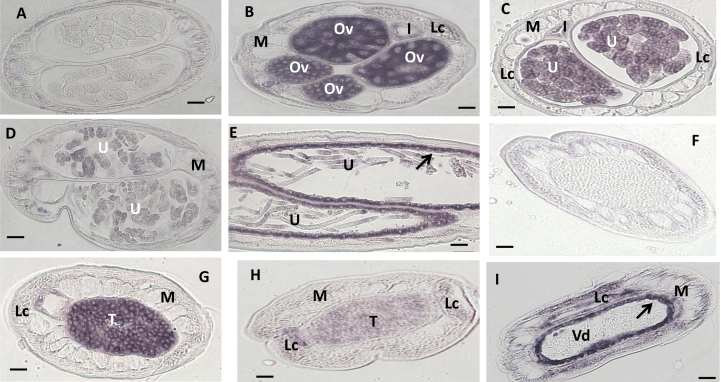
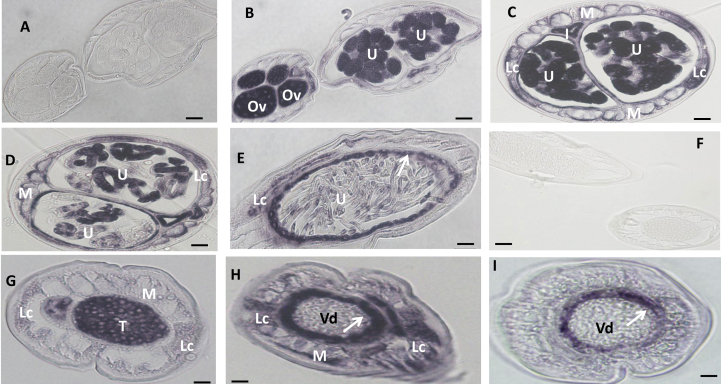
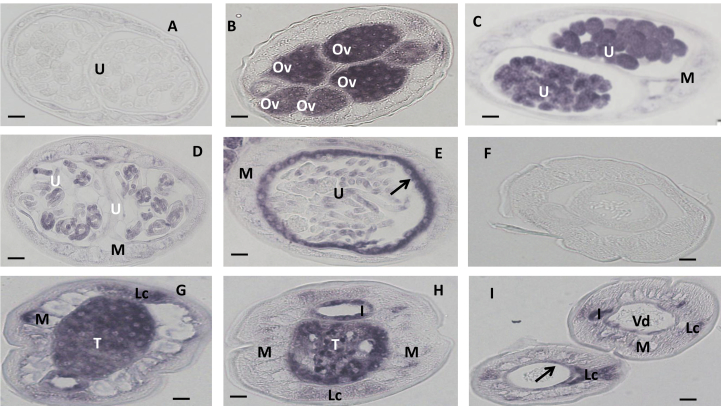
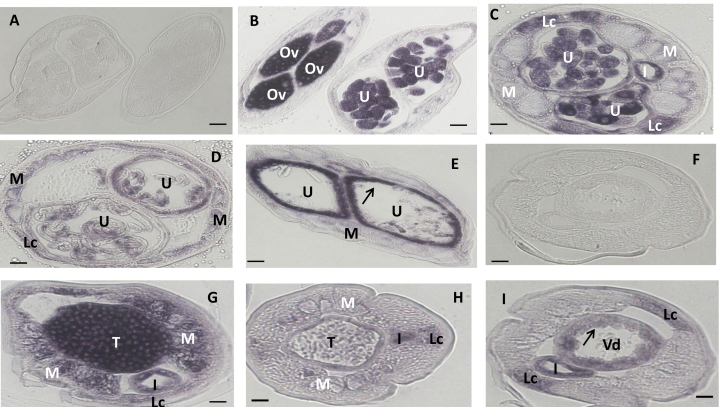
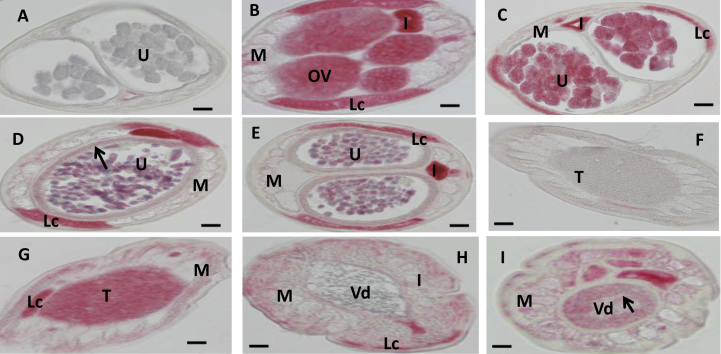
Acetylcholine receptors (AChRs) are required for body movement in parasitic nematodes and are targets of "classical" anthelmintic drugs such as levamisole and pyrantel and of newer drugs such as tribendimidine and derquantel. While neurotransmission explains the effects of these drugs on nematode movement, their effects on parasite reproduction are unexplained. The levamisole AChR type (L-AChRs) in Caenorhabditis elegans is comprised of five subunits: Cel-UNC-29, Cel-UNC-38, Cel-UNC-63, Cel-LEV-1 and Cel-LEV-8. The genome of the filarial parasite Brugia malayi contains nine AChRs subunits including orthologues of Cel-unc-29, Cel-unc-38, and Cel-unc-63. We performed in situ hybridization with RNA probes to localize the expression of five AChR genes (Bm1_35890-Bma-unc-29, Bm1_20330-Bma-unc-38, Bm1_38195-Bma-unc-63, Bm1_48815-Bma-acr-26 and Bm1_40515-Bma-acr-12) in B. malayi adult worms. Four of these genes had similar expression patterns with signals in body muscle, developing embryos, spermatogonia, uterine wall adjacent to stretched microfilariae, wall of V as deferens, and lateral cord. Three L-AChR subunit genes (Bma-unc-29, Bma-unc-38 and Bma-unc-63) were expressed in body muscle, which is a known target of levamisole. Bma-acr-12 was co-expressed with these levamisole subunit genes in muscle, and this suggests that its protein product may form receptors with other alpha subunits. Bma-acr-26 was expressed in male muscle but not in female muscle. Strong expression signals of these genes in early embryos and gametes in uterus and testis suggest that AChRs may have a role in nervous system development of embryogenesis and spermatogenesis. This would be consistent with embryotoxic effects of drugs that target these receptors in filarial worms. Our data show that the expression of these receptor genes is tightly regulated with regard to localization in adult worms and developmental stage in embryos and gametes. These results may help to explain the broad effects of drugs that target AChRs in filarial worms.
乙酰胆碱受体(AChRs)是寄生线虫身体运动所必需的,是左旋咪唑、噻嘧啶等“经典”驱虫药以及三苯双脒和地喹特等新药的作用靶点。虽然神经传递解释了这些药物对线虫运动的影响,但其对寄生虫繁殖的影响尚不清楚。秀丽隐杆线虫中的左旋咪唑型乙酰胆碱受体(L-AChRs)由五个亚基组成:Cel-UNC-29、Cel-UNC-38、Cel-UNC-63、Cel-LEV-1和Cel-LEV-8。丝虫寄生虫马来布鲁线虫的基因组包含九个乙酰胆碱受体亚基,包括Cel-unc-29、Cel-unc-38和Cel-unc-63的直系同源物。我们用RNA探针进行原位杂交,以定位五个乙酰胆碱受体基因(Bm1_35890-Bma-unc-29、Bm1_20330-Bma-unc-38、Bm1_38195-Bma-unc-63、Bm1_48815-Bma-acr-26和Bm1_40515-Bma-acr-12)在马来布鲁线虫成虫中的表达。这些基因中的四个具有相似的表达模式,在身体肌肉、发育中的胚胎、精原细胞、与伸展的微丝蚴相邻的子宫壁、输精管壁和侧索中有信号。三个L-AChR亚基基因(Bma-unc-29、Bma-unc-38和Bma-unc-63)在身体肌肉中表达,而身体肌肉是左旋咪唑已知的作用靶点。Bma-acr-12与这些左旋咪唑亚基基因在肌肉中共表达,这表明其蛋白质产物可能与其他α亚基形成受体。Bma-acr-26在雄性肌肉中表达,但在雌性肌肉中不表达。这些基因在早期胚胎以及子宫和睾丸中的配子中强烈的表达信号表明,乙酰胆碱受体可能在胚胎发生和精子发生的神经系统发育中起作用。这与针对丝虫中这些受体的药物的胚胎毒性作用是一致的。我们的数据表明,这些受体基因的表达在成虫中的定位以及胚胎和配子中的发育阶段方面受到严格调控。这些结果可能有助于解释针对丝虫中乙酰胆碱受体的药物的广泛作用。