Messaoudene Meriem, Périer Aurélie, Fregni Giulia, Neves Emmanuelle, Zitvogel Laurence, Cremer Isabelle, Chanal Johan, Sastre-Garau Xavier, Deschamps Lydia, Marinho Eduardo, Larousserie Frederique, Maubec Eve, Avril Marie-Françoise, Caignard Anne
INSERMU1160, Institut Universitaire d'Hématologie, Hôpital Saint Louis, 1 Avenue Claude Vellefaux, 75010, Paris, France.
U1015 INSERM-CIC, Institut Gustave Roussy, Villejuif, France.
PLoS One. 2015 Jul 28;10(7):e0133363. doi: 10.1371/journal.pone.0133363. eCollection 2015.
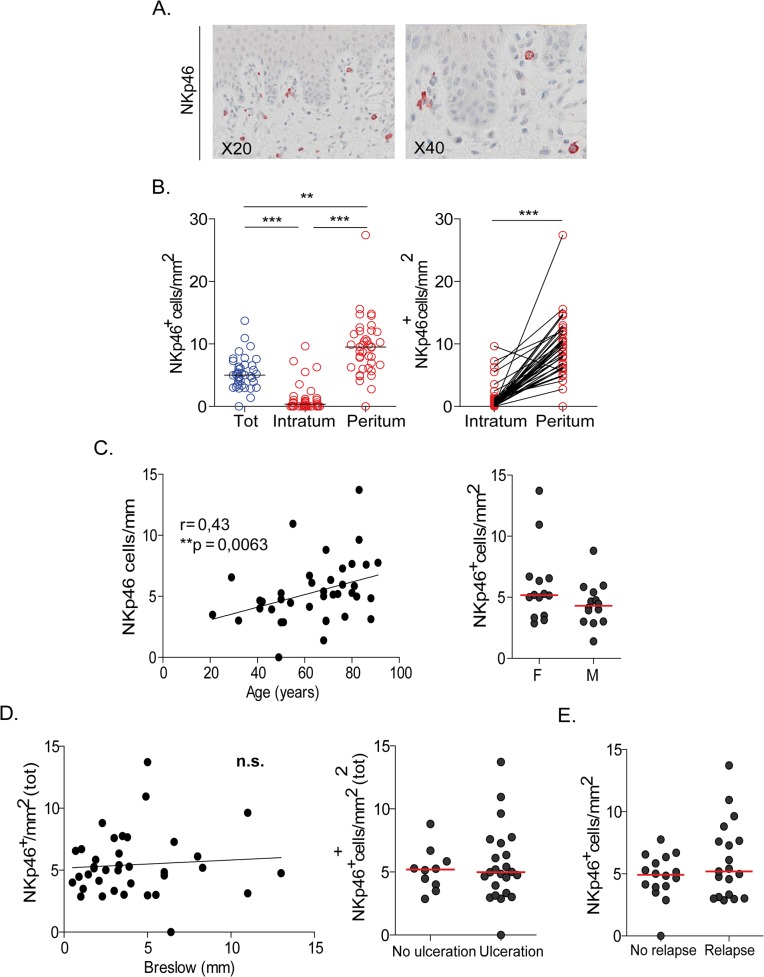
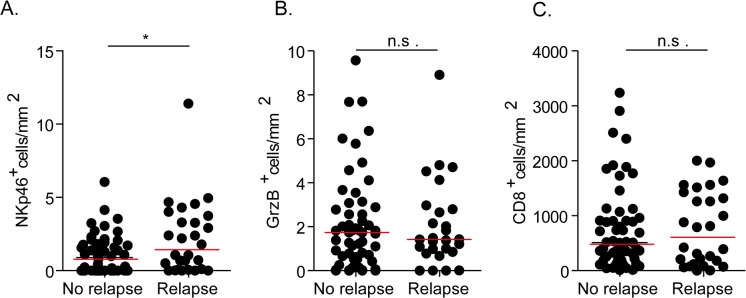
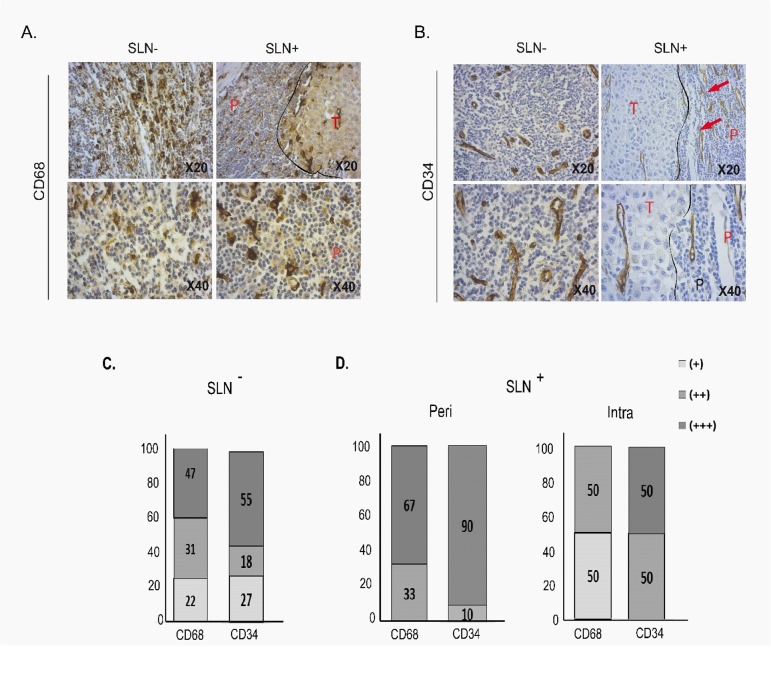
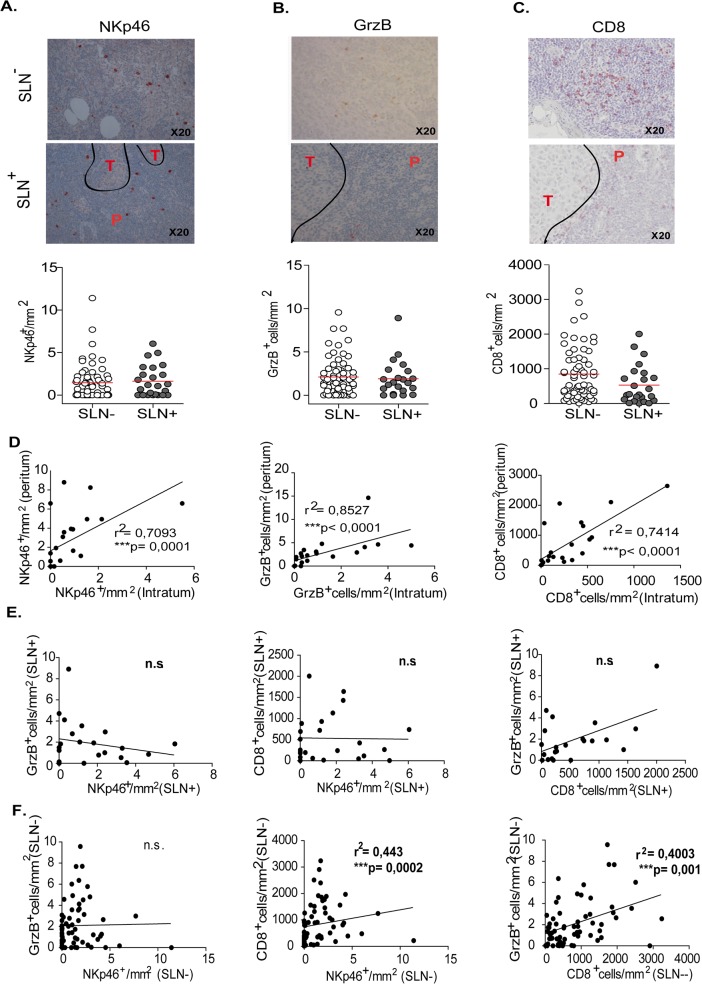
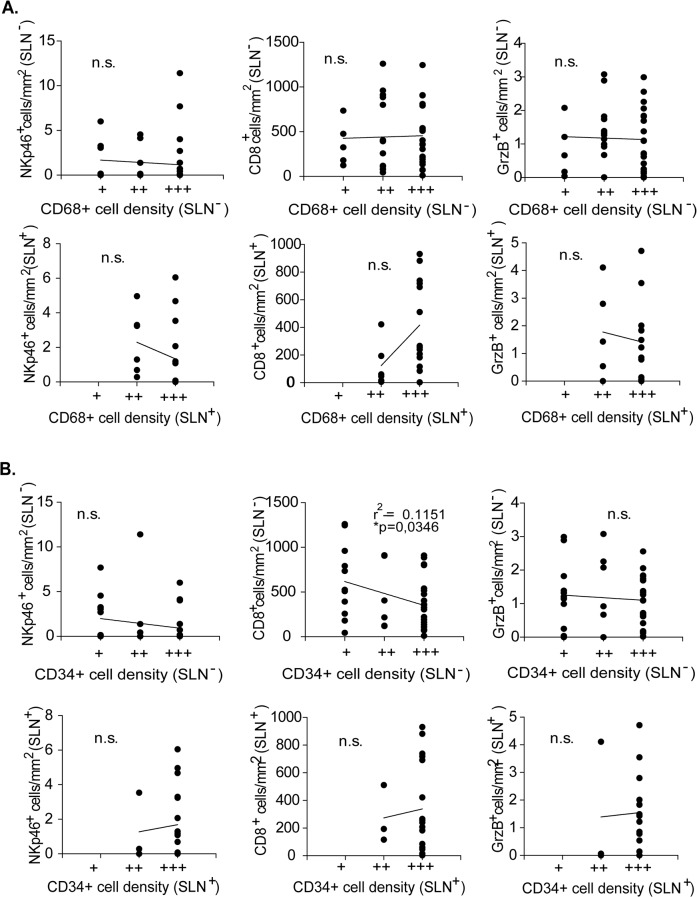
Melanomas are aggressive skin tumors characterized by high metastatic potential. Our previous results indicate that Natural Killer (NK) cells may control growth of melanoma. The main defect of blood NK cells was a decreased expression of activating NCR1/NKp46 receptor and a positive correlation of NKp46 expression with disease outcome in stage IV melanoma patients was found. In addition, in stage III melanoma patients, we identified a new subset of mature NK cells in macro-metastatic Lymph nodes (LN). In the present studies, we evaluated the numbers of NK cells infiltrating primary cutaneous melanoma and analyzed immune cell subsets in a series of sentinel lymph nodes (SLN). First, we show that NKp46+ NK cells infiltrate primary cutaneous melanoma. Their numbers were related to age of patients and not to Breslow thickness. Then, a series of patients with tumor-negative or -positive sentinel lymph nodes matched for Breslow thickness of the cutaneous melanoma was constituted. We investigated the distribution of macrophages (CD68), endothelial cells, NK cells, granzyme B positive (GrzB+) cells and CD8+ T cells in the SLN. Negative SLN (SLN-) were characterized by frequent adipose involution and follicular hyperplasia compared to positive SLN (SLN+). High densities of macrophages and endothelial cells (CD34), prominent in SLN+, infiltrate SLN and may reflect a tumor favorable microenvironment. Few but similar numbers of NK and GrzB+ cells were found in SLN- and SLN+: NK cells and GrzB+ cells were not correlated. Numerous CD8+ T cells infiltrated SLN with a trend for higher numbers in SLN-. Moreover, CD8+ T cells and GrzB+ cells correlated in SLN- not in SLN+. We also observed that the numbers of CD8+ T cells negatively correlated with endothelial cells in SLN-. The numbers of NK, GrzB+ or CD8+ T cells had no significant impact on overall survival. However, we found that the 5 year-relapse rate was higher in SLN with higher numbers of NK cells.
黑色素瘤是具有高转移潜能的侵袭性皮肤肿瘤。我们之前的结果表明,自然杀伤(NK)细胞可能控制黑色素瘤的生长。血液NK细胞的主要缺陷是活化性NCR1/NKp46受体表达降低,并且在IV期黑色素瘤患者中发现NKp46表达与疾病预后呈正相关。此外,在III期黑色素瘤患者中,我们在宏观转移淋巴结(LN)中鉴定出了成熟NK细胞的一个新亚群。在本研究中,我们评估了浸润原发性皮肤黑色素瘤的NK细胞数量,并分析了一系列前哨淋巴结(SLN)中的免疫细胞亚群。首先,我们发现NKp46+ NK细胞浸润原发性皮肤黑色素瘤。它们的数量与患者年龄有关,而与Breslow厚度无关。然后,构建了一系列皮肤黑色素瘤Breslow厚度匹配的前哨淋巴结肿瘤阴性或阳性的患者。我们研究了巨噬细胞(CD68)、内皮细胞、NK细胞、颗粒酶B阳性(GrzB+)细胞和CD8+ T细胞在SLN中的分布。与阳性SLN(SLN+)相比,阴性SLN(SLN-)的特征是频繁的脂肪退化和滤泡增生。SLN+中高密度的巨噬细胞和内皮细胞(CD34)浸润SLN,可能反映了有利于肿瘤的微环境。在SLN-和SLN+中发现的NK和GrzB+细胞数量很少但相似:NK细胞和GrzB+细胞不相关。大量CD8+ T细胞浸润SLN,SLN-中的数量有更高的趋势。此外,CD8+ T细胞和GrzB+细胞在SLN-中相关,而在SLN+中不相关。我们还观察到,SLN-中CD8+ T细胞的数量与内皮细胞呈负相关。NK、GrzB+或CD8+ T细胞的数量对总生存期没有显著影响。然而,我们发现NK细胞数量较多的SLN中5年复发率较高。