Li Bob T, Wong Matthew H, Pavlakis Nick
Department of Medical Oncology, Royal North Shore Hospital, St. Leonards NSW 2065, Sydney, Australia.
Sydney Medical School, University of Sydney, Camperdown NSW 2050, Sydney, Australia.
J Clin Med. 2014 Jan 9;3(1):1-24. doi: 10.3390/jcm3010001.
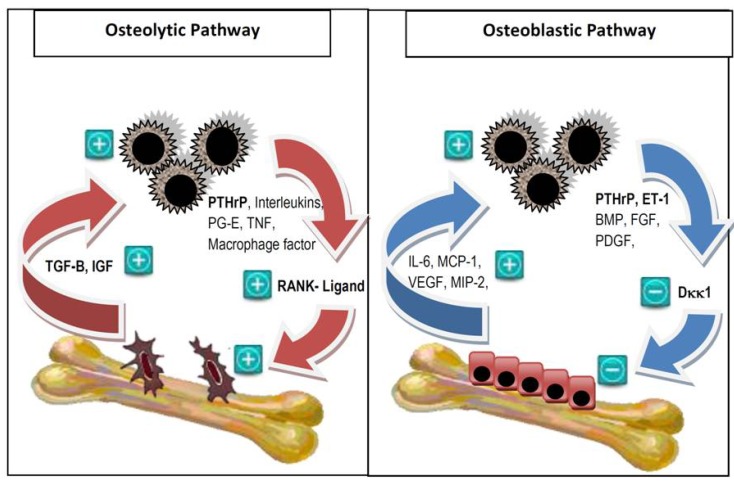
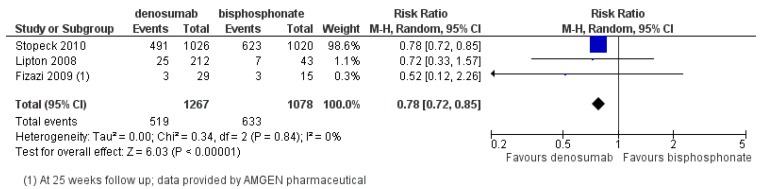
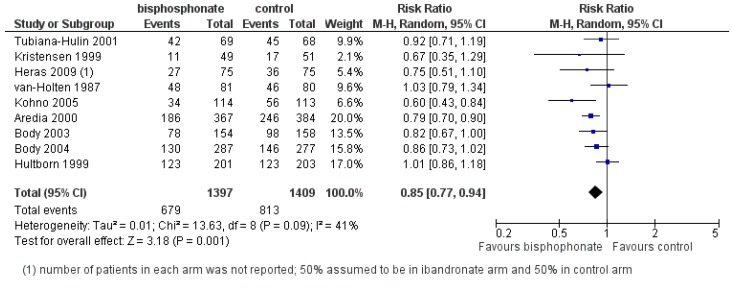
Bone is the most common site of metastasis from breast cancer. Bone metastases from breast cancer are associated with skeletal-related events (SREs) including pathological fractures, spinal cord compression, surgery and radiotherapy to bone, as well as bone pain and hypercalcemia, leading to impaired mobility and reduced quality of life. Greater understanding of the pathophysiology of bone metastases has led to the discovery and clinical utility of bone-targeted agents such as bisphosphonates and the receptor activator of nuclear factor kappa-B ligand (RANK-L) antibody, denosumab. Both are now a routine part of the treatment of breast cancer bone metastases to reduce SREs. With regards to prevention, there is no evidence that oral bisphosphonates can prevent bone metastases in advanced breast cancer without skeletal involvement. Several phase III clinical trials have evaluated bisphosphonates as adjuvant therapy in early breast cancer to prevent bone metastases. The current published data do not support the routine use of bisphosphonates in unselected patients with early breast cancer for metastasis prevention. However, significant benefit of adjuvant bisphosphonates has been consistently observed in the postmenopausal or ovarian suppression subgroup across multiple clinical trials, which raises the hypothesis that its greatest anti-tumor effect is in a low estrogen microenvironment. An individual patient data meta-analysis will be required to confirm survival benefit in this setting. This review summarizes the key evidence for current clinical practice and future directions.
骨是乳腺癌最常见的转移部位。乳腺癌骨转移与骨相关事件(SREs)相关,包括病理性骨折、脊髓压迫、骨手术和放疗,以及骨痛和高钙血症,导致活动能力受损和生活质量下降。对骨转移病理生理学的更深入了解促使人们发现了骨靶向药物,如双膦酸盐和核因子κB受体活化因子配体(RANK-L)抗体地诺单抗,并将其应用于临床。现在,这两种药物都是治疗乳腺癌骨转移以减少SREs的常规用药。关于预防,没有证据表明口服双膦酸盐可以预防无骨骼受累的晚期乳腺癌发生骨转移。多项III期临床试验评估了双膦酸盐作为早期乳腺癌辅助治疗预防骨转移的效果。目前已发表的数据不支持在未选择的早期乳腺癌患者中常规使用双膦酸盐来预防转移。然而,在多个临床试验的绝经后或卵巢抑制亚组中,一直观察到辅助使用双膦酸盐有显著益处,这就提出了一个假设,即其最大的抗肿瘤作用是在低雌激素微环境中。需要进行个体患者数据荟萃分析来证实这种情况下的生存获益。本综述总结了当前临床实践的关键证据和未来方向。