Yu Fujun, Lu Zhongqiu, Chen Bicheng, Wu Xiaoli, Dong Peihong, Zheng Jianjian
Department of Infectious Diseases, The First Affiliated Hospital of Wenzhou Medical University, Wenzhou, China.
Emergency Department, The First Affiliated Hospital of Wenzhou Medical University, Wenzhou, China.
J Cell Mol Med. 2015 Nov;19(11):2617-32. doi: 10.1111/jcmm.12655. Epub 2015 Aug 10.
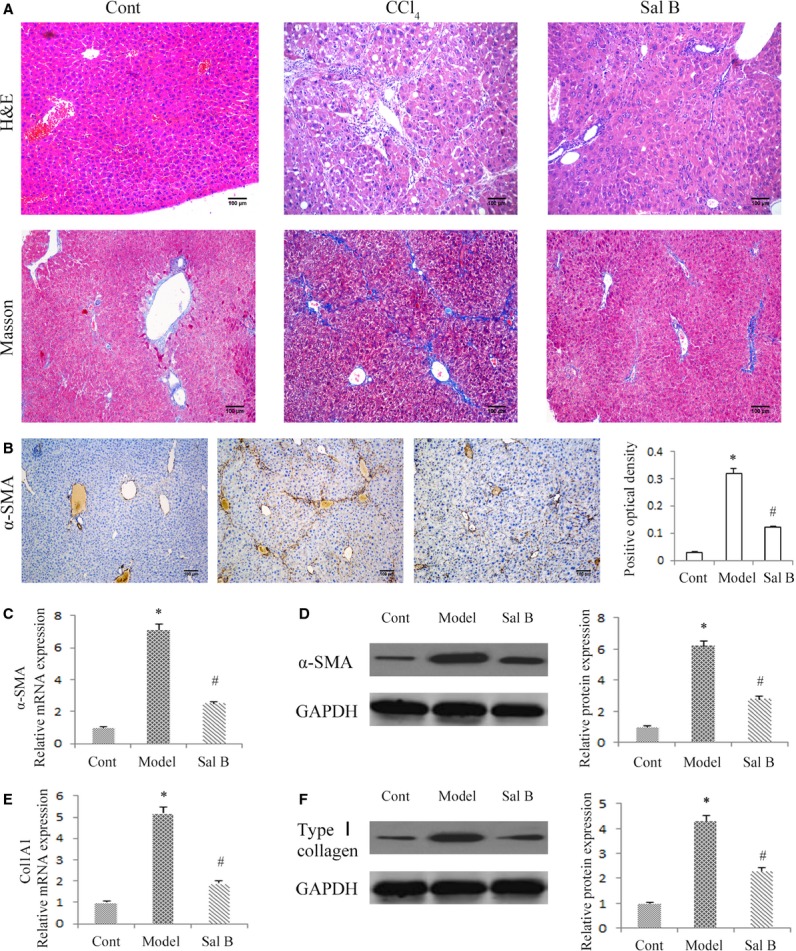
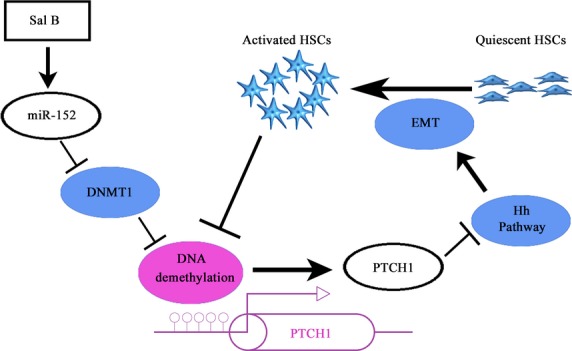
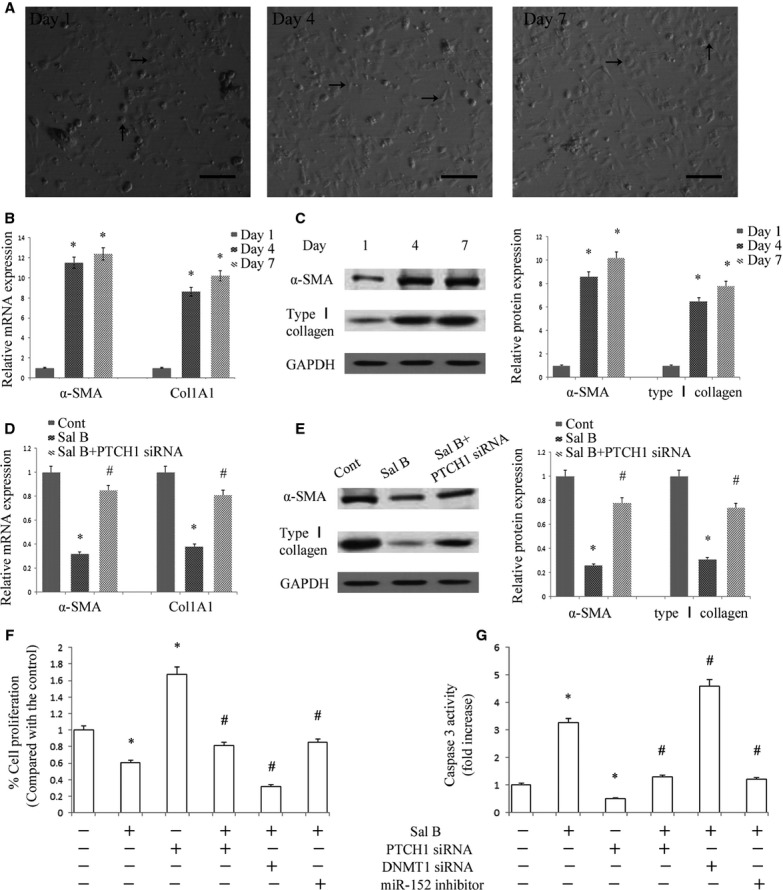
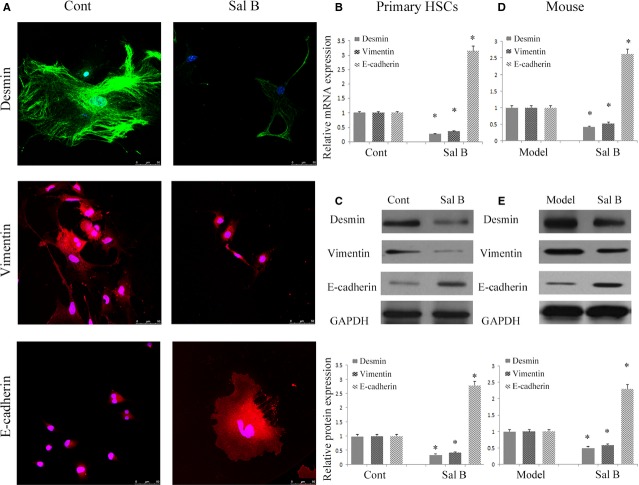
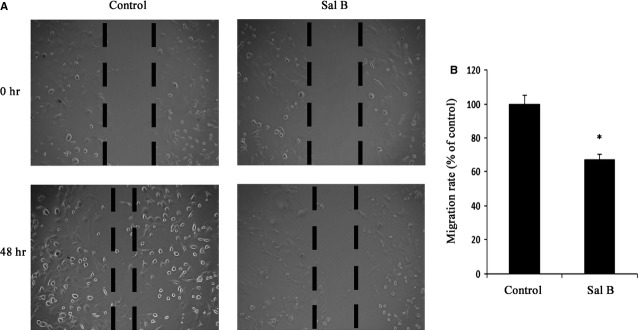
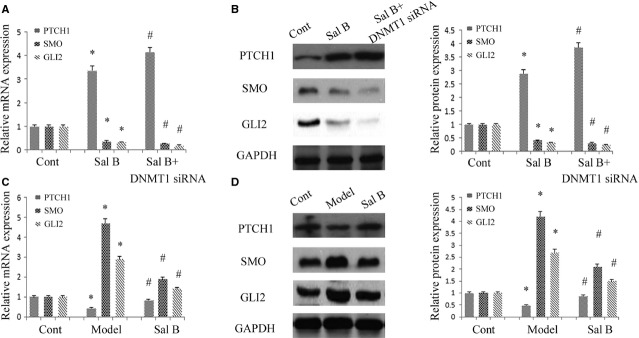
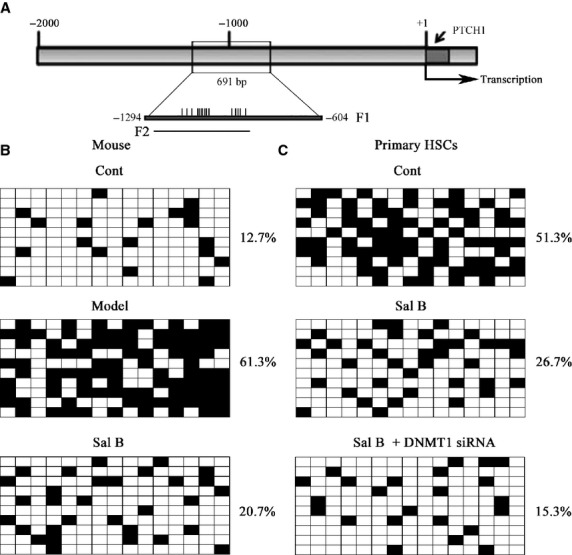
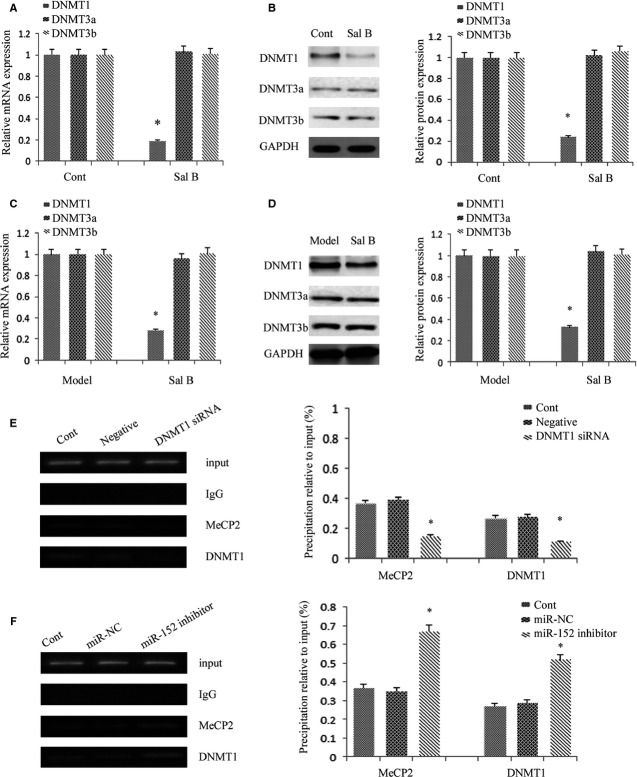
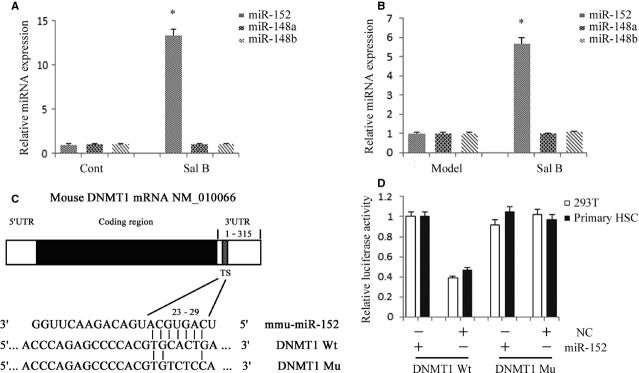
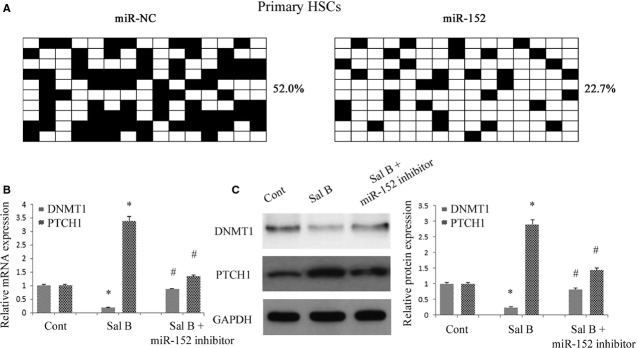
Epithelial-mesenchymal transition (EMT) was reported to be involved in the activation of hepatic stellate cells (HSCs), contributing to the development of liver fibrosis. Epithelial-mesenchymal transition can be promoted by the Hedgehog (Hh) pathway. Patched1 (PTCH1), a negative regulatory factor of the Hh signalling pathway, was down-regulated during liver fibrosis and associated with its hypermethylation status. MicroRNAs (miRNAs) are reported to play a critical role in the control of various HSCs functions. However, miRNA-mediated epigenetic regulations in EMT during liver fibrosis are seldom studied. In this study, Salvianolic acid B (Sal B) suppressed the activation of HSCs in CCl4 -treated mice and mouse primary HSCs, leading to inhibition of cell proliferation, type I collagen and alpha-smooth muscle actin. We demonstrated that the antifibrotic effects caused by Sal B were, at least in part, via inhibition of EMT and the Hh pathway. In particular, up-regulation of PTCH1 was associated with decreased DNA methylation level after Sal B treatment. Accordingly, DNA methyltransferase 1 (DNMT1) was attenuated by Sal B in vivo and in vitro. The knockdown of DNMT1 in Sal B-treated HSCs enhanced PTCH1 expression and its demethylation level. Interestingly, increased miR-152 in Sal B-treated cells was responsible for the hypomethylation of PTCH1 by Sal B. As confirmed by the luciferase activity assay, DNMT1 was a direct target of miR-152. Further studies showed that the miR-152 inhibitor reversed Sal B-mediated PTCH1 up-regulation and DNMT1 down-regulation. Collectively, miR-152 induced by Sal B, contributed to DNMT1 down-regulation and epigenetically regulated PTCH1, resulting in the inhibition of EMT in liver fibrosis.
据报道,上皮-间质转化(EMT)参与肝星状细胞(HSC)的激活,促进肝纤维化的发展。刺猬信号通路(Hh)可促进上皮-间质转化。在肝纤维化过程中,Hh信号通路的负调控因子Patched1(PTCH1)表达下调,且与其高甲基化状态相关。据报道,微小RNA(miRNA)在控制各种肝星状细胞功能中起关键作用。然而,关于肝纤维化过程中miRNA介导的上皮-间质转化表观遗传调控的研究很少。在本研究中,丹酚酸B(Sal B)抑制了四氯化碳处理小鼠和小鼠原代肝星状细胞中肝星状细胞的激活,导致细胞增殖、I型胶原蛋白和α-平滑肌肌动蛋白受到抑制。我们证明,Sal B引起的抗纤维化作用至少部分是通过抑制上皮-间质转化和Hh信号通路实现的。特别是,Sal B处理后PTCH1的上调与DNA甲基化水平降低有关。因此,Sal B在体内和体外均使DNA甲基转移酶1(DNMT1)表达减弱。在Sal B处理的肝星状细胞中敲低DNMT1可增强PTCH1表达及其去甲基化水平。有趣的是,Sal B处理的细胞中miR-152增加是Sal B导致PTCH1低甲基化的原因。荧光素酶活性测定证实,DNMT1是miR-152的直接靶点。进一步研究表明,miR-152抑制剂可逆转Sal B介导的PTCH1上调和DNMT1下调。总的来说,Sal B诱导的miR-152导致DNMT1下调并对PTCH1进行表观遗传调控,从而抑制肝纤维化中的上皮-间质转化。