ALPS Clinic, Laboratory of Clinical Infectious Diseases, Division of Intramural Research, National Institute of Allergy and Infectious Diseases, National Institutes of Health, Department of Health and Human Services , Bethesda, MD , USA.
Front Pediatr. 2015 Jul 21;3:65. doi: 10.3389/fped.2015.00065. eCollection 2015.
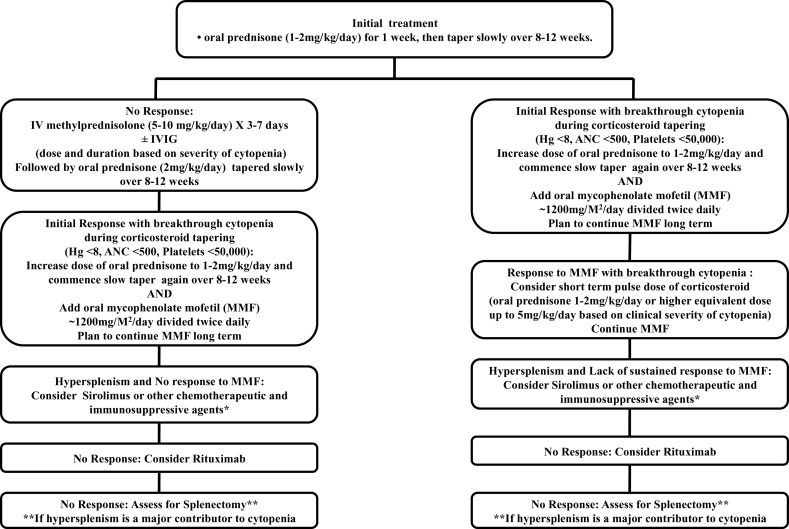
Autoimmune lymphoproliferative syndrome (ALPS) is a rare disorder of apoptosis. It is frequently caused by mutations in FAS (TNFRSF6) gene. Unlike most of the self-limiting autoimmune cytopenias sporadically seen in childhood, multi lineage cytopenias due to ALPS are often refractory, as their inherited genetic defect is not going to go away. Historically, more ALPS patients have died due to overwhelming sepsis following splenectomy to manage their chronic cytopenias than due to any other cause, including malignancies. Hence, current recommendations underscore the importance of avoiding splenectomy in ALPS, by long-term use of corticosteroid-sparing immunosuppressive agents like mycophenolate mofetil and sirolimus. Paradigms learnt from managing ALPS patients in recent years is highlighted here and can be extrapolated to manage refractory cytopenias in patients with as yet undetermined genetic bases for their ailments. It is also desirable to develop international registries for children with rare and complex immune problems associated with chronic multilineage cytopenias in order to elucidate their natural history and long-term comorbidities due to the disease and its treatments.
自身免疫性淋巴增生综合征(ALPS)是一种罕见的凋亡紊乱。它通常由 FAS(TNFRSF6)基因突变引起。与儿童中偶尔出现的大多数自限性自身免疫性血细胞减少症不同,由于 ALPS 引起的多谱系血细胞减少症通常是难治性的,因为其遗传缺陷不会消失。从历史上看,由于脾切除术治疗慢性血细胞减少症导致的严重败血症,更多的 ALPS 患者死亡,而不是由于任何其他原因,包括恶性肿瘤。因此,目前的建议强调了通过长期使用免疫抑制药物(如霉酚酸酯和西罗莫司)避免 ALPS 患者脾切除术的重要性。近年来从管理 ALPS 患者中吸取的经验教训在这里得到了强调,并可以推广到管理尚未确定遗传基础的患者的难治性血细胞减少症。还希望为与慢性多谱系血细胞减少症相关的罕见和复杂免疫问题的儿童建立国际登记处,以阐明其自然史以及疾病及其治疗的长期合并症。