Eitan Erez, Hutchison Emmette R, Greig Nigel H, Tweedie David, Celik Hasan, Ghosh Soumita, Fishbein Kenneth W, Spencer Richard G, Sasaki Carl Y, Ghosh Paritosh, Das Soumen, Chigurapati Susheela, Raymick James, Sarkar Sumit, Chigurupati Srinivasulu, Seal Sudipta, Mattson Mark P
Laboratory of Neurosciences, National Institute on Aging Intramural Research Program, Baltimore, MD 21224, USA.
Translational Gerontology Branch, National Institute on Aging Intramural Research Program, Baltimore, MD 21224, USA.
Exp Neurol. 2015 Nov;273:151-60. doi: 10.1016/j.expneurol.2015.08.008. Epub 2015 Aug 13.
Multiple sclerosis (MS) is a debilitating neurological disorder involving an autoimmune reaction to oligodendrocytes and degeneration of the axons they ensheath in the CNS. Because the damage to oligodendrocytes and axons involves local inflammation and associated oxidative stress, we tested the therapeutic efficacy of combined treatment with a potent anti-inflammatory thalidomide analog (lenalidomide) and novel synthetic anti-oxidant cerium oxide nanoparticles (nanoceria) in the experimental autoimmune encephalomyelitis (EAE) mouse model of MS.
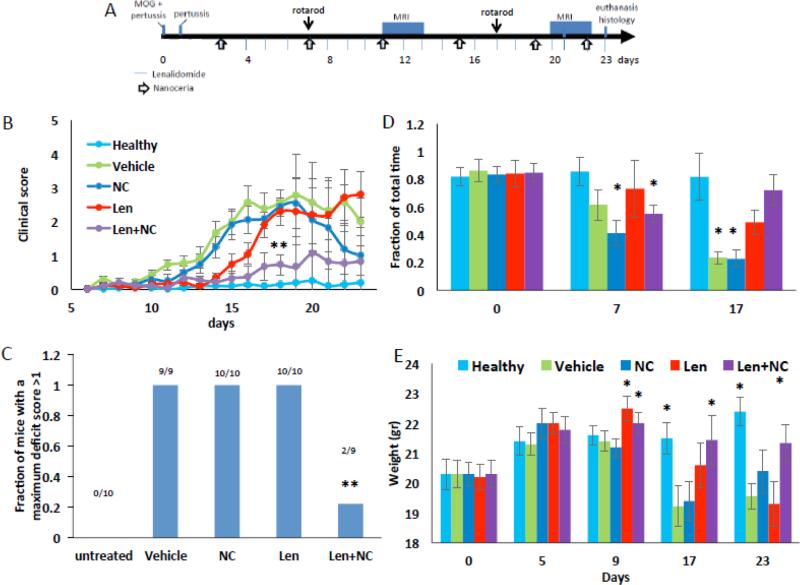
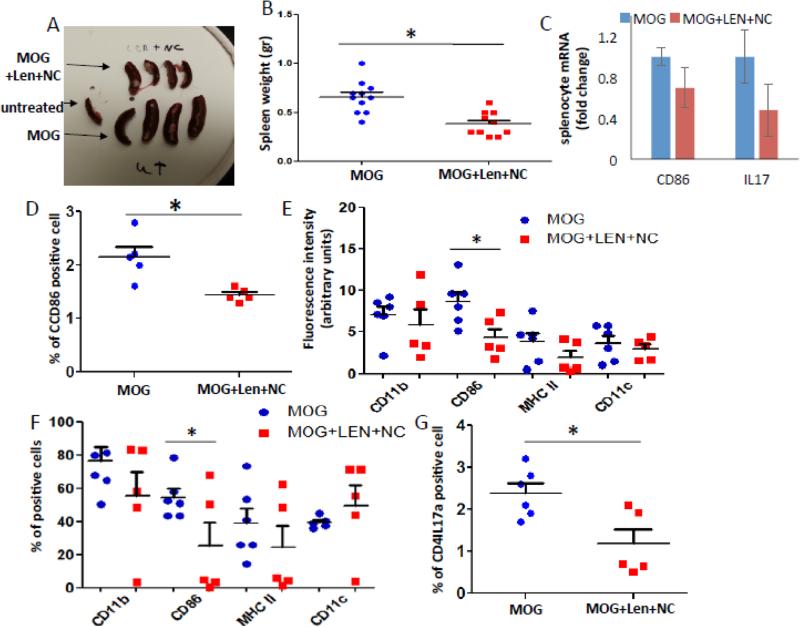
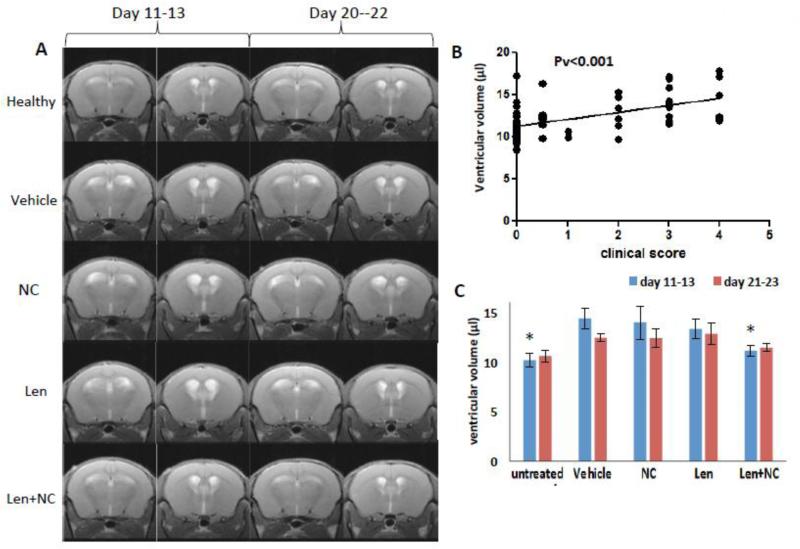
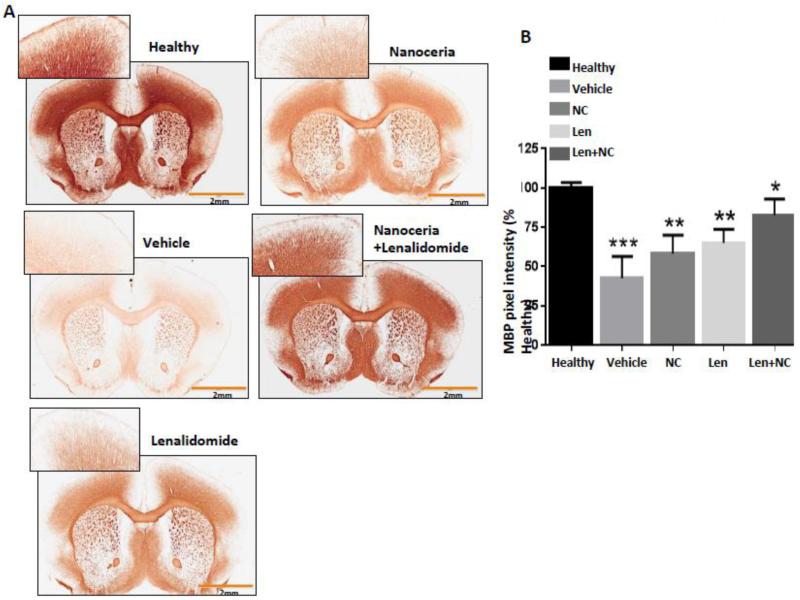
C57BL/6 mice were randomly assigned to a control (no EAE) group, or one of the four myelin oligodendrocyte glycoprotein-induced EAE groups: vehicle, lenalidomide, nanoceria, or lenalidomide plus nanoceria. During a 23 day period, clinical EAE symptoms were evaluated daily, and MRI brain scans were performed at 11-13 days and 20-22 days. Histological and biochemical analyses of brain tissue samples were performed to quantify myelin loss and local inflammation.
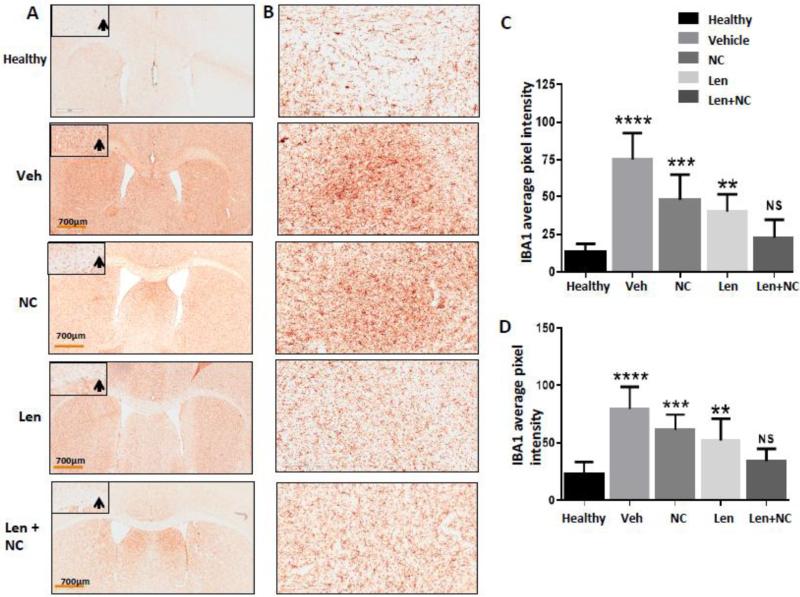
Lenalidomide treatment alone delayed symptom onset, while nanoceria treatment had no effect on symptom onset or severity, but did promote recovery; lenalidomide and nanoceria each significantly attenuated white matter pathology and associated inflammation. Combined treatment with lenalidomide and nanoceria resulted in a near elimination of EAE symptoms, and reduced white matter pathology and inflammatory cell responses to a much greater extent than either treatment alone.
By suppressing inflammation and oxidative stress, combined treatment with lenalidomide and nanoceria can reduce demyelination and associated neurological symptoms in EAE mice. Our preclinical data suggest a potential application of this combination therapy in MS.
多发性硬化症(MS)是一种使人衰弱的神经疾病,涉及对少突胶质细胞的自身免疫反应以及它们在中枢神经系统中所包裹轴突的退化。由于少突胶质细胞和轴突的损伤涉及局部炎症和相关的氧化应激,我们在MS的实验性自身免疫性脑脊髓炎(EAE)小鼠模型中测试了强效抗炎沙利度胺类似物(来那度胺)与新型合成抗氧化剂氧化铈纳米颗粒(纳米氧化铈)联合治疗的疗效。
将C57BL/6小鼠随机分为对照组(无EAE)或四个髓鞘少突胶质细胞糖蛋白诱导的EAE组之一:赋形剂组、来那度胺组、纳米氧化铈组或来那度胺加纳米氧化铈组。在23天的时间里,每天评估临床EAE症状,并在第11 - 13天和第20 - 22天进行脑部MRI扫描。对脑组织样本进行组织学和生化分析,以量化髓鞘损失和局部炎症。
单独使用来那度胺治疗可延迟症状发作,而纳米氧化铈治疗对症状发作或严重程度无影响,但确实促进了恢复;来那度胺和纳米氧化铈均显著减轻了白质病理和相关炎症。来那度胺和纳米氧化铈联合治疗几乎消除了EAE症状,并且比单独使用任何一种治疗方法都更大程度地减少了白质病理和炎症细胞反应。
通过抑制炎症和氧化应激,来那度胺和纳米氧化铈联合治疗可减少EAE小鼠的脱髓鞘和相关神经症状。我们的临床前数据表明这种联合疗法在MS中有潜在应用价值。