King Carina, McCollum Eric D, Mankhambo Limangeni, Colbourn Tim, Beard James, Hay Burgess Debbie C, Costello Anthony, Izadnegahdar Rasa, Lufesi Norman, Masache Gibson, Mwansambo Charles, Nambiar Bejoy, Johnson Eric, Platt Robert, Mukanga David
Institute for Global Health, University College London, London, United Kingdom.
Institute for Global Health, University College London, London, United Kingdom; Department of Pediatrics, Division of Pulmonology, Johns Hopkins School of Medicine, Baltimore, Maryland, United States of America.
PLoS One. 2015 Aug 27;10(8):e0136839. doi: 10.1371/journal.pone.0136839. eCollection 2015.
Pneumonia is the leading cause of infectious death amongst children globally, with the highest burden in Africa. Early identification of children at risk of treatment failure in the community and prompt referral could lower mortality. A number of clinical markers have been independently associated with oral antibiotic failure in childhood pneumonia. This study aimed to develop a prognostic model for fast-breathing pneumonia treatment failure in sub-Saharan Africa.
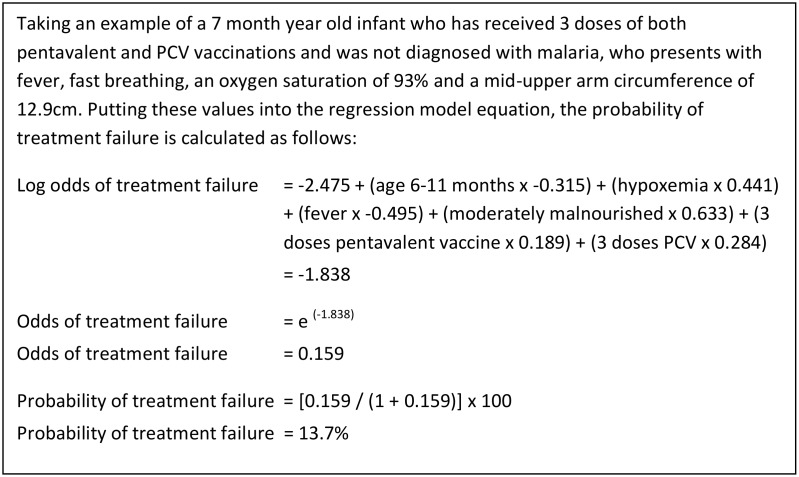
We prospectively followed a cohort of children (2-59 months), diagnosed by community health workers with fast-breathing pneumonia using World Health Organisation (WHO) integrated community case management guidelines. Cases were followed at days 5 and 14 by study data collectors, who assessed a range of pre-determined clinical features for treatment outcome. We built the prognostic model using eight pre-defined parameters, using multivariable logistic regression, validated through bootstrapping.
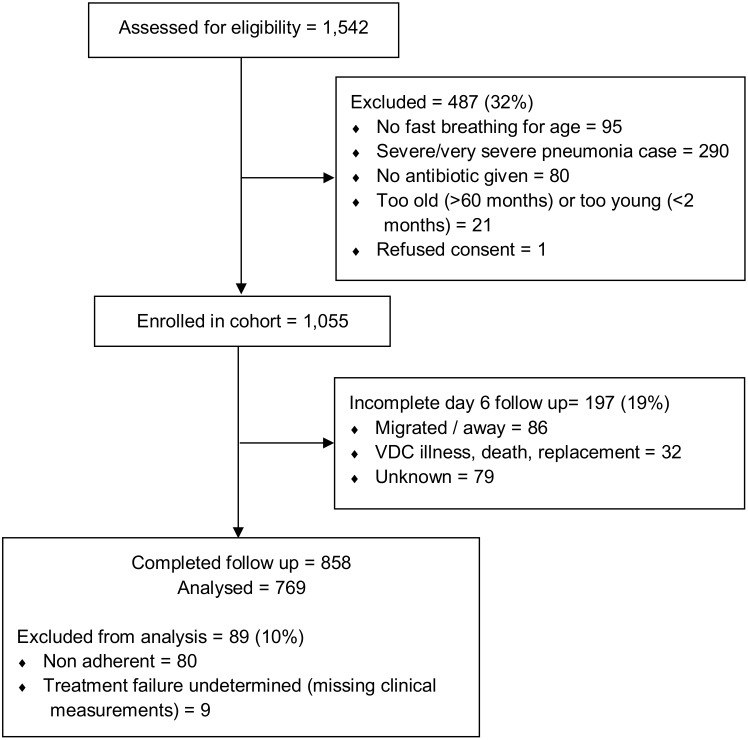
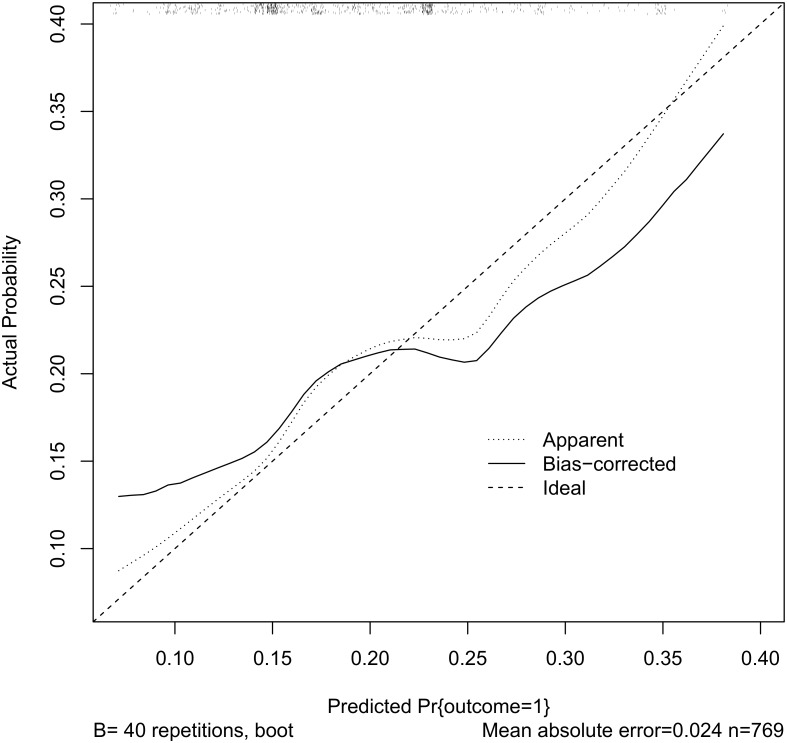
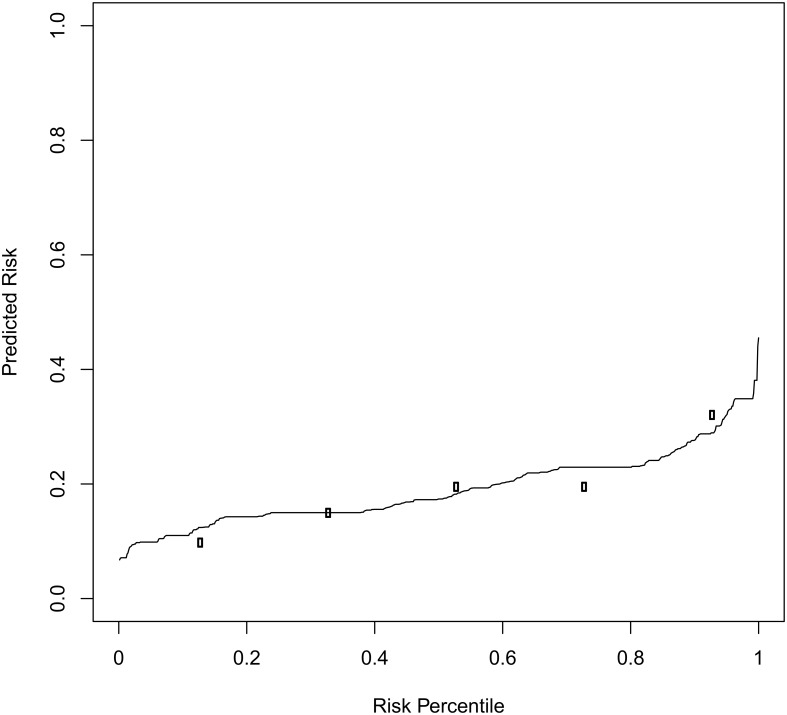
We assessed 1,542 cases of which 769 were included (32% ineligible; 19% defaulted). The treatment failure rate was 15% at day 5 and relapse was 4% at day 14. Concurrent malaria diagnosis (OR: 1.62; 95% CI: 1.06, 2.47) and moderate malnutrition (OR: 1.88; 95% CI: 1.09, 3.26) were associated with treatment failure. The model demonstrated poor calibration and discrimination (c-statistic: 0.56).
This study suggests that it may be difficult to create a pragmatic community-level prognostic child pneumonia tool based solely on clinical markers and pulse oximetry in an HIV and malaria endemic setting. Further work is needed to identify more accurate and reliable referral algorithms that remain feasible for use by community health workers.
肺炎是全球儿童感染性死亡的主要原因,在非洲负担最重。在社区中早期识别有治疗失败风险的儿童并及时转诊可降低死亡率。一些临床指标已被独立证明与儿童肺炎口服抗生素治疗失败有关。本研究旨在为撒哈拉以南非洲快速呼吸性肺炎治疗失败开发一种预后模型。
我们前瞻性地跟踪了一组儿童(2至59个月),这些儿童由社区卫生工作者根据世界卫生组织(WHO)综合社区病例管理指南诊断为快速呼吸性肺炎。研究数据收集人员在第5天和第14天对病例进行随访,评估一系列预先确定的临床特征以确定治疗结果。我们使用八个预先定义的参数构建预后模型,采用多变量逻辑回归,并通过自举法进行验证。
我们评估了1542例病例,其中769例被纳入(32%不符合条件;19%失访)。第5天的治疗失败率为15%,第14天的复发率为4%。同时诊断为疟疾(比值比:1.62;95%置信区间:1.06,2.47)和中度营养不良(比值比:1.88;95%置信区间:1.09,3.26)与治疗失败有关。该模型显示校准和区分能力较差(c统计量:0.56)。
本研究表明,在艾滋病毒和疟疾流行地区,仅基于临床指标和脉搏血氧饱和度创建一个实用的社区层面儿童肺炎预后工具可能很困难。需要进一步开展工作,以确定更准确可靠且社区卫生工作者仍可实际使用的转诊算法。